Skip to content

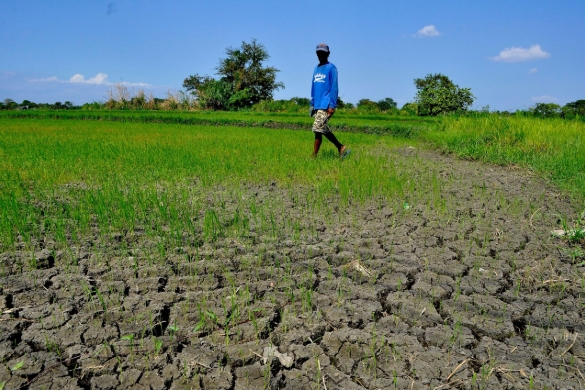

Nearly 50 million more people worldwide could be pushed into acute hunger as the strengthening El Niño weather phenomenon intensifies climate shocks across vulnerable regions, with Nigeria and other countries in West and Central Africa expected to experience a sharp rise in food insecurity, the United Nations World Food Programme (WFP) has warned.
The agency said the combination of prolonged droughts, floods, extreme temperatures and erratic rainfall—compounded by climate change—is placing millions of people who already struggle with poverty, conflict and unemployment at greater risk of starvation.

According to WFP’s latest projections, food insecurity in West and Central Africa is expected to increase by 12 per cent, affecting nearly six million additional people, while globally the number of people facing acute food insecurity could rise from 225 million to 274 million by the end of 2027.
Acute hunger refers to a situation in which people are unable to meet their daily food requirements.
WFP estimates that the 2026–2027 El Niño could push at least 49 million additional people into acute food insecurity beginning from September, representing an overall increase of about 22 per cent.
“The sooner we help families to prepare for these climate shocks, the greater our ability to save lives and protect livelihoods,” WFP Acting Executive Director, Carl Skau, said.
“El Niño is a massive threat to the food security of millions who are already vulnerable.”
The agency noted that its projections were based on an assessment of 45 countries already experiencing food insecurity and expected to be significantly affected by El Niño through changes in rainfall patterns, prolonged droughts, flooding and unusually high temperatures.
While all affected regions face heightened risks, WFP identified Central America and southern Africa as likely to suffer the most severe impacts.
Latin America and the Caribbean are projected to record one of the sharpest increases in food insecurity, with more than 16 million additional people expected to require food assistance. Central America alone could witness the largest proportional increase among all regions assessed, with food insecurity rising by 83.1 per cent.
In East and Southern Africa, more than 18 million people could see their food security deteriorate, representing a 26 per cent increase. Southern African countries are considered especially vulnerable because millions of households depend heavily on rain-fed subsistence farming, making them particularly susceptible to prolonged droughts and failed harvests.
Asia and the Pacific are also expected to experience significant disruptions, with an estimated 8.2 million more people likely to face acute food insecurity.
For Nigeria and the wider West and Central African region, WFP warned that worsening climate conditions could further strain food systems already weakened by conflict, economic hardship and recurrent weather extremes.
The agency stressed that the impacts of El Niño vary across countries, with some already experiencing below-average rainfall, flooding and excessive heat, while others are expected to face deteriorating agricultural conditions during upcoming planting and harvesting seasons.
WFP recalled that the 2015–2016 El Niño affected the food security of between 60 million and 100 million people globally, warning that the current event could produce similarly severe humanitarian consequences if preventive measures are not intensified.
The weather phenomenon is forecast to peak between September and December 2026, although its effects are expected to persist throughout 2027 because of damage to agricultural production and future harvests.
To reduce the humanitarian impact, WFP, working with the Food and Agriculture Organization of the United Nations (FAO), the UN Office for the Coordination of Humanitarian Affairs (OCHA) and other partners, is expanding anticipatory action programmes in more than 50 countries.
Since May, the agency has activated emergency preparedness plans in South Sudan, Chad, Mauritania, Uganda, Guatemala and El Salvador, deploying more than $14 million in assistance to support about 500,000 vulnerable people.
The interventions include disaster risk insurance, emergency credit facilities and digital cash payments designed to help governments and communities prepare for climate shocks before they escalate into full-scale humanitarian crises.
WFP said evidence from previous El Niño events demonstrates that investing in preparedness delivers substantial economic and humanitarian benefits.
According to the agency, every $1 invested in anticipatory action can save between $3 and $7 in avoided losses, emergency response costs and damage to livelihoods.
The WFP and FAO have appealed for increased international support to help at-risk countries strengthen resilience, protect food production and safeguard vulnerable populations before the full impact of the 2026–2027 El Niño unfolds.