Skip to content

FG draws fresh $1.25bn World Bank loan to finance job creation programme

World Bank has granted approval to a fresh $1.25 billion loan request by the Federal Government under its Nigeria Actions for Investment and Jobs Acceleration programme.
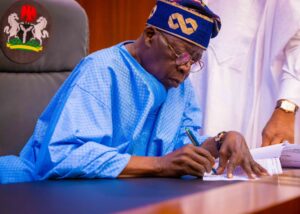
The approval was confirmed in a statement made by the World Bank on Wednesday, along with the unveiling of Nigeria’s new Country Partnership Framework for 2026-2032.
The bank stated that the new framework would guide its support for Nigeria over the next six years, with a focus on creating jobs by unlocking private sector-led growth.
“The World Bank Group has endorsed a new Country Partnership Framework for Nigeria spanning 2026–2032, setting out a strategy to create more and better jobs at scale by unlocking private sector-led growth,” the statement read.
It added that the bank had “also approved the Nigeria Actions for Investment and Jobs Acceleration Development Policy Financing operation, which supports Nigeria’s transition toward a more inclusive growth model that spurs growth and creates jobs.”
The approval comes on the heels of weeks of public outrage following revelations that the federal government was seeking a new $1.25 billion World Bank facility to boost economic reforms, job growth, and competitiveness, as Nigerians expressed concern over the mounting external debt figures amid declining standard of living in the country.
Meanwhile, the global bank explained in the statement that the new Country Partnership Framework builds on Nigeria’s previous macroeconomic reforms, which have resulted in better economic growth, higher government revenues, bigger external reserves, and improved investor confidence.Africans & Diaspora
It stated that the framework intends to increase power availability to 32 million Nigerians, deliver internet connectivity to 58 million people, improve health and nutrition services for 40 million individuals, and assist 9.5 million farmers.
It also aims to build human capital, increase agricultural productivity, and improve access to energy and digital infrastructure, the bank said.
Commenting, World Bank’s Country Director for Nigeria, Matthew Verghis said the institution’s priority will be to assist Nigeria in translating recent macroeconomic advances into higher living standards.Africans & Diaspora
“Our new Country Partnership Framework provides the strategy for how the World Bank Group will support Nigeria over the coming years, with a strong focus on helping to create more and better jobs, particularly by enabling private sector-led growth.
“The recent macroeconomic gains have been critical to help stabilize the economy. Translating improved macroeconomic conditions into better living standards will require addressing the structural constraints to spur private sector investment and job creation,” he said.
The bank said the $1.25 billion Development Policy Financing operation would help Nigeria’s competitiveness and create conditions for long-term growth.
According to the statement, the reforms include deepening capital markets, modernizing the regulatory framework for the digital economy and e-governance, advancing power sector reforms to accelerate electrification, lowering trade barriers in line with Nigeria’s commitments under the Economic Community of West African States and the African Continental Free Trade Area, improving access to quality agricultural seeds, and strengthening domestic revenue mobilization.
“The NAIJA DPF operation, which amounts to $1.25 bn, supports a set of government reforms to strengthen the foundations for growth and competitiveness.
“These include making capital markets stronger, updating rules for the digital economy and e-governance, improving the power sector to speed up electrification, reducing trade barriers to align with Nigeria’s commitments to ECOWAS and AfCFTA to help lower prices, providing better access to quality agricultural seeds, and enhancing the collection of domestic revenue,” the statement added.Africans & Diaspora
Also commenting, Dahlia Khalifa, the International Finance Corporation’s Divisional Director for Nigeria, stated that Nigeria’s reform plan has opened chances for increased private investment.
“Nigeria’s long-term growth potential will be shaped by the economy’s ability to attract investment, raise productivity, and unleash private sector job creation, building on the capital of a rapidly growing population,” she said.
Ed Mountfield, vice president and chief financial officer of the Multilateral Investment Guarantee Agency, stated that while Nigeria’s reforms have generated opportunities for investors, concerns remained.Executive Branch
“Nigeria’s reform progress is creating important opportunities for private investment, but risks remain for investors. MIGA’s role is to help manage these risks—through guarantees and political risk insurance—so that investors can step in with confidence,” he said.
The latest loan approval is the second-largest single World Bank facility received by Nigeria under President Bola Tinubu, after the $1.5 billion Reforms for Economic Stabilization to Enable Transformation Development Policy Financing authorized in June 2024.
According to numbers supplied by the Debt Management Office (DMO), Nigeria’s debt to the World Bank increased from $17.81 billion at the end of 2024 to $19.89 billion as of December 31, 2025, reflecting a $2.08 billion or 11.7 per cent rise.
According to DMO data, loans from the International Development Association (IDA) went from $16.56 billion to $18.51 billion during the time, while debt to the International Bank for Reconstruction and Development increased from $1.24 billion to $1.38 billion.
Notably, the World Bank accounted for 38.36 percent of Nigeria’s total external debt stock of $51.86 billion at the end of 2025.