Skip to content

WEF kicks off amid escalating global military and diplomatic tensions

Ziggy Ojiegbe
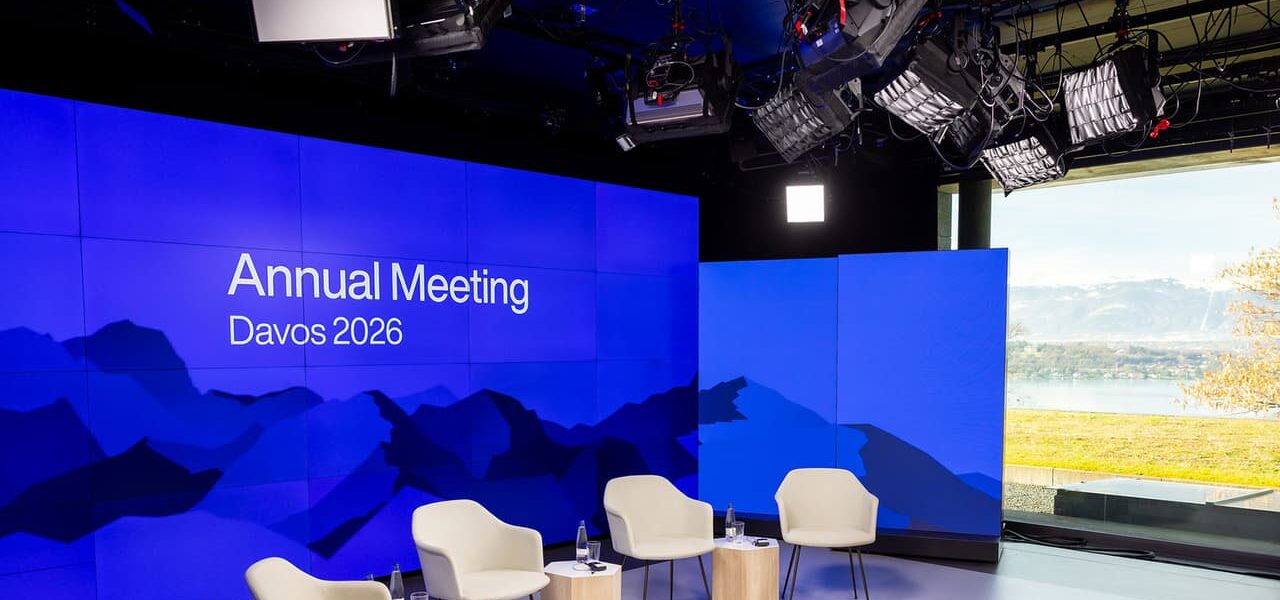
More than 60 heads of state and government are gathering today in Davos, Switzerland, as the World Economic Forum (WEF) opens against a backdrop of rising geopolitical tensions, trade disputes, and military confrontations that threaten the global economy.

The five-day summit, themed A Spirit of Dialogue, comes at a time when advances in technology, growing protectionism, and deepening diplomatic rifts are reshaping global trade and cooperation.
This year’s meeting will be dominated by a large United States delegation, reflecting Washington’s outsized role in current geopolitical and economic uncertainty. Global concerns have intensified as Russia continues its territorial advance in Ukraine, the United States signals ambitions to acquire Greenland, and multilateral forces seek to counter Iran-backed groups fuelling violence in the Middle East.
The forum also takes place as US President Donald Trump pushes a more confrontational foreign and trade policy agenda, including setting new trade rules, withdrawing from international agreements such as the UN climate treaty, and detaining Venezuela’s President Nicolás Maduro as part of efforts to reset oil trade relations.
Under Trump’s administration, the US has also threatened tariffs on eight NATO allies, including Germany, France, and the United Kingdom.
The economic fallout from these diplomatic strains is expected to feature prominently in discussions.
“Dialogue is not a luxury in times of uncertainty; it is an urgent necessity,” said WEF President and CEO Børge Brende. “At a critical juncture for international cooperation — marked by profound geoeconomic and technological transformation — this year’s annual meeting will be one of our most consequential.”
Trump is leading the largest US delegation ever to attend the forum, comprising five cabinet secretaries and other senior officials. Participants include Secretary of State Marco Rubio, special envoy Steve Witkoff, and Trump’s son-in-law Jared Kushner.
He will be joined by world leaders such as German Chancellor Friedrich Merz, Canadian Prime Minister Mark Carney, Argentine President Javier Milei, European Commission President Ursula von der Leyen, China’s Vice Premier He Lifeng, Pakistani Prime Minister Shehbaz Sharif, and Syrian leader Ahmad al-Sharaa.
On the sidelines of the forum, Trump is expected to meet Ukrainian President Volodymyr Zelenskyy and Kyiv’s G7 allies to discuss US backing for security guarantees for Ukraine in the event of a peace deal with Russia.
The strong American presence will be reinforced by the debut of a “USA House,” a venue set up in a small church along Davos’ main Promenade, where US officials will host meetings and engage investors.
Beyond geopolitics, policymakers and business leaders are expected to focus on broader economic challenges. The global economy has shown resilience despite trade tensions and policy uncertainty, driven in part by massive investments in artificial intelligence (AI), particularly in the United States.
Still, projected global growth of 3.1 per cent in 2026 remains weak, especially as global debt has climbed to levels not seen since World War II. The International Monetary Fund has flagged the debt burden in several African countries as particularly alarming.
Global trade continues to face pressure from rising protectionism, including unilateral tariffs, tighter restrictions on foreign investment, and increased competition over critical minerals. Economic confrontation between nations topped the WEF’s Global Risks Report released this week.
Artificial intelligence is another major focus of this year’s meeting. Tech leaders such as Microsoft CEO Satya Nadella, Nvidia’s Jensen Huang, and Google AI chief Demis Hassabis are attending, reflecting the technology’s growing economic and strategic importance.
While AI has shown promise in sectors such as medicine and education and attracted trillions of dollars in investment, concerns persist over job losses, weak real-world applications, and widening inequality. Anthropic CEO Dario Amodei has warned that AI could eliminate up to half of entry-level white-collar jobs within the next five years, highlighting the need for large-scale reskilling.
There are also fears that AI could worsen the digital divide, embed bias, spread misinformation, and enable deepfakes. Misinformation, disinformation, and cybersecurity rank among the top global risks identified in the WEF survey.
This year’s gathering is the first without WEF founder Klaus Schwab at the helm. Schwab resigned in April 2025 following allegations of misuse of funds. An independent inquiry later found no criminal wrongdoing, citing only minor irregularities.
He has been succeeded by interim co-chairs Larry Fink, CEO of BlackRock, and André Hoffmann, vice-chair of Roche Holding.
The strong turnout is seen as a boost for the forum after a turbulent year. Founded in 1971 to promote global dialogue, the WEF now faces growing skepticism as multilateralism weakens and free trade comes under sustained pressure.