Skip to content

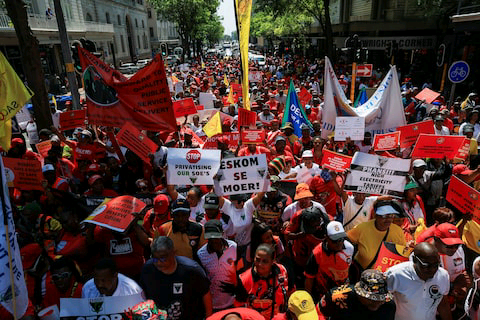
S/African labour unions warn workers to shun anti-migrant protests

Ahead of the June 30 planned nationwide protests by several anti-migrant activist groups in South Africa against African migrants, the country’s biggest labour platforms have warned workers to shun the marches.
The labour unions stated that it will not guarantee the job safety of workers who joined in the protest led by the March and March anti-immigrant group.

The position of the labour unions also comes on the heels by the statement issued by the country’s president, Mr Cyril Ramaphosa, during a youth day event in Johannesburg, Tuesday, where he expressed displeasure at the turn of events in the wake of anti-African migrant protests, noting that the development had been hijacked by people ‘with nefarious intentions.’
Ramaphosa then declared that there will be no June 30 shutdown of the country as planned by the marchers, warning further that the police will move to stop ‘these people with clear intention to destabilise the country.’
Meanwhile, the southern African country’s biggest labour platforms, including, the Congress of South African Trade Unions (COSATU), have stated that workers who skip work to join demonstrations may not receive union protection.
The labour unions urged workers not to participate in anti-immigrant protests that have seized the country, and said they could face consequences if they skip work to attend.
South Africa is on edge ahead of a June 30 deadline which anti-immigrant groups have given for all undocumented (and even the documented) foreigners to leave the country.
Protests and potential civil unrest are expected, after weeks of violent xenophobic attacks on foreign nationals of African descent.
Countries like Nigeria, Ghana and others have already commenced repatriation of their citizens from the country, even as protests have also erupted in Ghana as demonstrators called on government to shut down South African companies in Ghana, further urging Ghanaians to shun products and services by the affected foreign firms.
At least 10 foreign nationals have been killed by anti-migrant protesters belonging to the March and March group, including a 19 year-old man of Limpopo descent who was mistaken by the protesters for a foreign migrant in the KwaZulu Natal Provincez earlier this month.
The killing of the young man sparked tribal sentiments and threats of reprisal attacks across the regions as many in the Limpopo Province have also issued a June 30 deadline for all Zulus to exit the region.
President Ramaphosa hails from the Limpopo Province.
Meanwhile, four of the country’s major unions including COSATU, which represents around 2 million people, said in a joint statement that workers would not be protected if they do not go to work on June 30.
“We urge workers to report for duty and not place their employment at risk,” they said.
The unions echoed President Cyril Ramaphosa’s call on Tuesday not to scapegoat migrants for South Africa’s problems.
“Removing foreign nationals from workplaces, communities or public spaces will not reopen factories, repair municipalities, strengthen public healthcare or create sustainable jobs,” said the unions, namely; COSATU, FEDUSA, SAFTU and NACTU.
Africa’s largest economy has more job opportunities than many other African countries and has long attracted large numbers of foreign workers.
However, some politicians have seized on the issue in recent months to blame such migrants for widespread poverty and crime.
South African media outlets reported on Wednesday that clashes had erupted between police and thousands of Malawians awaiting repatriation in the coastal city of Durban, as police fired stun grenades and teargas after a crowd became agitated.
Malawi said earlier in the week that 10,000 of its nationals were in distress and hoping to return from South Africa. While the country has been organising buses to bring them home, it put out a public call for donations to assist with the effort.
“Government is resolute in its commitment to bring home every Malawian who wishes to return from South Africa,” the government said.
“However… the scale and urgency of the operation have created unprecedented financial, logistical, and humanitarian demands.”