Skip to content

Nigeria’s total public debt to hit N160.98tn, as fresh $1.25bn World Bank loan nears approval

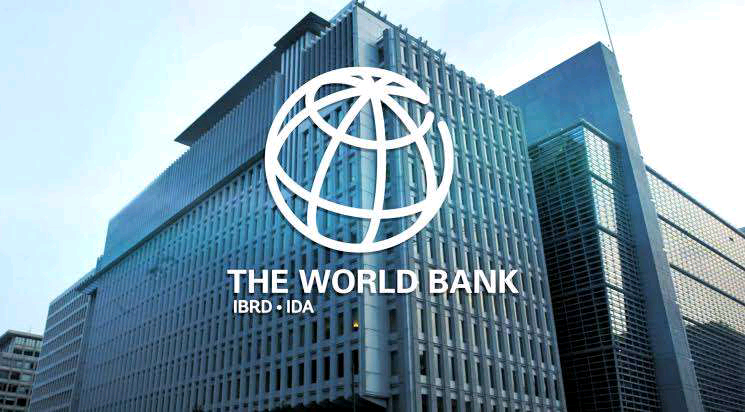
As a fresh World Bank loan by the federal government nears approval, the country’s total public debt profile is now projected to reach N160.98 trillion.
This figure is sharp rise from the N87.38 it stood, as at the assumption of office of President Bola Tinubu, in 2023.

According to data released by the Debt Management Office (DMO) the country’s total public debt stood at about N87.38 trillion when President Tinubu assumed office in June 2023.
With Nigeria set to secure another major loan from the World Bank as a proposed $1.25bn facility moves closer to final approval, the country’s debt becomes even more worrying, according to analysts who have questioned the timing of the loan, as it coincides with the 2027 electioneering campaigns.
The loan, tagged; Nigeria Actions for Investment and Jobs Acceleration, is expected to come before the World Bank’s Board of Executive Directors for approval on June 26, 2026.
The facility is intended to support the Federal Government’s economic reform agenda, with emphasis on investment promotion, job creation, digital expansion, electricity access and improved competitiveness in key sectors of the economy.
If approved, it will become the second-largest World Bank loan obtained under President Bola Tinubu, behind the $1.5bn reform support facility approved in June 2024.
At the prevailing exchange rate of N1,361.4 to the dollar, the proposed loan is valued at approximately N1.70tn, underscoring the scale of borrowing being pursued by the government to sustain ongoing reforms.
The World Bank document indicated that the project has progressed beyond the concept and appraisal stages and is currently at the decision meeting phase, where senior management reviews the final package before recommending it for board approval.
According to the lender, the programme is designed to strengthen access to finance, improve electricity and digital infrastructure, and deepen reforms in taxation, agriculture and trade to stimulate private sector growth.
According to the loan request document, the Federal Ministry of Finance will serve as the implementing agency for the programme.
Should the facility receive final approval and be fully disbursed, Nigeria’s external debt stock could rise from $51.86bn recorded at the end of 2025 to about $53.11bn. In naira terms, external debt would increase from N74.43tn to N76.13tn.
The country’s total public debt is also projected to rise from N159.28tn to roughly N160.98tn.
The latest borrowing request comes amid increasing scrutiny of Nigeria’s debt accumulation under the current administration. Since President Tinubu assumed office in 2023, the World Bank has approved approximately $9.35bn in loans and credits for Nigeria across sectors such as healthcare, power, agriculture, social investment, education and economic reforms.
Some of the major facilities include; the $2.25bn RESET and ARMOR reform financing approved in 2024, the $1.57bn HOPE and SPIN programmes approved later that year, and another $1.08bn approved in March 2025 for education and resilience projects.
Approval of the proposed facility would raise total World Bank commitments to Nigeria under Tinubu’s administration to around $10.6bn.
However, concerns have persisted over delays in the release of approved funds, with disbursements often tied to strict reform benchmarks and implementation milestones.
The Accountant-General of the Federation, Shamseldeen Ogunjimi, recently cautioned that Nigeria could reconsider future World Bank loan arrangements if prolonged delays in approval and disbursement continue.
Speaking during a meeting in Abuja with a delegation from the World Bank led by Treed Lane, Ogunjimi argued that lengthy approval timelines could affect project execution and weaken the impact of development programmes.
He stressed that Nigeria expected timely processing of loan requests, especially as the facilities were repayable loans rather than grants.
Responding to the concerns, the World Bank’s Senior External Affairs Officer, Mansir Nasir, explained that project funds were usually released in tranches based on agreed implementation conditions and the nature of the financing arrangement.
Meanwhile, figures from the Debt Management Office showed that Nigeria’s debt to the World Bank rose from $17.81bn in 2024 to $19.89bn in 2025, representing an increase of 11.7 per cent within one year.
The increase was driven largely by higher obligations to the International Development Association, while exposure to the International Bank for Reconstruction and Development also rose during the period.
World Bank obligations now account for more than 38 per cent of Nigeria’s total external debt stock.
The lender said the proposed facility aligns with its Country Partnership Framework for Nigeria and is expected to support growth through improved agricultural productivity, enhanced digital access, stronger financial inclusion, expanded electricity supply and increased domestic revenue mobilisation.