 Skip to content

Time for African to achieve technical capability is now __NCDMB
 Sopuruchi Onwuka Posted on
 The Executive Secretary of the Nigerian Content Development and Monitoring Board, Engr. Felix Ogbe, has called on African oil-producing nations to leverage the continent’s vast hydrocarbon resources to build indigenous technical capabilities for exploration, field development and production activities.
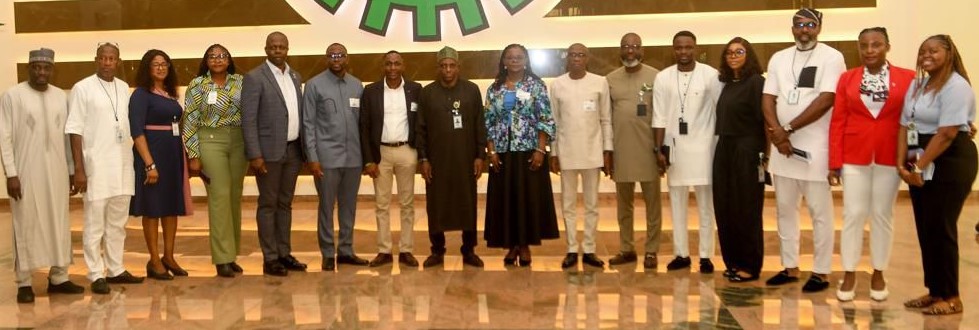
Ogbe made the declaration while receiving a delegation from the Ghana National Petroleum Corporation (GNPC), which is on a knowledge-sharing and local content benchmarking visit to the NCDMB headquarters in Yenagoa, Bayelsa State.

According to the NCDMB boss, Africa possesses more than 120 billion barrels of crude oil reserves and over 800 trillion standard cubic feet of natural gas, representing more than 10 per cent of global hydrocarbon resources. He stressed that the continent must seize the opportunity to develop the technical expertise required to maximize the value of those resources.
“The time for the African petroleum industry to achieve technical capability for resource optimization is now,” Ogbe said, emphasizing that oil-producing countries must reverse decades of dependence on foreign technology and expertise for critical industry operations.
The GNPC delegation, led by the corporation’s Director of Corporate Affairs, Mr. Eric Pwadura, is undertaking a week-long study tour of the NCDMB to gain deeper insight into Nigeria’s local content development framework, implementation strategies and institutional structures.
Welcoming the visitors, Ogbe noted that Africa’s hydrocarbon wealth should serve as a catalyst for economic transformation, particularly through investments in human capital development. He pointed out that the continent’s large youth population represents a significant labour force that can be equipped with the skills needed to drive the oil and gas industry.
Represented by the NCDMB Director of Corporate Services, Dr. Abdulmalik Halilu, Ogbe recounted Nigeria’s local content journey, which began with a Local Content Division in the defunct Nigerian National Petroleum Corporation (NNPC) and evolved into a dedicated regulatory institution through the establishment of the NCDMB.
“We have evolved from a policy to an institution,” he said, noting that the Board is now the sole agency responsible for driving and regulating local content development in Nigeria’s oil and gas sector.
He highlighted the Board’s Nigerian Content 10-Year Strategic Roadmap, which is anchored on five strategic pillars: Technical Capability Development, Compliance and Enforcement, Enabling Business Environment, Organisational Capability, and Sectoral and Regional Markets. The roadmap is further supported by key enablers including funding, regulatory support, collaboration, stakeholder engagement, and research and development.
Ogbe also outlined several initiatives aimed at strengthening indigenous capacity, particularly the Nigerian Content Intervention Fund (NCI Fund), which is administered through development finance institutions such as the Bank of Industry and the Nigerian Export-Import Bank. The fund provides single-digit interest loans to indigenous service companies, enabling them to acquire critical industry assets and improve competitiveness.
“What we have done is to create that access to make the local service companies competitive,” he explained, noting that the intervention has helped Nigerian firms invest in assets such as marine vessels and other strategic infrastructure supporting oil and gas operations.
The Executive Secretary stressed that building capacity alone is insufficient unless such capabilities are actively utilized. To address this, he said the Board promotes a First Consideration policy that gives preference to indigenous companies with proven technical and operational capabilities.
He also cautioned against the misconception that local content development lowers operational standards.
“Local content does not compromise standards. It does not mean you have African spec or European spec. It is one global spec,” he stated.
Providing further insight into Nigeria’s local content journey, Dr. Zuwairat Asekome, Assistant Manager, Strategy and Transformational Projects at NCDMB, presented the milestones achieved since the enactment of the Nigerian Oil and Gas Industry Content Development Act in 2010.
She explained that through sustained implementation of local content policies and compliance monitoring, Nigeria has increased in-country value addition in the oil and gas industry to 61 per cent, representing significant progress toward greater indigenous participation.
Responding on behalf of the Ghanaian delegation, Pwadura expressed appreciation for the opportunity to learn from Nigeria’s experience, acknowledging that Ghana’s local content framework remains at a comparatively early stage of development.
“Even though we have legislation guiding local content, we have not had the benefit of having a robust local content environment like you have,” he said.
According to him, GNPC currently operates a local content unit and is seeking a deeper understanding of how Nigeria developed a comprehensive institutional framework for local content administration and enforcement.
Also speaking, NCDMB’s Director of Monitoring and Evaluation, Esueme Dan Kikile, underscored the growing interest among African oil-producing nations in local content development and regional collaboration.
“It’s important that we work together. We are happy to continue to share our experience in oil and gas and our experience in local content,” he said.
Earlier, the General Manager of Corporate Communications at NCDMB, Dr. Obinna Ezeobi, highlighted the long-standing cooperation between Nigeria and Ghana in the energy sector. He noted that the Board has mentored several African institutions on local content development and currently maintains partnerships with regulatory agencies across the continent.
According to him, NCDMB has signed memoranda of understanding with the Petroleum Commission of Ghana, Senegal’s National Content Monitoring Committee, and related agencies in Mozambique, Angola and Namibia as part of efforts to promote indigenous participation and capacity development across Africa’s petroleum industry.
The visit underscores growing regional efforts to strengthen local content frameworks and ensure that Africa’s vast oil and gas resources translate into sustainable industrial development, job creation and long-term economic growth driven by indigenous expertise.



