Skip to content
Nigeria to launch 100-channel free TV service, as DSO kicks off

Nigeria is set to launch FreeTV on June 17, 2026, a national digital television platform aimed at expanding access to television services across Nigeria without monthly subscription costs.
According to a post on its X handle by the Presidency, the initiative forms part of Nigeria’s ongoing Digital Switch-Over (DSO) programme designed to move the country completely from analogue to digital broadcasting.
“Nigeria to Launch FreeTV on June 17, Bringing Free Digital Television to Homes Nationwide.@nbcgovng pic.twitter.com/QXzv45bOes— Presidency Nigeria (@NGRPresident) June 17, 2026,” read the post on X.
The platform is expected to provide Nigerians with access to more than 100 national, regional and state television channels, covering news, sports, movies, music, educational programmes, children’s content and dedicated local language channels.
The service will be available through satellite transmission, terrestrial broadcasting and a mobile application, allowing users in urban and rural communities to access digital television services.
The government stated that Nigerians would not necessarily need to purchase new television sets to use the service. Existing televisions can work with compatible DVB-T2 or DVB-S2 decoders, while some households with free-to-air decoders may already be able to access the platform.
According to the statement, the initiative aligns with efforts to promote digital inclusion, create jobs and strengthen Nigeria’s creative economy.
Speaking ahead of the launch, the Director-General of the National Broadcasting Commission (NBC), Charles Ebuebu, said the platform was designed to ensure that every Nigerian benefits from the digital economy regardless of location or income level.
“With FreeTV, families across Nigeria can enjoy quality digital television without a monthly subscription, while local content producers, technicians and young creatives gain new platforms and new jobs,” he said.
Government also disclosed that regional production studios in Lagos, Abuja, Port Harcourt, Enugu, Kano and Benin would support content creation and generate employment opportunities for producers, editors, camera operators, sound engineers and other creative professionals.
The final analogue switch-off remains scheduled for December 31, 2028, as authorities continue efforts to complete Nigeria’s transition to digital broadcasting.
Citizens have been encouraged to check their decoder compatibility and download the FreeTV mobile application ahead of the official rollout.
The launch of FreeTV is expected to widen access to information and entertainment while reducing the cost burden of television services for millions of households across the country.
Broadcasters back hybrid digital model for Nigeria’s DSO programme
It would be recalled that industry stakeholders, Tuesday, expressed backing for the adoption of a hybrid digital broadcasting model that combines Digital Terrestrial Television (DTT), Direct-to-Home (DTH) satellite services, and digital application-based platforms for the soon-to-be launched Digital Switch Over (DSO) programme by Nigeria.
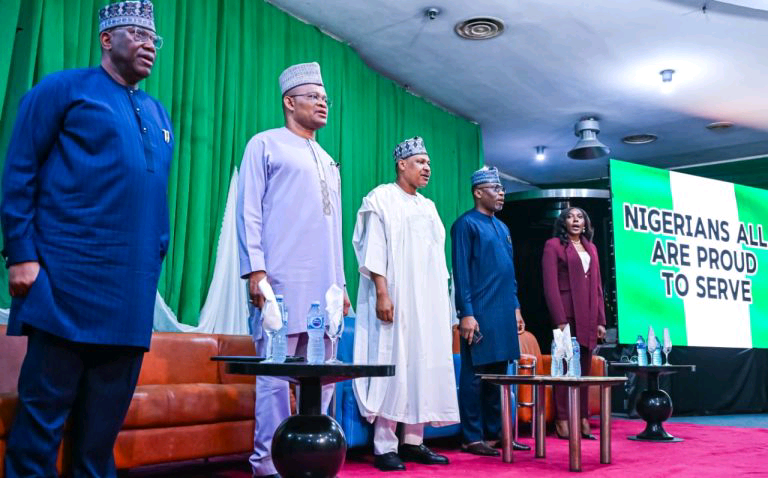
This was part of resolutions arrived at during a high-level stakeholder meeting convened by the National Broadcasting Commission (NBC), under the supervision of the Federal Ministry of Information and National Orientation, which held at the NICON Luxury Hotel, Abuja, Tuesday.
The meeting, chaired by the Honourable Minister of Information and National Orientation, Alhaji Mohammed Idris, brought together regulators, broadcasters, signal distributors, set-top box manufacturers, content producers, satellite operators, and industry associations to chart a sustainable path for Nigeria’s long-delayed digital migration project.
Addressing stakeholders during the closed-door engagement session, the Minister described the meeting as a collaborative effort aimed at finding practical solutions to challenges facing the DSO project.
“This engagement is a family discussion aimed at finding practical solutions to ensure the success of the Digital Switch Over project. Government has no hidden agenda, and all decisions will be guided by national interest, stakeholder inclusion, and the long-term sustainability of the broadcasting industry,” he said.
Idris acknowledged concerns raised by industry players regarding stakeholder consultation and participation in previous phases of the project, noting that while broader engagement should ideally have commenced earlier, there remained an opportunity to build consensus and move forward together.
“While there may be differing views on implementation approaches, there is broad agreement that Nigeria must complete its digital migration journey. We must work collectively to achieve this national objective,” he stated.
Also speaking, Director-General of the National Broadcasting Commission (NBC), Mr Charles Ebuebu, described the stakeholder meeting as ‘iconic,’ noting that it marked a turning point in Nigeria’s efforts to complete the digital migration.
He said the country had spent over a decade on the DSO journey, missing several deadlines, but expressed optimism that a clear implementation plan was now being developed.
Ebuebu said the commission, in collaboration with stakeholders, is working toward a sustainable model that ensures return on investment for industry players while delivering value to the nation.
He said that the outcome of the consultation process would produce a unified framework for implementation and communication going forward.
The meeting attracted 128 participants, including; Director-General of the Nigerian Television Authority (NTA), Abdulhamid Dambos; Director-General of the Advertising Regulatory Council of Nigeria (ARCON), Dr Olalekan Fadolapo; Chairman of the Broadcasting Organisations of Nigeria (BON), Chief Tony Akiotu; Managing Director of NIGCOMSAT Ltd, Mrs Jane Nkechi Egerton-Idehen; and representatives of licensed broadcasters and other industry stakeholders.
During deliberations, stakeholders agreed that the DSO project remains both necessary and desirable for Nigeria, emphasising that the transition should prioritise national interest, industry sustainability, local content development, local manufacturing, and job creation.
Among the key resolutions reached was the affirmation that Digital Terrestrial Television (DTT) remains a critical component of the DSO framework and should not be discontinued.
Participants also agreed on the need to reconstitute the DigiTeam implementation platform to provide a structured mechanism for consultation, collaboration, and industry participation.
Stakeholders further called for stronger engagement between regulators and industry players, with an agreement that stakeholder meetings would be held at least quarterly to ensure continuous alignment on implementation strategies.