Skip to content

Nigeria Leads Sub-Saharan Africa’s LNG Boom

Sopuruchi Onwuka
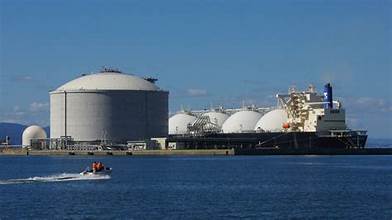
Sub-Saharan Africa’s liquefied natural gas (LNG) supply is set for rapid expansion over the next decade, with total output forecast to rise by 172% from 35.7 billion cubic metres (bcm) in 2024 to about 98 bcm by 2034, according to industry reports reviewed by Oracle Intelligence on Monday.
Estimated total investment profile in the dramatic natural gas liquefaction capacity development is projected to be in excess of $100 billion.
By volume, projected LNG output from the region would be roughly ten times the current liquefaction capacity of Nigeria LNG Limited (NLNG), which remains Africa’s leading LNG exporter.
Energy analysts have long argued that natural gas will be the only fossil fuel to grow its share of the global energy mix in the coming years. Its lower emissions profile compared with coal and oil, combined with flexibility for grid stability, has strengthened its role as a “bridge fuel,” particularly as Asian demand rises and renewables expand.
Nigeria, Angola, and Equatorial Guinea anchor Sub-Saharan Africa’s emerging LNG corridor, which is expected to power the continent’s next phase of energy-led growth. However, the most dramatic supply increase is projected to come from Mozambique, which could become the region’s largest LNG exporter by 2031.
Other emerging producers, including Mauritania, Senegal, Congo-Brazzaville, and Gabon, are broadening Africa’s exporter base and raising the continent’s profile in an increasingly competitive global LNG market shaped by energy transition dynamics.
Nigeria remains the capacity leader, supported by reforms and major final investment decisions (FIDs) that have unlocked more than $8 billion in new gas project approvals. At the same time, Mozambique is restarting stalled mega-projects, while Tanzania is moving closer to a long-awaited FID that could reshape its economy. These developments are also shifting Africa’s traditional gas map, pushing long-established hubs such as Egypt, Algeria, and Libya into a less dominant position.
Oracle Intelligence notes that natural gas is poised to play a transformative role in Africa’s future, offering pathways for export revenues and domestic industrialization. Sub-Saharan Africa holds more than 70% of the continent’s recoverable gas resources, placing it at the centre of expected output growth.
Nigeria’s Decade of Gas programme, Senegal and Mauritania’s cross-border LNG hub, Mozambique’s floating LNG (FLNG) buildout, and Tanzania’s LNG framework dominate the continent’s new wave of gas projects. Overall, LNG exports from Sub-Saharan Africa are forecast to surge by nearly 175% by 2034.
Launched in 2021, Nigeria’s Decade of Gas initiative aims to leverage the country’s vast reserves—estimated at over 200 trillion cubic feet—to drive industrialization, reduce energy poverty, and expand exports by 2030. Central to the programme was the passage of the Petroleum Industry Act (PIA) 2021, which modernised the sector and improved regulatory clarity.
The reforms appear to be gaining traction. The Nigerian government recently announced that over $8 billion in gas-related FIDs have been reached in the past 18 months. Key infrastructure projects include the 614-kilometre Ajaokuta–Kaduna–Kano (AKK) gas pipeline, NLNG’s Train 7 expansion, and the recently commissioned OML 53 Kwale Gas Gathering Facility. Domestic demand has also grown, driven by policies promoting liquefied petroleum gas (LPG) and compressed natural gas (CNG) for transport and industry.
In West Africa, Senegal and Mauritania are jointly developing the Greater Tortue Ahmeyim (GTA) offshore gas field, operated by BP and partners Kosmos Energy, PETROSEN, and SMH. With estimated recoverable reserves of over 15 trillion cubic feet, GTA delivered first gas in January 2025 and its first LNG cargo in April 2025, making both countries new LNG exporters. Phase 1 is expected to produce about 2.3 million tonnes per annum (mtpa), while a Phase 2 expansion of up to 3.0 mtpa awaits FID, with construction tentatively planned for 2028.
Mozambique is emerging as one of Africa’s most significant gas frontiers, with estimated recoverable reserves exceeding 150 trillion cubic feet. TotalEnergies is preparing to resume work on its $20 billion LNG project, Africa’s largest private investment, after suspending operations four years ago due to security concerns. The project has a planned capacity of 13.1 mtpa and includes significant participation from Indian state-owned companies.
Alongside this, Eni and ExxonMobil are leading the Rovuma LNG project, targeting 18 mtpa from onshore facilities supplied by offshore gas fields. Mozambique is also home to the Coral South FLNG project, Africa’s first floating LNG development, which is already producing 3.4 mtpa for global markets.
In East Africa, Shell and Equinor continue to pursue a $42 billion LNG project in Tanzania, potentially the country’s largest-ever foreign investment. The Likong’o–Mchinga LNG project, anchored in offshore reserves estimated at 57 trillion cubic feet, aims to produce up to 10 mtpa, with first gas potentially by 2029. While disputes over fiscal terms delayed progress for years, a final investment decision is now expected in 2026.
Together, these projects underscore Sub-Saharan Africa’s growing role in the global LNG market, with Nigeria still setting the pace and new exporters rapidly reshaping the continent’s energy landscape.