Skip to content

ExxonMobil’s gas project portends over 4% rise in Mozambique’s economy __ Standard Bank

Ziggy Ojiegbe
Mozambique’s ambition to become one of the world’s leading liquefied natural gas (LNG) exporters appears to be moving closer to reality, with Standard Bank projecting that the ExxonMobil-led Rovuma LNG project could add more than four percentage points to the country’s annual economic growth while fundamentally reshaping its long-term development trajectory.

The significance of the project extends far beyond its $30 billion price tag. For a country whose gross domestic product is currently estimated at about $25 billion, the development represents one of the largest investments ever undertaken on the African continent and has the potential to transform Mozambique from a relatively small economy into a major energy player with growing influence in global gas markets.
According to Standard Bank, Africa’s largest lender by assets, the ExxonMobil-led Area 4 development could contribute an average of $11 billion annually to Mozambique’s GDP between 2030 and 2056, improve the country’s balance of payments by about $9 billion each year and generate roughly $4 billion in annual fiscal revenues. Over a projected 30-year lifespan, the project is expected to yield as much as $150 billion in tax revenues for the Mozambican government, creating a financial windfall capable of altering the country’s economic fortunes for generations.
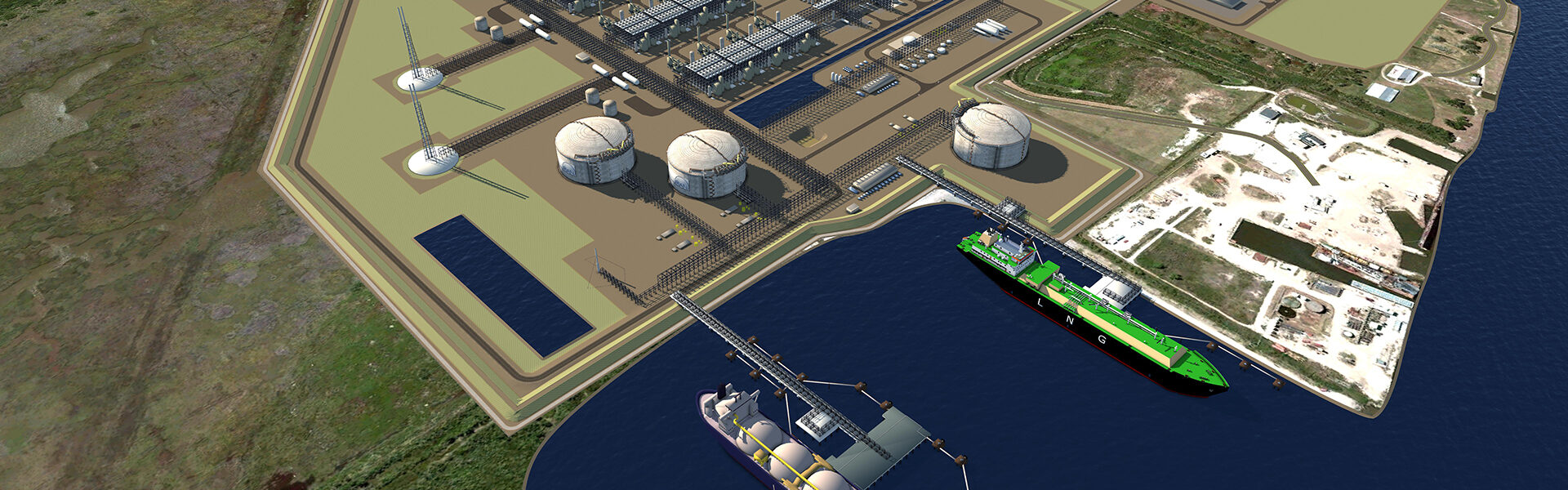
The scale of the expected impact helps explain why Standard Bank has described Rovuma LNG as the largest project in Africa’s history. Led by ExxonMobil and involving partners from Europe, Asia, the Middle East and Mozambique itself, the development is expected to produce about 18 million tonnes of LNG annually once fully operational. If all approvals are secured and construction proceeds according to schedule, production could commence by the end of 2030.
What makes the project particularly consequential is that it forms part of a broader LNG expansion strategy that could position Mozambique among the world’s most important gas-exporting nations. Together with the separate $20 billion Mozambique LNG project led by TotalEnergies, Rovuma LNG is expected to significantly increase the country’s production capacity at a time when global buyers are seeking greater supply diversification amid mounting geopolitical uncertainties.
The timing may prove especially advantageous. Heightened tensions in the Middle East and recurring concerns over disruptions around the Strait of Hormuz have renewed interest in alternative LNG suppliers outside the Gulf region. While countries such as Qatar and the United Arab Emirates continue to expand production, global energy consumers are increasingly looking to diversify supply sources to reduce exposure to geopolitical risks.
In that context, Mozambique’s vast offshore gas reserves, the eleventh largest in the world, offer a compelling proposition. Standard Bank estimates that the country’s LNG production capacity could rise from about 20 million tonnes currently in operation or under development to 38 million tonnes by 2030 once Rovuma LNG comes on stream. If additional LNG trains are subsequently approved, production could climb to between 75 million and 80 million tonnes annually by the mid-2030s, placing Mozambique among the world’s leading LNG exporters.
The implications for Southern and Eastern Africa could be equally significant. Beyond export earnings, increased gas production would create opportunities for regional energy integration, potentially supplying neighboring countries such as South Africa with natural gas and LNG for industrial use and power generation. At a time when many African economies are grappling with energy shortages and rising electricity demand, Mozambique’s emergence as a major gas supplier could strengthen regional energy security and support industrial development.
The economic benefits are expected to extend beyond headline growth figures. Standard Bank projects that the project will create approximately 151,000 employment opportunities, while also providing the foundation for substantial sovereign wealth accumulation. Under existing fiscal frameworks, revenues from the LNG sector could help expand Mozambique’s sovereign wealth fund to around $81 billion by the mid-2050s, creating a potentially powerful vehicle for long-term national development.
Yet despite the optimism, significant challenges remain. The project’s timeline remains closely tied to security conditions in northern Mozambique, where an Islamist insurgency disrupted earlier LNG developments and forced the suspension of major construction activities. Although security conditions have improved in recent years, supported by regional military deployments and enhanced security measures, investors remain mindful of the risks associated with large-scale infrastructure projects in the region.
Execution risk also cannot be overlooked. Simultaneous construction of multiple LNG projects in the same geographical area could place pressure on logistics networks, labour availability and project management capacity. Managing these complexities will be essential if Mozambique is to realise its ambition of becoming a global LNG powerhouse.
The immediate focus now is on the project’s final investment decision (FID), expected toward the end of this year. That milestone will mark the formal commitment by project partners to proceed with construction and unlock the massive capital investment required to bring the development to fruition. Before then, authorities must complete the necessary approvals for the project’s development plan, covering everything from drilling operations to infrastructure deployment.
Industry observers view the prospects for approval as favourable. Mozambique has already demonstrated its willingness to support large-scale LNG developments through previous approvals for Coral South, Coral North and Mozambique LNG. Although Rovuma LNG’s original development plan received approval in 2019, progress was interrupted by the combined effects of security challenges and the Covid-19 pandemic.
Should the final investment decision proceed as anticipated, Rovuma LNG would represent far more than another energy project. It would signal Mozambique’s arrival as a major force in global gas markets, strengthen Africa’s role in international energy supply chains and provide a powerful example of how natural resources, if effectively managed, can serve as a catalyst for broad-based economic transformation.
For a country seeking to convert vast underground wealth into sustainable development, the success of Rovuma LNG may ultimately determine whether Mozambique emerges as one of Africa’s most significant energy success stories in the decades ahead.