 Skip to content


Ojulari finally finds operating partners for Nigeria’s refineries

- Plans integrated refining and petrochemical hubs
Ziggy Ojiegbe
The Nigerian National Petroleum Company (NNPC) Limited has moved to clarify its strategy for reviving the country’s long-idle refining assets, announcing new arrangements aimed at rehabilitating and restarting key plants after months of uncertainty over earlier revamp plans.

The company said it is now pursuing a Technical Equity Partnership (TEP) model with Chinese firms, including Sanjiang Chemical Company Limited and Xingcheng (Fuzhou) Industrial Park Operation and Management Company Limited, to restore operations at two of its major refining hubs.
The approach marks a shift from previous strategies, with NNPC opting to bring in external technical partners who would take on operational roles to ensure efficiency, reliability and sustained output.
Under the plan, priority will be given to the Port Harcourt Refining Company and the Warri Refinery and Petrochemical Company. Together, the facilities have a combined installed capacity of 335,000 barrels of crude oil per day and are considered central to Nigeria’s efforts to reduce dependence on imported refined petroleum products.
The new partnership is expected to cover the completion of outstanding rehabilitation work, upgrades to improve performance and efficiency, and potential expansion to meet modern refining standards.
NNPC disclosed that a Memorandum of Understanding (MOU) formalizing the proposed alliance was signed in Jiaxing City, China, at the end of April. The agreement was executed by the company’s Group Chief Executive Officer, Bashir Bayo Ojulari, alongside Chairman of Sanjiang Chemical Company, Guan Jianzhong, and Chairman of Xingcheng, Bill Bi.
The MOU followed more than six months of technical and commercial discussions between both sides, the NNPC stated.
According to NNPC’s spokesperson, Andy Odeh, the MoU establishes a framework for not only completing the rehabilitation of the refineries but also ensuring their efficient operation and maintenance under a performance-driven model.
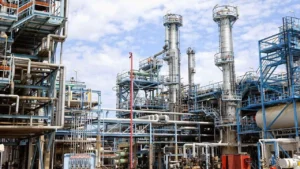 A section of the PHRC under rehabilitation
He said the goal is to deliver sustainable output while positioning the plants to produce cleaner, more commercially viable petroleum products in line with current global standards.
The agreement also extends beyond conventional fuel production, incorporating plans to develop petrochemical capacity and explore broader opportunities in the downstream sector. This includes leveraging progress on the Ajaokuta–Kaduna–Kano gas pipeline, which is advancing under the current NNPC management and is expected to provide feedstock for industrial and petrochemical activities.
While the Port Harcourt and Warri refineries are slated for full rehabilitation and restart, a different pathway is being considered for the Kaduna Refinery and Petrochemical Company.
Previous assessments have raised concerns about the long-term feasibility of supplying crude oil to the Kaduna plant through existing pipeline infrastructure, prompting consideration of an alternative use. Industry sources indicate that NNPC is evaluating plans to retrofit the facility into a petrochemical complex that would rely on gas-based feedstock, potentially supplied through the AKK pipeline, which has reached an advanced stage of development.
NNPC officials also highlighted the possibility of establishing integrated, gas-powered industrial hubs in proximity to the refineries, a move aimed at creating additional value chains and supporting broader economic activity beyond fuel production.
Ojulari described the agreement with the Chinese partners as a significant breakthrough, emphasizing that it brings together the technical expertise and financial capacity required to revive Nigeria’s refining sector and ensure long-term profitability.
He explained that the partnership reflects strong mutual interest among all parties and represents a critical step toward restoring domestic refining capacity while unlocking opportunities in petrochemicals and gas-based industries.
He added that while the MoU sets the foundation for collaboration, discussions would continue in good faith toward final, binding agreements, which will be subject to the necessary regulatory approvals.
The outcome, he said, is expected to reposition Nigeria’s refining infrastructure on a more sustainable and commercially viable footing.



