Skip to content

Iran war: UN appoints envoy to push for peace

Ziggy Ojiegbe
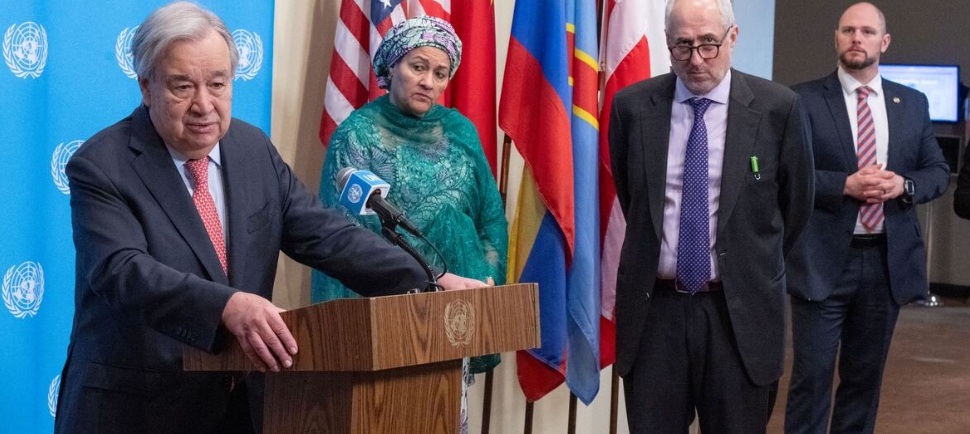
UN Secretary-General António Guterres has warned that the escalating Gulf conflict is “out of control,” urging all parties to step back and allow diplomacy to prevail as he announced the appointment of a senior envoy to lead peace efforts.

Speaking outside the UN Security Council in New York on Wednesday, Guterres described the conflict as having “spiralled far beyond what leaders had anticipated.” He warned that the world faces “a wider war, a rising tide of human suffering, and a deeper global economic shock,” adding bluntly, “This has gone too far.”
The Secretary-General confirmed that veteran diplomat Jean Arnault has been appointed as his Personal Envoy to spearhead UN mediation. Arnault will work directly on the ground, engaging all parties, assessing the conflict’s far-reaching impacts, and supporting efforts to broker peace in a region shaken by violence and economic disruption.
Guterres issued pointed messages to key actors: he urged the United States and Israel that “it is high time to end the war,” while calling on Iran to “stop attacking their neighbours that are not parties to the conflict.” He emphasized that freedom of navigation, particularly through the strategic Strait of Hormuz, must be respected, warning that prolonged disruption threatens vital supplies of oil, gas, and fertilizer.
Highlighting the human cost, Guterres said civilians across the region are “enduring serious harm and living under profound insecurity.” Focusing on Lebanon, he insisted the conflict must cease, calling on Hezbollah to halt attacks on Israel and urging Israel to stop strikes that are disproportionately affecting civilians.
The Secretary-General also cautioned against the broader global fallout. He noted that markets are “in turmoil” and humanitarian operations constrained, with developing countries particularly hard hit by rising energy prices, inflation, and debt burdens. He warned that disruptions to fertilizer supplies could imperil global food security: “Without fertilizers today, we might have hunger tomorrow,” he said.
Despite the ongoing escalation, Guterres stressed that a path forward remains. “Diplomacy must prevail,” he said. “War is not the answer… We need a way out of this disaster. Diplomacy is the way out. Full respect of international law is the way out. Peace is the way out.”