Skip to content

Engineer’s study challenges skeptics on Jesus’ resurrection
 Sopuruchi Onwuka Posted on
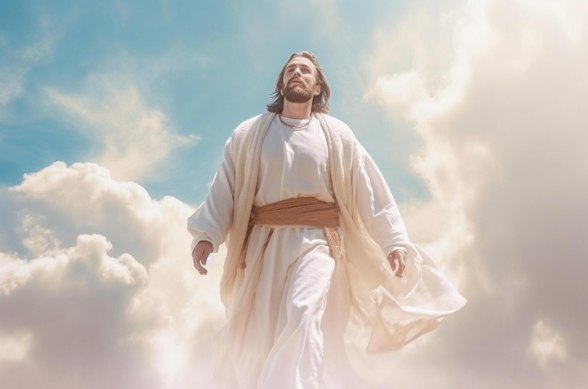
 A new study examining one of Christianity’s central claims is stirring fresh debate over whether history and reason can meaningfully address what has long been considered a matter of faith. The research, authored by Pearl Bipin, revisits the question of whether the resurrection of Jesus Christ can be supported through historical analysis, forensic reasoning and probability-based evaluation.
For centuries, the idea that Jesus rose from the dead three days after crucifixion has stood at the core of Christian belief, while also remaining one of the most contested claims in religious history. Scholars and skeptics have traditionally approached the subject from opposing angles, weighing biblical accounts against alternative explanations such as hallucinations, conspiracy or the possibility that Jesus never truly died.

Bipin’s study enters this long-running debate by testing those competing theories against what he describes as a structured body of historical and analytical evidence. At the center of his approach are four recurring points often cited in discussions of the resurrection: the empty tomb, reported appearances of Jesus after his death, the sudden transformation of his followers and the conversion of individuals who had previously been skeptics.
To build what he calls a “secular foundation,” the study turns first to sources outside the Bible. Among them is the Roman historian Tacitus, who wrote in the early second century that a figure known as Christus was executed under the authority of Pontius Pilate during the reign of Emperor Tiberius. The account is widely regarded by historians as independent confirmation that Jesus existed and was put to death by Roman authorities.
The research also draws on the writings of Flavius Josephus, who referenced Jesus in connection with the execution of James, described as his brother. Together, these accounts are presented as part of a broader historical framework suggesting that Jesus lived, was crucified and became the focal point of a movement that persisted after his death.
From there, the study shifts to one of the oldest alternative explanations: the so-called “Swoon Theory,” which suggests Jesus survived crucifixion and later revived. To address this, Bipin turns to forensic and medical analysis of Roman execution practices. Crucifixion, he argues, was designed to ensure death through a combination of severe trauma, blood loss and eventual suffocation. Victims, often scourged beforehand, were left struggling to breathe as exhaustion set in, a process that typically ended in cardiac failure.
One detail cited in the study comes from the Gospel of John, which describes a Roman soldier piercing Jesus’ side, resulting in what was recorded as the flow of “blood and water.” Bipin interprets this as consistent with fluid buildup around the heart and lungs, a condition associated with traumatic injury and death. In his view, such evidence makes survival highly unlikely and challenges the idea that Jesus merely lost consciousness.
The analysis then turns to the behavior of Jesus’ followers in the aftermath of his death. According to the study, the transformation of early disciples—from fearful individuals into outspoken advocates willing to face persecution—requires explanation. Bipin argues that such a shift is difficult to reconcile with the belief that the resurrection story was fabricated or based on misunderstanding.
He also highlights the conversion of former skeptics. James, identified in historical accounts as Jesus’ brother, is described in early Christian tradition and by Josephus as a leader in the Jerusalem church who later died as a martyr. Similarly, Paul the Apostle, once a persecutor of Christians, is said to have undergone a dramatic change after claiming to encounter the risen Jesus. For Bipin, these transformations carry historical weight because they involve individuals who had little to gain and much to lose.
Psychological explanations, particularly the idea that followers experienced hallucinations driven by grief, are also examined. Bipin argues that such experiences are typically individual rather than collective and may not fully account for reports of appearances to multiple people at once. While not dismissing psychological factors entirely, the study suggests they fall short of explaining the full range of reported events.
A key element of the research is its use of Bayesian reasoning, a statistical method that evaluates the probability of competing explanations based on available evidence. By combining historical records, reported experiences and the rapid spread of early Christianity, the study concludes that the resurrection hypothesis offers what it describes as the most coherent explanation among the options considered.
Bipin is careful to note that this does not amount to definitive proof of a miracle. Instead, he frames the resurrection as a serious historical possibility that aligns, in his view, with both philosophical arguments about consciousness and broader theistic frameworks.
The study also draws on legal-style standards often used to assess historical documents, including consistency of accounts, preservation over time and the absence of clear motives for fabrication. Under these criteria, Bipin argues that the Gospel narratives meet several benchmarks of credibility, though he acknowledges that this remains a point of contention among scholars.
Critics have been quick to caution against overreach. Many note that the conclusions rely heavily on interpretations of ancient texts rather than physical evidence, and that historical methods may not be equipped to verify supernatural events. Others argue that the same data can support multiple explanations, depending on the assumptions brought to the analysis.
Even so, the study has reignited discussion about whether the tools of history, science and philosophy can shed new light on questions traditionally reserved for faith. By placing the resurrection within a framework that invites analytical scrutiny, it challenges both skeptics and believers to reconsider how such claims are evaluated.
What remains unresolved is not just the question of what happened in the days following the crucifixion, but whether events of that nature can ever be fully understood through the methods available today. For now, the debate continues, shaped as much by interpretation as by evidence, and grounded in a question that has endured for centuries.