Skip to content

US tempers diplomacy with military pressure as Iran war enters critical phase

Frank Okon
The United States is simultaneously pursuing diplomatic efforts and preparing for potential military escalation in its ongoing conflict with Iran, reflecting a dual-track strategy aimed at ending the war through negotiation or force.

Officials in Washington continue to signal openness to talks, even as military assets and contingency plans expand across the Middle East. Recent mediation efforts, including backchannel proposals delivered via Pakistan, indicate that a negotiated settlement remains on the table, though Tehran has criticized earlier US terms as “one-sided.”
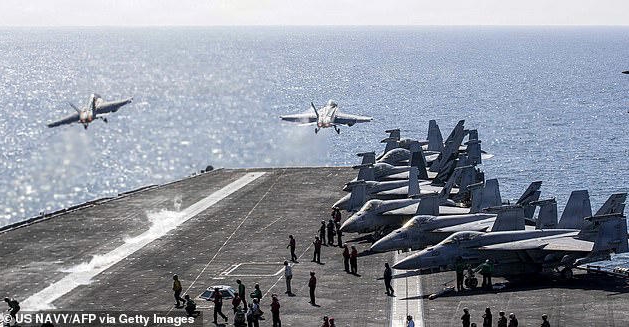
At the same time, the Pentagon has intensified preparations for possible ground operations. A deployment of roughly 3,500 troops aboard the USS Tripoli has reinforced US presence in the region, with additional forces under consideration.
According to US officials, the military planning under review focuses on limited-duration operations such as raids by special forces and conventional troops, rather than a full-scale invasion. These plans remain contingent on approval by Donald Trump, who has publicly stated he prefers to avoid deploying ground troops even as options are being developed.
The approach highlights what analysts describe as a strategy of “coercive diplomacy,” combining negotiations with credible military pressure. Lawmakers in Washington have expressed concern that the buildup could lead to a deeper conflict if not carefully managed, while also acknowledging the administration’s effort to retain flexibility between de-escalation and escalation paths.
On the battlefield, the conflict, now more than a month old, has already involved extensive US and Israeli airstrikes targeting Iran’s missile infrastructure, significantly reducing its launch capabilities, though not eliminating them.
Iran, for its part, has responded with regional attacks and strong warnings against any US ground incursion, framing Washington’s diplomatic outreach as a cover for potential invasion.
The result is a volatile standoff in which both sides are signaling readiness for very different outcomes: a negotiated end to hostilities, or a sharper phase of conflict involving direct ground engagement.
With global markets unsettled and regional actors pushing for mediation, the trajectory of the conflict may ultimately depend on whether diplomacy gains traction before military plans move from preparation to war.