 Skip to content

Energy and security risks rise as Gulf states signal possible counterstrikes

Frank Okon
Fears of a wider conflict in the Middle East are growing after seven regional countries signaled that they may respond militarily to recent attacks attributed to Iran.

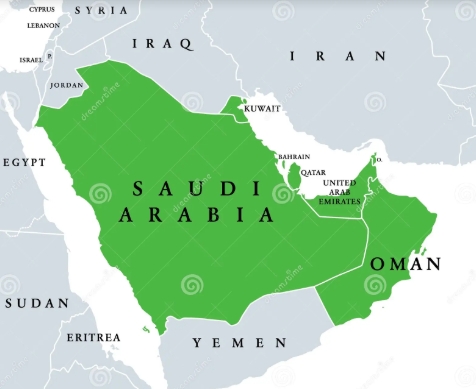
In a joint statement issued on June 25, six members of the Gulf Cooperation Council comprising Saudi Arabia, United Arab Emirates, Qatar, Kuwait, Oman and Bahrain alongside Jordan, warned that they reserve the right to defend themselves following a series of missile and drone strikes.
The group said international law permits states to respond individually or collectively when attacked, citing Article 51 of the UN Charter. “We have the right to take all necessary measures to safeguard our sovereignty, security, and stability,” the statement read.
The warning follows a wave of reported Iranian retaliatory strikes across the region, some of which targeted areas linked to U.S. and Israeli interests. Gulf states described the attacks as “war crimes,” accusing Iran of either carrying them out directly or supporting them through allied armed groups.
Satellite imagery released by the European Space Agency showed damage near Kuwait International Airport, where a drone strike reportedly hit a fuel storage facility, sending thick smoke into the air. The incident is one of several that have heightened concerns over the vulnerability of critical infrastructure, particularly energy facilities.
The crisis has also intensified divisions within the international community. During an emergency session of the United Nations Human Rights Council, convened at the request of Bahrain and Jordan, the seven countries condemned Iran’s actions as violations of sovereignty and international law.
Officials from the region delivered strong statements. The UAE’s ambassador to the UN accused Iran of seeking to destabilize the international order, while Bahrain said it had endured nearly a month of sustained attacks. Jordan called for an immediate halt to hostilities.
The United Nations Security Council has also been drawn into the الأزمة. At the request of Gulf states, it adopted a resolution expressing concern over Iran’s reported blockade of the Strait of Hormuz and its impact on global energy supplies — a move that underscores the potential economic consequences of the conflict.
UN Secretary-General António Guterres warned that the situation is rapidly deteriorating. Speaking in New York, he said the Middle East conflict is “spiraling out of control,” with rising humanitarian suffering and increasing risks to the global economy.
He urged restraint from all sides, calling on the United States and Israel to de-escalate the broader conflict, while also pressing Iran to halt attacks on neighboring countries not directly involved in the war.
With tensions rising across multiple fronts, analysts warn that any direct military response from Gulf states could mark a significant escalation, potentially drawing more regional and global powers into an already volatile situation.



