Skip to content

- Homepage
- Conflicts and Wars
- US strikes Iran as nuclear talks stall
US strikes Iran as nuclear talks stall
 Sopuruchi Onwuka Posted on
 Sopuruchi Onwuka
The United States has launched a large-scale military operation against Iran after weeks of stalled diplomatic talks over Tehran’s nuclear program. President Donald Trump described the attack as a “last option” to prevent Iran from obtaining nuclear weapons.

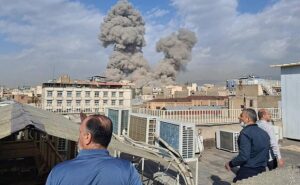
In a televised address and a video posted to Truth Social, Trump announced that the US had begun what he called “major combat operations” inside Iran. Explosions were reported in at least five cities, including areas near Tehran.
Trump said the objective is clear: eliminate what he described as imminent threats posed by Iran’s missile and nuclear programs. He vowed to “raze Iran’s missile industry to the ground” and ensure that Tehran “never attains a nuclear weapon.”
Shortly after the US strikes, Iran launched retaliatory missile attacks toward Israel, widening the conflict. The Israeli military confirmed that ballistic missiles had been detected and said its air defense systems were working to intercept them.
Air raid sirens sounded across parts of Israel, and authorities instructed citizens to remain close to bomb shelters. Israeli airspace was closed to civilian flights.
Prime Minister Benjamin Netanyahu said the joint US-Israel action aimed to “remove an existential threat” posed by Iran.
Iranian state media reported explosions in Tehran but did not provide immediate details on casualties or damage. Unverified reports also mentioned blasts in Isfahan and Tabriz. Iranian authorities shut down national airspace, and mobile phone services were disrupted.
The conflict follows escalating tensions over Iran’s nuclear ambitions. Trump has repeatedly accused Tehran of advancing its nuclear program and developing long-range missiles capable of reaching the United States.
The Defense Intelligence Agency assessed last year that Iran possesses space launch vehicle technology that could potentially be adapted into a militarily viable intercontinental ballistic missile by 2035, should it choose to pursue that path.
In recent weeks, Washington combined diplomatic outreach with a visible military buildup. Two US aircraft carrier strike groups, comprising roughly 15,000 personnel, along with dozens of ships, aircraft, and submarines, were positioned near Iranian waters. Thousands of additional troops remain stationed at bases across the Gulf region.
Diplomatic efforts included meetings in Geneva involving US envoys and Iranian representatives, facilitated by Oman’s foreign minister. However, those talks failed to produce a breakthrough.
The latest operation follows a covert US mission last year known as “Operation Midnight Hammer.” During that mission, B-2 stealth bombers carried out a 37-hour flight targeting Iranian defense systems near nuclear enrichment facilities in Isfahan. Tomahawk cruise missiles were also used in the operation.
According to US officials at the time, the goal was to degrade Iran’s air defense systems protecting key nuclear infrastructure. No American aircraft were reported to have come under fire during that operation.
Trump has framed the current conflict as a defensive measure to protect American citizens and regional allies. He has also criticized Iran’s leadership, accusing it of supporting proxy groups across the Middle East and destabilizing the region.
Iran has warned of a “crushing response,” raising concerns that the conflict could expand further and draw in additional regional actors.
With both sides signaling determination, the unfolding situation risks becoming one of the most consequential confrontations in the Middle East in years.