Skip to content

Will NNPC-Sinopec IJV deliver broader economic recovery with refinery revamp?

Sopuruchi Onwuka
The declaration early in the moth by the Nigerian National Petroleum Company (NNPC) Limited that it has devised a new approach to rehabilitation and restreaming of the Nation’s three refineries is indisputably the most awaited inflection point in the nation’s narrative on resource value creation.
The new Group Chief Executive Officer of NNPC Limited, Engr Bayo Ojulari, would be the first leader of the Nigerian petroleum industry to step out with boldness and candor to lay a clear convincing plan for the rehabilitation and reactivation of the country’s refineries which Nigerians miss with immense nostalgia following the prevailing chaos in the domestic fuel market.
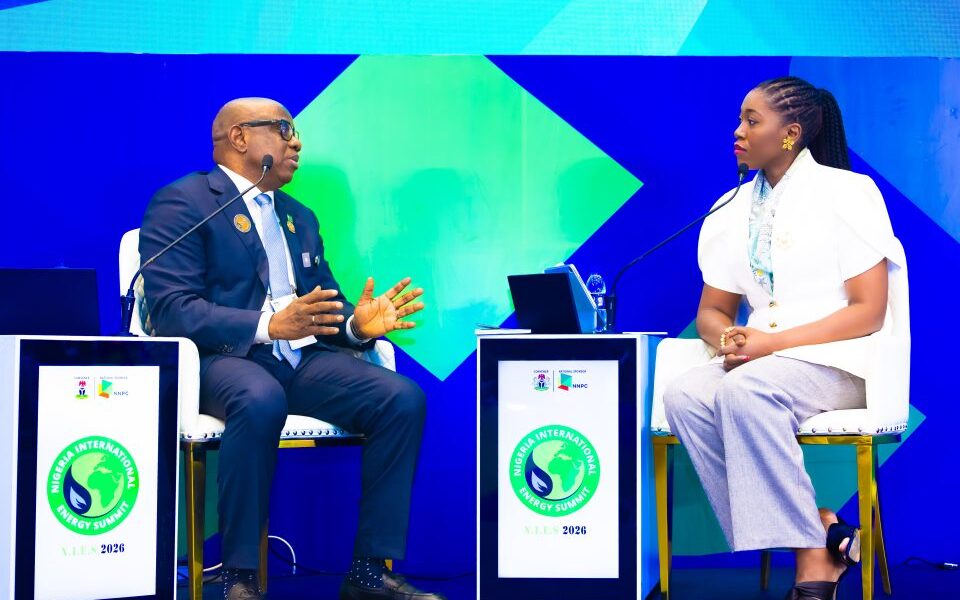
 Group Chief Executive Officer of NNPC Limited, Engr Bayo Ojulari
The NNPC boss came to stage with two scripts containing the bitter truth of the past and hope for the future respectively. But he served the bitter pill first, earning himself deafening applause after serving sweet syrup at the end of a tense industry update at Africa’s largest petroleum industry convening in Abuja.
The bitter truth which set the most plausible onset is Engr Ojulari’s admission that the national oil company has lost the capacity to efficiently and profitably run the moribund refineries. He told industry delegates and stakeholders at the Nigerian International Energy Summit (NIES) in Abuja that whereas the refineries have not yet depreciated to scrap value as many had inferred, it would require experienced and dexterous operator to recover and restore the plants to optimal functionality.
Engr Ojulari painted very clear picture of the current operating status of the refineries, saying that the NNPC’s three refining companies are no longer upbeat on delivering their key mandates of meeting domestic market demands, generating commercial revenues from their operations and creating full loop value from assigned crude oil feedstock.
He noted that aside from running huge commercial losses, the company’s refining subsidiaries were generating very insignificant value from crude oil while producing massive waste due to suboptimal operating processes, poor management, low-level expertise and limited experience commercial refining business.
Engr Ojulari who is yet to clock one year in the office as the GCEO of NNPC Limited, told industry delegates at NIES 2026 that high level of inefficiency, poor asset management and loss of capacity transformed the refineries into a massive commercial loss center for the national oil company.
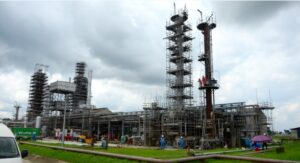 Port Harcourt Refinery under one of many failed rehabs
Thus, the options that stand before the leadership of NNPC point at incorporated joint venture that would assist Nigeria recover processing capacity of its refineries with combined capacity for 445,000 barrels of crude oil per day. At full processing capacity, the refineries could churn out enough transportation fuels to surpass the nation’s fuel demand in the immediate to near future.
The plants include the old 60,000 barrels per day refinery and the new 150,000 barrels per day refinery; together operated by the Port Harcourt Refining Company (PHRC) Limited. The sister petrochemical company has since been excised and sold to India’s Indorama Eleme Petrochemical Company Limited. It now operates as a private entity to demonstrate the efficient hands of the private sector.
There is also Warri Refinery and Petrochemical Company (WRPC) Limited which operates 125,000 barrels per day refining plant and associated petrochemical add-ons. Then, there is the 110,000 barrels per day refining plant operated by the Kaduna Refining and Petrochemical Company Limited (KRPC).
The NNPC refineries form the initial investments conceived to give effect to Nigeria’s energy security policies and programs in the 1970s and 1980s. But the refineries went down in the 1980s and 1990s following military intervention in political administration of the country.
According to a document at the Corporate Planning Division of the defunct Nigerian National Petroleum Corporation (NNPC) seen by Oracle Intelligence, the establishment of the Petroleum Special Trust Fund (PTF) by the military government in the 1990s led to channeling of operating income from NNPC operations to defunct PTF, starving the corporation of funds for the maintenance of its refineries, pipelines, depots and jetties.
The document detailed how acute funding starvation associated with channeling of all petroleum revenues to the defunct PTF led to rapid capacity loss across the business arms of the NNPC and causing facility obsolescence, dilapidation and dysfunction.
With total loss of capacity for local production of transportation fuels, NNPC resorted to massive importation of petroleum products to meet its mandate of meeting domestic fuel demand. But the import programs came at very huge price to the economy. The nation’s import bills continuously swelled in proportion to rising prices of oil in the export market. And the situation created the Nigerian paradox of being exporter of crude oil and importer of refined fuels. While crude oil led Nigeria’s exports, refined fuels led imports.
Across the years, import dependence exposed the Nigerian economy to international energy price shocks as market forces interact.
Since the return to democracy in 1999, recovering domestic refineries and distribution infrastructure from moribund state has remained the subject of fiery political and industry debate: and subsequent administrations of the federal government have hazarded different measures to resolve the refining and market supply impasse.
From the failed privatization of the refineries in 2007 through failed rehabilitation efforts from 2014 to 2025, billions of dollars were poured into projects that eventually dashed expectations.
According to Engr Ojulari, the situation led to a decision by the new management of NNPC Limited to shut down the refineries to arrest financial losses, curtail resource waste and devise new ways of turning operations into profitable ventures.
Under the new reinvention strategy authorized by the Board of Directors currently overseeing the management of the national oil company, Ojulari explained, NNPC has sifted through several options -from auctioning off the refineries through full rehabilitation and upgrade to service contracts -before arriving at forging an incorporated joint venture with a highly competent refining company.
Engr Ojulari stated that the board and management of the national oil company decided to settle for a reputable Chinese company that operates some of the largest refineries in the world, saying that the company holds robust pedigree for running profitable refineries and allied businesses in China.
Although he decided to withhold the name of the company, it was not difficult to run a quick check threw up China Petroleum & Chemical Corporation (Sinopec) as the largest, highly diversified and most capitalized petroleum processing company in China and in Asia.
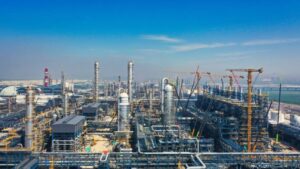 A refinery operated by Sinopec in Egypt
Our checks show that Sinopec operates one of the largest and most sophisticated refining systems in the world, with total refining capacity of approximately 5.9 million barrels per day. It ranks first in China in refining capacity and manages a network of highly complex refineries capable of processing a broad range of crude oil grades. Its refining operations are closely integrated with petrochemical production, enabling efficient conversion of feedstock into transportation fuels, synthetic materials, and high-value chemical products.
Sinopec also leads China in ethylene production capacity, reflecting its strong downstream integration and technical capability.
The company’s international refining operations are supported by a global crude sourcing and trading platform, overseas storage and logistics assets, and extensive import and export activities.
Sinopec also has substantial experience in managing multi-origin crude procurement, optimizing refinery configurations in response to market conditions, and meeting diverse product specifications across international markets. Its integrated supply chain links crude acquisition, refining, petrochemical manufacturing, and end-market distribution at scale.
Financially, Sinopec benefits from significant revenue generation and strong operating cash flow. As one of the largest energy companies globally, it maintains established relationships with major financial institutions and access to both domestic and international capital markets.
Our findings show that financial strength enables the company to respond effectively to large capital commitments and major project cash calls, including refinery upgrades, international joint ventures, infrastructure investments, and strategic acquisitions.
With its scale, operational integration, technical depth, and robust financial capacity, Sinopec is well positioned to manage and fund complex, capital-intensive international refining and petrochemical ventures.
According to Engr Ojulari, NNPC has decided to concede significant shareholding to Sinopec to enable the Chinese refiner take-on the Nigerian refinery operations with commitment.
He did not explain the investment commitments in the refinery revamp, but indications are abundantly clear that Sinopec comes with strong technical capability and required financial muscles to help revamp Nigeria’s refining plants, recover full capacity and restore them to full operations.
Oracle Intelligence reports that Engr Ojulari’s frank discussion on real state and plans for the nation’s refineries provided stakeholders assurance that the prevailing issues in the domestic fuel market where feuding fuel supply factions bicker over control of the market will soon be over.
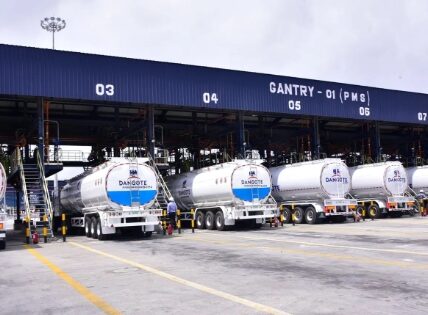
Whereas he acknowledged the role of the 650,000 barrels per day Dangote Refinery in plugging supply gaps at a time the NNPC Limited struggled with strategy options on how to reclaim its role in the domestic market, Engr Ojulari declared unwillingness to engage any player in unnecessary market competition when NNPC returns to the market as a profit driven supplier. The company currently plays in the retain segment of the market.
It would be pointed out that NNPC Limited has, for the first time in over two decades, presented Nigerians with clear picture of the state of the refineries and a credible plan for capacity recovery. This is expected to address the lingering frustration over endless waste of public funds on avoidable fuel imports and endless rehabilitation projects that gulp trillions of Naira.
Some analysts in the public commentariat have called for outright sale of the nation’s downstream assets as the easy way to cut operating losses and forestall total collapse of the assets. Others have preferred the build, operate and transfer (BOT) option to relieve the national oil company the burden of investments and diversify domestic supply sources.
However, Engr Ojulari has shown that Nigeria finally has a board and management at NNPC Limited which are not obsessed with creating impressions and providing excuses but are focused on measurable performance and palpable results. Declaring the parlous state of the refineries and mapping out recovery pathway set the baseline for measuring progress, performance and delivery. Forging an incorporated joint venture with leading worldclass refiner is an ample indication that the national oil company is ardent at repositioning Nigeria’s energy sector to assist government manage fiscal stress, currency volatility, and inflationary pressures related to fuel importation and high cost of transportation.
It is therefore in the foreground of the prevailing context that functional refineries are valued beyond industrial assets to count as critical macroeconomic stabilizers. Rehabilitated and efficiently run refineries will reduce import dependence, conserve foreign exchange, stimulate industrial activity, create jobs, and strengthen public finances. This would bring an end to decades of mismanaged refining assets and associated drain on public resources.
Whereas some analysts argue that NNPC Limited is running late with its refinery revamp program after private refiners like Dangote have already dominated the market, it needs to be pointed out that private refiners in the country sit on huge debts and thus drive price increases at slightest opportunity.
Fuel prices are global inflation triggers, and such rapid price swings and sudden hikes in fuel pump prices as have been witnessed in Nigeria since deregulation of the market undermine fiscal and economic stability. The situation is exacerbated by looming supply monopoly that currently wreaks chaos in the market and spur continued importation. Return of the NNPC refineries, expected to be quick, presents immense opportunity to address supply monopoly, tame prices and assist in arresting galloping inflation in the country.
Therefore, the partnership between NNPC and Sinopec represents more than refinery rehabilitation. It offers new opportunity for Nigeria to convert its resource wealth into sustained economic value by producing outcomes that shape broader domestic economic recovery.