Skip to content

Japa: Death tolls on Mediterranean routes amplify the cost of diaspora remittances

By Sopuruchi Onwuka
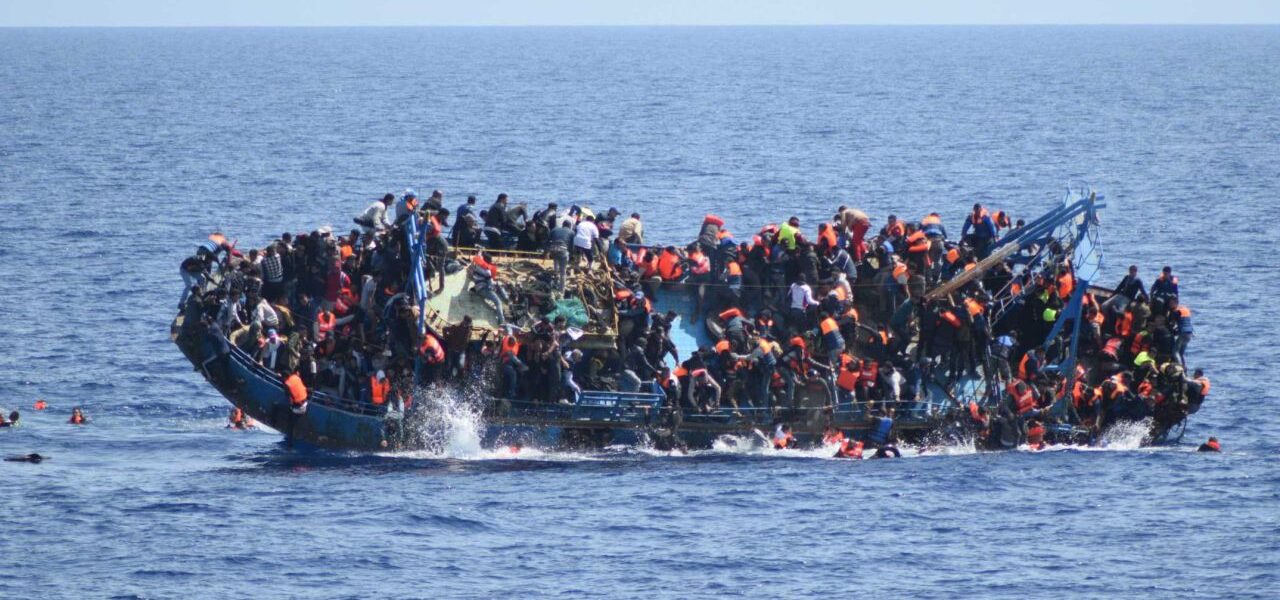
More than 3,000 African migrants died in the Mediterranean Sea in 2025 while attempting dangerous crossings into Europe, according to a new report by Spanish NGO Caminando Fronteras. The report highlights the desperation that pushes young skilled Africans escape parlous home economies into perilous journeys that turn to gamble between life and death.

The organization said at least 3,090 people perished between January 1 and December 15, 2025, most of them during irregular sea journeys from North and West Africa. Many were fleeing hunger, poverty, and lack of opportunity at home.
Annual death of young Africans trying to reach Europe by sea, Oracle Intelligence reports, underscores a grim truth that millions are driven not just by hardship at home but also by economic policies that make diaspora remittances a central pillar of national survival.
Many governments in Sub-Saharan Africa now treat money sent home by emigrants as vital foreign exchange income channel, an economic performance index that indirectly encourages more citizens into perilous migration routes.
Nigeria, for example, which is the largest recipient of remittances in Sub-Saharan Africa, accounts for approximately $19.5 billion in 2023, which represented about 35 % of the region’s total remittance inflows.
In 2024, official figures show Nigeria’s diaspora remittances rose to roughly $20.9 billion, far outstripping foreign direct investment into the country.
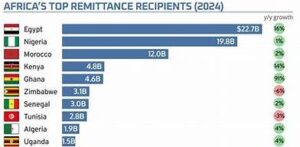
These funds play an outsized role in Nigeria’s economy, providing highly needed foreign exchange liquidity, supporting households, and forming essential buffers against foreign currency shortages.
In other countries also, governments treat remittances as one of the few reliable streams of foreign currency, sometimes dwarfing exports and investment inflows.
When governments tacitly recognize and depend on remittances to prop up foreign exchange reserves or balance of payments accounts, they create incentives for citizens to leave home country to face uncertainties that mostly end in fatal mishaps.
Besides, government’s economic policies that devalue local currencies, propel inflation and spread poverty form stronger incentives that push people toward risky journeys; because sending money home from abroad becomes a legitimate and necessary exit strategy from poverty.
Also, while diaspora remittances play big roles in family survival, government benefits from the broader outcome of economic and social stability.
So, when governments fail in job creation and industrial development, young professionals find it difficult to continue staying unemployed or underemployed in depressed home economy. They are compelled to consider risky desert and sea routes into unwelcoming but more promising foreign lands.
Review of statistics by Oracle Intelligence show that the flipside of the fiscal benefits associated with diaspora remittances indicate severe economic and social consequences, including critical skills drain, irregular and illegal emigration, perilous voyages to unknown destinations, as in the present circumstances, avoidable death of young Africans.
Caminando Fronteras noted that many of the deadly journeys began along Morocco’s coastline, placing the country at the center of one of the deadliest years on record for irregular migration to Spain.
The report described 2025 as a year marked by mounting risks, failed rescue efforts, and longer, more dangerous routes. Along Morocco’s northern coast alone, 139 deaths were recorded, while another 245 people died along the Atlantic route between Agadir and Dakhla. Five migrants also died while attempting to enter the Spanish enclaves of Ceuta and Melilla.
The NGO stressed that these figures reflect only confirmed cases, warning that the true death toll is likely higher.
Caminando Fronteras said Morocco is not only a transit country but also a major source of migrants. Many Moroccan nationals died during these crossings in 2025, placing them among the most affected nationalities.
Overall, the victims included 192 women and 437 children and teenagers. At least 70 boats disappeared entirely at sea, with everyone on board presumed dead.
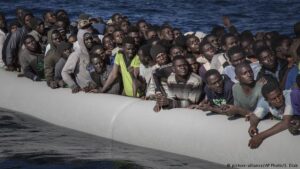
The report blamed delayed rescue operations, unanswered distress calls, and poor coordination between countries for the high number of fatalities. It also criticized policies that shift border control responsibilities to countries with limited resources, such as Morocco, without adequate support for search and rescue operations.
According to the NGO, journeys are becoming longer and riskier as tighter controls push migrants onto overcrowded and fragile boats and force them to take routes stretching thousands of kilometers. In many cases, emergency alerts arrive too late or not at all.
Caminando Fronteras also condemned the growing politicization of borders, saying increased funding to stop migration has effectively pushed Europe’s borders southward into countries of origin. This, the group said, has expanded danger zones and increased the risk to human life.
Despite stricter controls on Moroccan routes, migration has not stopped. Instead, migrants are being diverted to even deadlier paths. Deaths along the Algerian route rose sharply in 2025, reaching 1,037.
The report also highlighted a newly emerging route from Guinea-Conakry, spanning about 2,200 kilometers. It described this path as one of the most dangerous, even longer than the Senegal-to-Canary Islands crossing.
For many young Africans and their families, the journey remains a desperate gamble driven by worsening insecurity and living conditions in home countries, shrinking legal migration options, and the hope of a better life. And as remittances arrive in high value currencies, many young Africans feel compelled to join the diaspora, even through irregular and hazardous routes.
The tragic 3,000+ deaths in the Mediterranean in 2025 reflect not only desperate conditions but also an economic system that prioritizes foreign exchange over safe livelihoods.
Thus, the elevation of diaspora remittances to a core piece of foreign exchange income stream has a dark side. It can help governments manage economic pressures, but at the same time it normalizes the loss of skilled and unskilled workers, fuels dangerous migration incentives, and absolves policymakers from addressing the underlying causes of emigration.
Until African governments balance their reliance on remittances with stronger domestic opportunity and legal migration pathways, the tides of “japa” and the suffering that comes with it will likely continue.