Skip to content

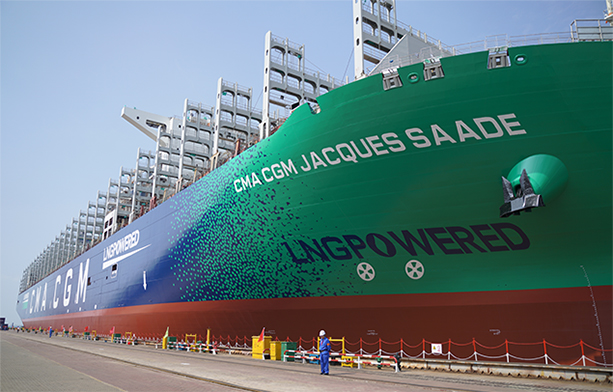

Proposed delay in the implementation of the Net-Zero Framework (NZF) by the International Maritime Organization’s (IMO) will give member states time to refine ambiguous or contentious elements to produce a stronger, more implementable framework for marine transport.
According to analysis by industry advisory firm, Rystad Energy, adoption of the NZF which has been deferred by another year creates room for careful examination of the proposed mechanisms despite the associated uncertainty in rolling off the strict emission regulation for international merchant navy.
Rystad stated in a latest report that critical gaps in the current NZF should be addressed to ensure an equitable and sustainable transition for the global shipping industry.
The report pointed at a substantial disparity between projected clean-fuel availability and targeted demand, exacerbated by infrastructure constraints, which raises concerns about the feasibility of the prescribed transition timeline.
It also noted a persistent imbalance in the carbon-trading mechanism, with demand for Tier II remedial unit offsets expected to outstrip available surplus units through 2035; adding that the structural deficit is anticipated to drive trading prices towards the Tier II penalty ceiling.
The situation, Rystad stated, underscores the need for careful consideration in designing the reward mechanism to prevent it from becoming a mere penalty-collection system.
“While the cost gap is expected to narrow as technology matures and economies of scale are achieved, a well-designed reward mechanism is crucial to incentivize sustainable practices. By addressing these critical issues, the IMO can develop a more effective and equitable NZF, ultimately supporting the global shipping industry’s transition to a low-carbon future,” the company stated.
Vice President of Supply Chain Research at Rystad Energy, Junlin Yu, wrote: “Decarbonizing the maritime sector is a complex challenge that goes beyond shipping, closely tied to the global shift from fossil fuels to renewables. Our findings suggests progress will likely lag behind the IMO’s current expectations due to infrastructure limits, technology readiness, and energy system interconnections. While the industry is committed, practical constraints demand a realistic approach. The IMO should use the extra year to refine the NZF into a more practical and equitable framework.”
Rystad stated that the analysis leveraged “extensive cross-sector data assets, from conventional fuels to hydrogen derivatives and biofuels, alongside a comprehensive analysis of alternative-fuel fleet composition, port infrastructure and global shipyard capabilities.
“Under the NZF, vessels that meet the direct target may generate Surplus Units (SUs), while non-compliant vessels will generate Remedial Units (RUs). Remedial Units are categorized in two tiers: Tier I (RU1s) for vessels that meet the base target, and Tier II (RU2s) for those that do not. Non-compliant vessels may offset their Tier II Remedial Units by acquiring Surplus Units from compliant vessels,” the company stated.