Skip to content

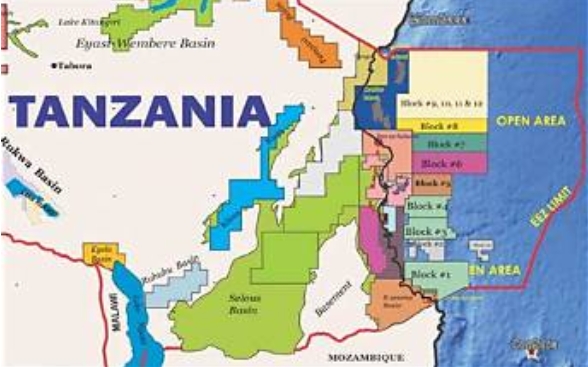
New 223 Bcf discovery adds momentum to Tanzania’s $42bn LNG project

Tanzania’s ambition to emerge as a major natural gas and energy export hub in East Africa has received a significant boost following the discovery of an estimated 223 billion cubic feet (bcf) of natural gas in the country’s southern Mnazi Bay area.
The discovery, the first in more than a decade, comes as the East African country advances plans to attract international investment into its petroleum industry, including a proposed $42 billion liquefied natural gas (LNG) development expected to transform its position in the global gas market.
The latest find is expected to strengthen Tanzania’s domestic gas supply, support electricity generation and industrial development, while reinforcing the commercial prospects of its wider gas resources.
According to industry reports surveyed by Oracle Intelligence, the gas was discovered at the Kasa-1X ST2 well, jointly explored by the state-owned Tanzania Petroleum Development Corporation (TPDC) and French oil company Maurel & Prom.
Tanzania’s Energy Minister, Juma Homera, confirmed the discovery, explaining that the companies had drilled three wells — MB-5, MS-2 and Kasa-1X ST2 — as part of efforts to increase the country’s domestic gas supply.
Maurel & Prom has indicated that production from the latest discovery could commence as early as next month, potentially providing additional feedstock for power generation and industrial activities.
The discovery is particularly significant for Tanzania as it seeks to expand the utilisation of natural gas in its domestic economy while positioning itself to become a major supplier of LNG to international markets.
The government is also broadening investment opportunities around its gas resources, with the Energy Ministry engaging four prospective investors interested in developing small-scale LNG projects.
The proposed investments are expected to create additional outlets for commercialising natural gas, complementing the country’s larger LNG export ambitions.
Before the latest discovery, Tanzania’s proven and discovered natural gas reserves were estimated at approximately 57.5 trillion standard cubic feet, according to Reuters. The new find adds to the country’s substantial resource base and strengthens its prospects of attracting further exploration and development investments.
$42bn LNG project anchors export ambitions
The discovery comes as Tanzania advances negotiations and development plans for a $42 billion LNG project, one of the largest proposed energy investments in East Africa.
The development, led by Norway’s Equinor and British energy major Shell, is designed to commercialise approximately 47.13 trillion cubic feet of offshore natural gas resources through large-scale liquefaction facilities for export to international markets.
Other companies participating in the project include ExxonMobil, Pavilion Energy, Medco Energi and TPDC.
The proposed development is expected to attract substantial foreign direct investment, stimulate infrastructure development, create employment and establish Tanzania as a significant player in the international LNG supply chain.
Although the bulk of the gas produced through the project is earmarked for export, a portion is expected to support domestic energy requirements, strengthening the country’s ability to expand electricity generation and provide gas feedstock for industries.
The project also presents opportunities for the development of associated infrastructure, including gas pipelines, processing facilities, export terminals and supporting services, with potential economic benefits extending beyond the petroleum industry.
For Tanzania, the combination of substantial offshore gas reserves, new discoveries and planned liquefaction infrastructure offers an opportunity to develop an integrated gas industry capable of serving both domestic and international markets.
East Africa’s emerging energy corridor
Tanzania’s growing gas ambitions are also unfolding alongside developments in the wider East African petroleum industry, where neighbouring countries are pursuing projects to connect newly developed hydrocarbon resources to international markets.
Uganda, for instance, is preparing to commence its first crude oil exports through Tanzania’s Port of Tanga in early 2027, creating additional opportunities for the country to emerge as a regional petroleum transportation and export corridor.
The planned Ugandan crude exports, together with Tanzania’s proposed LNG infrastructure, could strengthen regional energy trade and expand the strategic importance of East African transportation and export facilities.
The developments underscore the growing importance of cross-border energy infrastructure in unlocking the region’s petroleum resources and connecting landlocked producing countries to international markets.
For Tanzania, the latest gas discovery adds momentum to efforts to attract international energy companies, expand domestic production and develop the infrastructure required to support large-scale gas exports.
With its estimated 57.5 trillion cubic feet of proven and discovered reserves, the proposed $42 billion LNG project and growing regional petroleum transportation opportunities, the country is positioning its natural gas resources as a major driver of future industrialisation, energy security and economic growth.