Skip to content

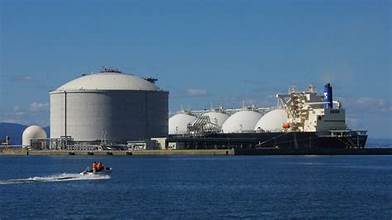
LNG supply risks mount as Europe enters winter with low gas reserves

Oracle Intelligence reports that rising attacks on commercial vessels in the Strait of Hormuz, falling temperatures across parts of Asia and Europe’s limited gas storage cushion are heightening risks to global liquefied natural gas (LNG) supplies, with market analysts warning that a surge in winter demand could trigger a costly contest for available cargoes.
Europe is approaching the winter heating season with a reduced cushion against potential gas supply disruptions as escalating security threats in the Strait of Hormuz, declining temperatures across Asia and intensifying competition for liquefied natural gas (LNG) cargoes raise concerns about the stability of international energy markets.
The continent’s gas storage facilities are nearly 75 per cent full nationally, while Germany’s reserves stand at just 61 per cent, significantly below their level at the same time last year. LNG imports have also failed to increase sufficiently to close the supply gap, leaving European buyers increasingly exposed to the possibility of a cold winter coinciding with stronger demand from Asian economies.

The security situation in the Middle East has further complicated the outlook. Ten attacks on commercial vessels were recorded in the Strait of Hormuz in the week to October 16 alone, reinforcing concerns over the movement of LNG supplies from Qatar and the United Arab Emirates (UAE), two important producers in the global market.
The combination of tight supply fundamentals and geopolitical uncertainty is already reflected in international gas prices. The European Title Transfer Facility (TTF) front-month contract closed at $28.06 per million British thermal units (MMBtu) on October 19, while East Asian LNG prices stood at $29.55 per MMBtu. In contrast, the United States benchmark, Henry Hub, settled at $2.96 per MMBtu, highlighting the substantial premium buyers in Europe and Asia are paying for gas amid supply uncertainties.
Rystad Energy analyst, Mathieu Utting, warned that Europe’s limited storage cushion and reduced flexibility to replace disrupted supplies could leave the continent vulnerable as winter approaches.
“As winter approaches, Europe has less of a storage cushion than needed and fewer options to quickly replace disrupted supply,” Utting said.
He noted that Europe’s LNG imports were 30 per cent below the previous year’s level in the week ended October 9. Although relatively mild weather has kept heating demand subdued, he cautioned that favourable temperatures alone would not eliminate the continent’s supply vulnerabilities.
According to the analyst, the more serious risk would emerge if a cold spell coincided with increased purchasing by Asian buyers, forcing European importers to raise their offers to secure LNG cargoes from the Atlantic market.
“China and South Korea are already seeing temperatures fall, and if that translates into sustained spot buying, European buyers will have to pay up to retain Atlantic cargoes,” he said.
The pressure is building despite a weekly improvement in European LNG imports. Deliveries for the week of October 12 totalled 1.93 million tonnes, representing a 21 per cent increase from the preceding week. However, the volume remained 30.6 per cent below the corresponding period last year, underscoring the scale of the shortfall facing the market.
Norwegian pipeline gas nominations have remained steady, while above-normal temperatures forecast across much of Europe through late October are expected to slow the early seasonal increase in heating demand.
But the immediate relief from milder weather does little to address the underlying supply gap. A sustained decline in temperatures could accelerate withdrawals from storage at a time when European buyers are competing with Asian importers for flexible LNG supplies.
Security threats have added another layer of uncertainty. The United Kingdom Maritime Trade Operations, in its October 16 weekly overview, recorded 12 attacks on commercial shipping across the wider Persian Gulf region, including 10 in the Strait of Hormuz itself.
The escalation comes amid renewed mutual attacks by Russia and Ukraine on energy infrastructure, weakening expectations of an early ceasefire that could ease pressure on international fuel markets.
The Strait of Hormuz remains particularly important to the outlook because disruptions there threaten the movement of LNG cargoes from Qatar and the UAE. Utting said vessels carrying LNG from the Gulf remained largely unable to resume normal movements, with only a limited number of ships attempting crossings each week.
For the week of October 5, eight LNG vessels exited the strait while one entered. Although this represented the highest number of weekly exits since the closure, nearly all vessels were switching off their tracking signals while crossing the waterway.
Rystad Energy’s data on vessel crossings through the strait consequently carries a two-week reporting lag. The analyst expects crossings by Qatari and UAE LNG vessels to have slowed since attacks on commercial shipping intensified, although the attacks recorded so far have been limited to non-LNG tankers.
The uncertainty surrounding Middle Eastern supplies is becoming more consequential as Asian demand begins to strengthen.
East Asian LNG prices, at $29.55 per MMBtu, are already above the European TTF benchmark, and the difference could widen if colder weather drives additional spot purchases. Although freight costs and voyage times currently favour the delivery of uncommitted US LNG cargoes to Europe, stronger Asian prices could gradually erode that advantage.
China’s National Meteorological Center reported sharp cooling across northern and northeastern parts of the country on October 19, forecasting a further temperature decline of between four and six degrees Celsius across central and eastern China through October 21.
South Korea is also experiencing the arrival of colder air, raising the prospect of increased demand for imported gas as the region prepares for winter.
If the cooling persists, Chinese and South Korean buyers could step up spot purchases, forcing European importers to offer higher prices to retain cargoes they need to replenish supplies ahead of peak heating demand.
The competition is already evident in the spot market. India awarded one LNG cargo under a recent tender at between $28 and $29 per MMBtu, while buyers in South Korea and China are actively seeking supplies for delivery between December and January.
The resulting competition could expose Europe to further price increases if Asian demand strengthens while Middle Eastern exports remain constrained.
The situation contrasts sharply with conditions in the United States, where abundant domestic gas production continues to limit price increases despite strong demand from LNG export terminals.
Henry Hub prices were reported at $3.06 per MMBtu on October 19, down 6.7 per cent from the October high of $3.28 recorded on October 13. The market update also cited a settlement of $2.96 per MMBtu, illustrating the need to distinguish between the reported closing figures for the relevant trading periods.
Meanwhile, US LNG feedgas demand reached a year-to-date record of 19.84 billion cubic feet per day on October 18, supported by the return of the Cove Point export terminal from maintenance, the establishment of a steady operating rate of approximately 0.7 billion cubic feet per day at Golden Pass, and feedgas demand exceeding 5.1 billion cubic feet per day at Sabine Pass.
The strong demand from export facilities has begun to tighten the US domestic gas balance. The country’s gas storage surplus over the five-year average has narrowed to just 1.1 per cent, while Rystad Energy’s weather-adjusted supply-demand balance indicator has fallen below its five-year norm for the first time since May.
However, elevated dry gas production and a mild national weather outlook through late October continue to restrain prices, limiting the extent to which increased export demand is being transmitted to the domestic market.
The divergence between US gas prices and their European and Asian counterparts reflects the protective effect of abundant domestic production in the American market. It also highlights the growing geopolitical premium embedded in international gas prices as buyers compete for supplies exposed to shipping disruptions and other external risks.
For Europe, the immediate challenge is to secure enough gas to meet winter demand without triggering a costly bidding contest with Asian importers. Storage levels, currently below last year’s position in key markets, leave limited room for prolonged supply interruptions or a sudden increase in consumption.
The risk is that a combination of colder weather, stronger Asian spot demand and continued disruption around the Strait of Hormuz could tighten the availability of flexible LNG cargoes just as European heating demand begins to rise.
Although mild temperatures and steady Norwegian pipeline deliveries are providing temporary relief, they cannot eliminate the structural vulnerability created by lower LNG imports and uncertainty over Middle Eastern supplies.
As Utting’s assessment suggests, the decisive test for the market may not be whether Europe can manage through the current mild conditions, but whether it can secure sufficient supplies if winter demand rises sharply while competing buyers are prepared to pay more for available cargoes.
With geopolitical tensions continuing to threaten shipping routes and Asian temperatures falling, Europe’s ability to replenish supplies at affordable prices will remain a critical determinant of gas-market stability in the weeks ahead.