Skip to content

AfDB targets $4trn domestic capital to close Africa’s financing gap

The African Development Bank (AfDB) is engaging financiers on a strategy to mobilise about $4 trillion in untapped domestic capital across Africa to help fund the continent’s development needs, as the region grapples with an estimated $400 billion annual financing gap.
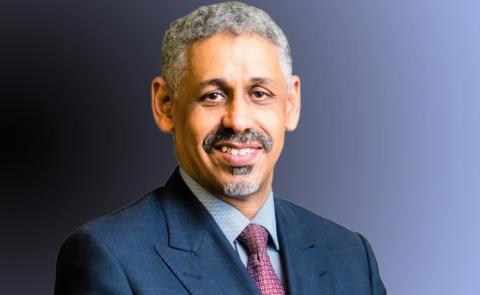
AfDB President Sidi Ould Tah stated at the S&P Emerging Markets Conference in London, that the multilateral lender was working to strengthen coordination among Africa-based pension funds, banks and capital markets to unlock greater domestic financing.

Tah, who assumed leadership of the continent’s largest development finance institution in September last year, said the initiative would focus on improving “risk allocation” across African financial markets, allowing more locally sourced capital to be channelled into development projects.
The strategy, he said, reflects growing concern over Africa’s dependence on external financing at a time when high borrowing costs, elevated debt burdens and tighter global financial conditions are constraining governments’ capacity to fund infrastructure and other development priorities.
A key component of the AfDB’s strategy will be helping African countries improve their preparedness for sovereign credit ratings.
Tah said the bank would launch an initiative to assist governments in preparing the data and information required by rating agencies, arguing that inadequate transparency in some African markets contributes to perceptions of excessive risk and consequently raises borrowing costs.
“Opacity in some markets creates this notion of high risk, which leads to high cost of borrowing,” he said.
The AfDB president said the bank would work with governments to improve the quality and transparency of economic and financial data available to investors and rating agencies.
African policymakers have long argued that international perceptions of risk do not always adequately reflect the continent’s economic fundamentals, resulting in what they regard as disproportionately high financing costs.
The proposed initiative therefore seeks to address both sides of the problem: improving the information available to investors while enabling African financial institutions and governments to deploy more of the continent’s own capital for development.
Analysts not that mobilizing even a portion of the estimated $4 trillion would provide African governments and businesses with an alternative to relying predominantly on foreign loans, aid and international capital markets to finance development.
For the AfDB, the challenge is not necessarily the absence of capital within Africa but the difficulty of connecting available savings with bankable development projects at acceptable levels of risk.
Pension funds, banks and domestic capital markets collectively control substantial financial resources, but regulatory fragmentation, weak project preparation, limited market depth and perceptions of sovereign and currency risk can prevent those resources from flowing efficiently into long-term infrastructure and productive investment.
Tah’s proposal consequently places financial-market coordination and risk-sharing at the centre of efforts to close Africa’s development financing gap.
If successful, the approach could also help reduce the vulnerability of African economies to shifts in global interest rates and investor sentiment by increasing the role of domestic savings in financing the continent’s long-term development.