 Skip to content


CBN places four banks ‘under close regulatory supervision’ over failure to meet March 31 recapitalisation deadline

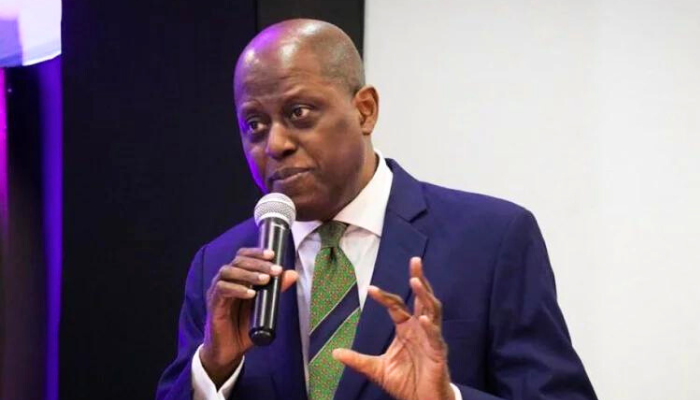
Central Bank of Nigeria (CBN) says it has placed four commercial banks under ‘close regulatory supervision’ over their failure to meet the March 31, 2026 recapitalisation deadline set for various categories of operators in the country.
CBN it would be recalled had set a timeline for various tiers of operators to recapitalise ranging from N500 billion, N200 billion to N50 billion and N20 billion for the financial establishments operating with international, national, regional, non-interest, merchant banking licenses, in no particular order.

Speaking, Tuesday, during the Tuesday, during the post-Monetary Policy Committee (MPC) briefing in Abuja, CBN Governor, Mr Olayemi Cardoso, confirmed that 33 of the country’s 37 commercial banks successfully met the new minimum capital requirement by the March 31, 2026 deadline without any extension.
According to the CBN boss, four banks failed to meet the deadline. This is even as Cardoso did not reveal the identities of the four affected banks.
However, industry analysts claim the four affected banks may well include the soon-to-be merged Union Bank and Titan Banks, in addition to the recently-merged Providus Bank and Unity Bank.
CBN has the authority to recommend forced mergers, acquisitions for the affected banks, in addition to downgrading their operating licenses.
Cardoso further clarified that its close regulatory supervision of the four banks does not mean a take-over of their operations, but instead that much of the credit facility approvals by the affected institutions must now pass through the regulatory bank for approval.
Cardoso allayed any fears among depositors of the banks’ liquidation, as he assured Nigerians that there is no cause for concern over the inability of the four operators to meet the banking sector recapitalisation requirement, saying the regulatory bank is working closely with them to ensure full compliance.
He said the CBN remained in active engagement with the four banks that are yet to comply, noting that they remain under close regulatory supervision.
“I believe the banking industry deserves recognition for what it has achieved. Out of 37 banks, 33 met the new capital requirements without any extension of the deadline.
“That is commendable. Much of the capital raised came from domestic investors, which is another achievement Nigerians should be proud of.
“Nigerian banks are among the strongest on the African continent and play a major role in financing trade and investment across Africa.
While keeping the lending rate at 26.5% amid hike in inflation figures, the MPC cited renewed tensions in the Middle East and the uncertainties they pose to the global economy as reasons for the retention.
The Committee also retained the asymmetric corridor around the MPR at +500/- 100 basis points, kept the Cash Reserve Ratio (CRR) at 45% for commercial banks and 16% for merchant banks, while maintaining the CRR on non-TSA public sector deposits at 75%.
“Overall, the recapilisation exercise has been successful. The industry is considerably stronger today than before.
“For the few banks yet to meet the requirements, several factors delayed their progress, including previous regulatory interventions.The Central Bank is working closely with them and considering different options to ensure compliance.
“For now, Nigerians can continue to conduct business with those banks as usual. They remain under the close supervision and guidance of the Central Bank, and there is no cause for concern,” Cardoso said.
Meanwhile, the CBN’s MPC meeting had concluded in Abuja with all 11 members voting unanimously to retain the benchmark interest rate or Monetary Policy Rate at 26.5%.


