Skip to content


Chevron lands sole deepwater block as NUPRC awards 37 oil licences

Chevron has strengthened its long-term investment position in Nigeria after its deepwater affiliate, Stardeep Petroleum, secured Petroleum Prospecting Licence (PPL) 2010 during the commercial bid conference for the 2025 oil and gas licensing round conducted by the Nigerian Upstream Petroleum Regulatory Commission (NUPRC) in Abuja.
The award gives Chevron an additional deepwater asset at a time the company is pursuing strategies to sustain production across Nigeria’s onshore, shallow water and offshore terrains while expanding its deepwater portfolio.
The NUPRC disclosed that only one deepwater block was available during the licensing exercise, making Stardeep’s successful bid one of the most significant outcomes of the auction.
Final results released by the Commission showed that about 300 companies initially expressed interest in the licensing round. Following prequalification, 196 applicants qualified to participate, while 143 companies eventually submitted 200 technical and commercial bids covering 37 of the 50 petroleum blocks offered. Thirteen blocks failed to attract any bids.
A Chevron official had earlier stated during a media training workshop in Lagos that the company remains committed to identifying new investment opportunities capable of sustaining its Nigerian operations over the long term.
According to the official, Chevron continues to generate significant production from its conventional assets while actively participating in major deepwater developments operated by partners, including the Bonga Southwest/Aparo, Usan and Owowo projects.
The company is also pursuing plans to transform its flagship Agbami deepwater field into a production hub capable of accommodating development of nearby discoveries. The strategy is expected to support the Federal Government’s drive for lower production costs, improved asset optimisation and increased crude oil output.
Winning PPL 2010 further reinforces Chevron’s commitment to continued exploration, development and production activities in Nigeria’s offshore basin.
The licence secured by Stardeep formed part of the 37 petroleum prospecting licences awarded to 31 companies at the conclusion of the 2025 commercial licensing round.
The acreage offered by the Commission covered a broad mix of geological provinces, including 16 onshore Niger Delta blocks, 18 shallow water blocks, one deep offshore block, three blocks in the Benin Basin, four in the Anambra Basin, four in the Chad Basin and four in the Benue Trough.
Of the 50 assets offered, only 37 received bids, while 13 remained unattractive to investors.
Significantly, NUPRC noted that this was the first licensing exercise in Nigeria’s history where frontier basins—including the Benue Trough, Chad Basin, Anambra Basin and Benin Basin—recorded such widespread investor interest.
Among the successful companies were SSonic Petroleum Limited (PPL 2A29), CFP Pipeline and Flowlines (2A30), Dutchford E&P Limited (2A32), Attabanson Global Company Limited (2A33 and PPL 901), Rosem Energy Limited (2A38), Pivot-GIS Limited (2A39), Network E&P (2A40), Asharami (2A41), LexOil (2A42), BVOF (2A43), Gupsco Energy Limited (2A44 and 2A51), Saratoga (2A45), Volante (2A46), Concept-Reel Petroleum Services Limited (2A47 and 2A55), Clinton Oil Field (2A48 and 2A62), Nuway Oaklane Limited (2A49), Ramec (2A50), Italia (2A53), Blueridge E&P (2A54), Up Energies Limited (2A56), AYM Shafa (2A57), Blackrock Holdings Limited (2A58), Funtay Integrated Business Limited (2A59), Riparian Development and Production Limited (2A60), Nikstallis (2A61 and PPL 900), Stardeep Petroleum (PPL 2010), Dakoda & U Limited (PPL 308 and PPL 800), Southborne Oil and Gas Limited (PPL 902), Lanaka Petroleum (PPL 903), Highban Resources Limited (PPL 700) and Eyre Energy Limited (PPL 801).
However, the Commission clarified that the successful bidders would only receive final Petroleum Prospecting Licences after fulfilling all post-award conditions stipulated under the Petroleum Industry Act (PIA), 2021. These include payment of the prescribed signature bonus, first-year rent, provision of required guarantees and execution of all contractual documentation, subject to approval by the Minister of Petroleum Resources.
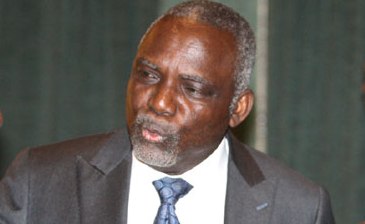
Addressing participants at the bid conference, NUPRC Commission Chief Executive, Mrs. Oritsemeyiwa Eyesan, commended President Bola Tinubu for supporting the Commission in delivering what she described as a transparent and seamless licensing exercise.
She congratulated the successful bidders but warned that the award of acreage comes with clear obligations rather than mere ownership rights.
According to her, the Commission will strictly enforce its “drill or drop” policy, requiring licensees to execute approved work programmes, honour financial commitments and meet agreed development milestones or risk forfeiting their licences.
Eyesan explained that commercial evaluation extended beyond the value of the signature bonus, incorporating work programme commitments and performance guarantees to ensure that awarded assets ultimately deliver maximum long-term value to the Nigerian government.
She stressed that petroleum acreage creates value only when exploration progresses into discoveries, appraisal, field development and commercial production rather than remaining dormant under speculative ownership.
The Commission projects that assets awarded under the 2025 licensing round have the potential to add approximately 500 million barrels to Nigeria’s crude oil and condensate reserves, increasing the country’s current reserve base of 37.01 billion barrels, while also boosting gas reserves currently estimated at 215.19 trillion cubic feet.
Within the next three years, successful development of the awarded assets is expected to contribute at least 300,000 barrels per day of additional crude oil and condensate production, supporting Nigeria’s ambition of increasing national oil production to three million barrels per day by 2030.
Eyesan said the expected production growth would generate higher government revenues, strengthen foreign exchange earnings, improve utilisation of existing petroleum infrastructure, expand opportunities for indigenous service companies, create employment, encourage technology transfer and stimulate broader economic development.
She reiterated that the Commission is committed to supporting credible investors through transparent regulation, predictable decision-making and timely interventions where legitimate operational challenges arise, while insisting that operators must demonstrate measurable performance.
She further warned that any successful bidder failing to satisfy post-award conditions within 90 days of receiving an offer letter would automatically lose entitlement to the asset, after which reserve bidders could be invited to take over the licences.
“The Government is not seeking speculative holders of acreage; it is seeking partners with the capacity, discipline and commitment to deliver measurable production and economic value,” she stated.
Eyesan also assured unsuccessful bidders that Nigeria would continue to offer fresh investment opportunities through regular licensing rounds, revealing that President Tinubu has already approved commencement of the 2026 bid round, with another portfolio of exploration assets expected to be unveiled.
According to her, sustained periodic licensing rounds are essential to maintaining exploration momentum, replenishing reserves and providing investors with a predictable pipeline of opportunities.
She added that strong participation by nearly 300 companies—including established international operators and new indigenous entrants—demonstrates growing investor confidence in Nigeria’s upstream petroleum sector and validates ongoing reforms aimed at enhancing the country’s competitiveness for global investment capital.