Skip to content


NERC blames court ruling for ₦2tn electricity subsidy burden

- ays 2016 judgment constrained regulatory powers, deepened subsidy exposure
• Lagos begins implementation of independent electricity market under new law
Nigerian Electricity Regulatory Commission (NERC) has disclosed that a court ruling in 2016 contributed to government’s subsidy exposure currently valued at about N2 trillion, amplifying how judicial pronouncements could shape the success of policy objectives and implementation outcomes.
The commission declared in Lagos that such judgments restrict government’s regulatory powers and significantly increased the financial burden on the electricity market.

The commission warned that judicial pronouncements have far-reaching consequences for the success of electricity sector reforms, policy implementation and investor confidence, stressing that the courts now occupy a pivotal position in determining the future of Nigeria’s evolving power industry.
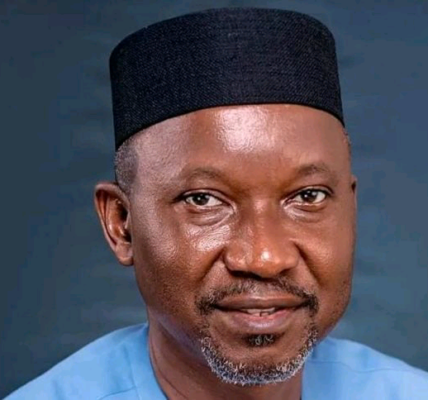
NERC Chairman, Dr. Musliu Oseni, made the disclosure at a regional seminar for judges of State High Courts held in Lagos with the theme, “Nigeria’s Electricity Market in Transition: Law, Regulation, and the Courts.”
According to him, the commission organised the engagement to deepen judicial understanding of the increasingly technical legal and regulatory issues emerging from ongoing reforms in the electricity sector, particularly following the constitutional and legislative changes that have decentralised electricity regulation.
Oseni said experience has shown that judicial decisions can either advance or frustrate reforms in the sector.
“Our experience has shown that the judiciary can make or mar this industry. A mere pronouncement in 2016 led to an increase in subsidy exposure to the tune of ₦520 billion in 2019 alone. If you consider the exchange rate at that period and convert it to the current exchange rate, that is equivalent to about ₦2 trillion today,” he said.
He explained that the judgment, delivered in a case instituted in 2016, constrained NERC’s ability to fully exercise its statutory responsibilities, resulting in a significant escalation in government subsidy obligations.
Oseni stressed that reliable electricity remains indispensable to national development, economic growth and even the effective administration of justice, noting that no country has achieved sustainable development without dependable electricity supply.
He also highlighted the far-reaching implications of the March 2023 constitutional amendment and the enactment of the Electricity Act 2023, describing both reforms as the beginning of a new era in Nigeria’s electricity market through the devolution of regulatory responsibilities to state governments.
According to him, NERC has already issued regulatory transfer orders to 16 states, with Gombe State being the latest to assume oversight of its intrastate electricity market.
While describing decentralised electricity regulation as a major opportunity to improve regulatory efficiency, consumer protection, tariff administration and dispute resolution, Oseni cautioned that the transition would inevitably generate fresh legal and jurisdictional disputes.
“With this new dispensation, you now have matters that will likely arise between consumers and multiple regulators, and also between regulators themselves, including state regulators and NERC,” he said.
He explained that the seminar was designed to equip judges with a better understanding of the technical, commercial and regulatory complexities of the electricity market so they could deliver well-informed decisions capable of supporting reform objectives rather than unintentionally undermining them.
The Lagos State Government, meanwhile, said it has already commenced implementation of the new constitutional and statutory framework establishing state electricity markets.
Speaking at the seminar, the Lagos State Attorney-General and Commissioner for Justice, Mr. Lawal Pedro (SAN), represented by the Permanent Secretary and Solicitor-General, Mr. Hamid Adenuga, said the judiciary has become central to the successful implementation of the country’s electricity reforms.
He noted that judicial decisions in the coming years would not merely resolve disputes but would shape the long-term evolution of Nigeria’s electricity industry.
“The administration of justice is dynamic. As society evolves, so too do the legal issues that come before our courts. For this reason, continuous judicial education is not merely desirable; it is indispensable,” Adenuga said.
According to him, the Fifth Alteration to the Constitution and the Electricity Act 2023 have fundamentally altered Nigeria’s electricity regulatory architecture by ending decades of exclusive federal control and empowering states to establish and regulate their own electricity markets.
He said the reforms present entirely new legal questions requiring judicial interpretation, including issues relating to overlapping regulatory jurisdictions, federal-state powers, consumer rights, contractual obligations and investor protection.
“As these reforms gather momentum, the judiciary occupies a strategic position. The courts will be required to interpret new legislation, resolve jurisdictional questions, balance federal and state regulatory powers, protect consumers, uphold contractual rights, and provide the certainty that investors require,” he said.
Adenuga disclosed that Lagos has moved rapidly to take advantage of the new legal framework through the enactment of the Lagos State Electricity Law 2024, which establishes an independent electricity market for the state.
The law, he said, created the Lagos State Electricity Regulatory Commission, provides for independent market operators and establishes the Lagos State Electrification Agency, while encouraging private sector participation, consumer protection, renewable energy development and off-grid electricity solutions.
He added that the state has already begun implementing the reforms through the transfer of regulatory oversight of intrastate electricity activities to the Lagos State Electricity Regulatory Commission, introduction of licensing frameworks and strategic initiatives designed to attract investments and expand electricity generation capacity.
According to him, the reforms align with the vision of the administration of Governor Babajide Sanwo-Olu to build a resilient, investor-friendly and modern electricity market capable of driving industrialisation, creating jobs and supporting sustainable economic growth.
Adenuga reaffirmed the commitment of the Lagos State Ministry of Justice to providing the legal framework necessary for the successful implementation of the reforms in accordance with the rule of law.
“It is therefore most appropriate that our judges are afforded opportunities such as this to engage directly with regulators, policymakers, practitioners and industry experts. Such interactions enrich judicial understanding, encourage informed dialogue and foster a shared commitment to ensuring that the law continues to facilitate, and not hinder, the transformation of this critical sector,” he said.