Skip to content

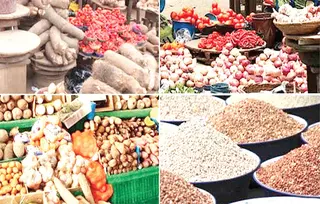

National Bureau of Statistics (NBS) says the country’s food inflation has continued its upward trajectory for the fourth consecutive month, reaching 16.96 per cent in May.
NBS disclosed this in its May report on food inflation in Nigeria.

According to the NBS data, food inflation climbed to 16.96 per cent year-on-year in May 2026 from 16.06 per cent in April, marking its highest level since September 2025. The increase means that food prices remained significantly higher than they were a year ago, despite a slowdown in the pace of monthly increases.
The continued rise in food inflation was a major contributor to the increase in Nigeria’s headline inflation rate, which rose to 15.93 per cent year-on-year in May from 15.69 per cent in April, extending the current inflation uptrend to three consecutive months.
While month-on-month food inflation eased slightly to 2.98 per cent from 3.63 per cent in April, analysts noted that the moderation merely indicates that prices are rising at a slower pace and not that food prices are declining.
The data showed that imported food inflation moderated significantly during the month, falling to 2.27 per cent from 4.38 per cent in April. The improvement was aided by a marginal appreciation of the naira and easing global food prices.
Similarly, farm produce inflation slowed sharply to 0.85 per cent month-on-month from 5.99 per cent in April. Softer price increases were recorded for commodities such as onions, maize, fresh tomatoes, cassava products, yam tubers, sweet potatoes, fresh pepper, plantain and cowpea.
However, the easing in monthly farm produce inflation has yet to translate into lower food prices for consumers.
The inflation report also suggests that the challenge may not disappear anytime soon.
Although food inflation showed some moderation on a monthly basis, the annual trend indicates that food prices are still rising faster than they were a year ago. This means that households are unlikely to experience significant relief in the near term, especially as broader inflationary pressures remain strong.
Adding to concerns is the sharp increase in core inflation, which rose to 16.82 per cent year-on-year in May from 15.86 per cent in April.
The rise in core inflation indicates that price pressures are spreading beyond food and becoming more deeply rooted across the economy.
According to the report, regional inflation data further reveal the uneven impact of food inflation across the country.
States such as Yobe, Anambra and Sokoto recorded some of the highest inflation rates nationwide, reflecting stronger pressures on food and transportation costs.