 Skip to content

Broadcasters back hybrid digital model for Nigeria’s DSO programme

Industry stakeholders have backed the adoption of a hybrid digital broadcasting model that combines Digital Terrestrial Television (DTT), Direct-to-Home (DTH) satellite services, and digital application-based platforms for the soon-to-be launched Digital Switch Over (DSO) programme by Nigeria.
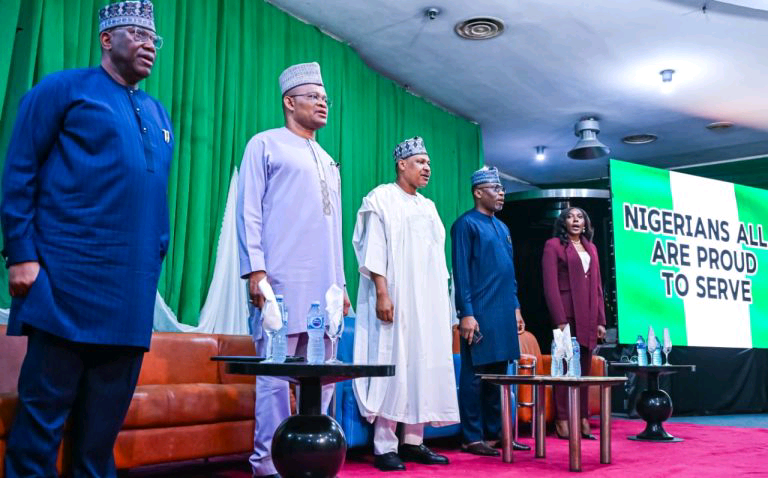
This is part of resolutions arrived at during a high-level stakeholder meeting convened by the National Broadcasting Commission (NBC), under the supervision of the Federal Ministry of Information and National Orientation, which held at the NICON Luxury Hotel, Abuja.

The meeting, chaired by the Minister of Information and National Orientation, Alhaji Mohammed Idris, brought together regulators, broadcasters, signal distributors, set-top box manufacturers, content producers, satellite operators, and industry associations to chart a sustainable path for Nigeria’s long-delayed digital migration project.
Addressing stakeholders during the closed-door engagement session, the Minister described the meeting as a collaborative effort aimed at finding practical solutions to challenges facing the DSO project.
“This engagement is a family discussion aimed at finding practical solutions to ensure the success of the Digital Switch Over project. Government has no hidden agenda, and all decisions will be guided by national interest, stakeholder inclusion, and the long-term sustainability of the broadcasting industry,” he said.
Idris acknowledged concerns raised by industry players regarding stakeholder consultation and participation in previous phases of the project, noting that while broader engagement should ideally have commenced earlier, there remained an opportunity to build consensus and move forward together.
“While there may be differing views on implementation approaches, there is broad agreement that Nigeria must complete its digital migration journey. We must work collectively to achieve this national objective,” he stated.
Also speaking, Director-General of the National Broadcasting Commission (NBC), Mr Charles Ebuebu, described the stakeholder meeting as ‘iconic,’ noting that it marked a turning point in Nigeria’s efforts to complete the digital migration.
He said the country had spent over a decade on the DSO journey, missing several deadlines, but expressed optimism that a clear implementation plan was now being developed.
Ebuebu said the commission, in collaboration with stakeholders, is working toward a sustainable model that ensures return on investment for industry players while delivering value to the nation.
He said that the outcome of the consultation process would produce a unified framework for implementation and communication going forward.
Similarly, Managing Director of the Nigerian Communications Satellite (NIGCOMSAT), Mrs Jane Nkechi Egerton-Idehen, said the DSO initiative forms part of broader federal interventions aimed at building a sustainable broadcasting ecosystem.
She explained that government investments had supported satellite coverage, national call centres, and regional production studios across the country.
According to her, the objective is to address gaps in content distribution and ensure that Nigerian broadcasting reflects the country’s linguistic and cultural diversity.
“We are not departing from the original plan. We are innovating on how it is implemented,” she said.
She also highlighted efforts to expand access to production facilities across geopolitical zones to support content creators and reduce dependence on major urban centres.
The meeting attracted 128 participants, including; Director-General of the Nigerian Television Authority (NTA), Abdulhamid Dambos; Director-General of the Advertising Regulatory Council of Nigeria (ARCON), Dr Olalekan Fadolapo; Chairman of the Broadcasting Organisations of Nigeria (BON), Chief Tony Akiotu; Managing Director of NIGCOMSAT Ltd, Mrs Jane Nkechi Egerton-Idehen; and representatives of licensed broadcasters and other industry stakeholders.
During deliberations, stakeholders agreed that the DSO project remains both necessary and desirable for Nigeria, emphasising that the transition should prioritise national interest, industry sustainability, local content development, local manufacturing, and job creation.
Among the key resolutions reached was the affirmation that Digital Terrestrial Television (DTT) remains a critical component of the DSO framework and should not be discontinued. Participants also agreed on the need to reconstitute the DigiTeam implementation platform to provide a structured mechanism for consultation, collaboration, and industry participation.
Stakeholders further called for stronger engagement between regulators and industry players, with an agreement that stakeholder meetings would be held at least quarterly to ensure continuous alignment on implementation strategies.



