Skip to content

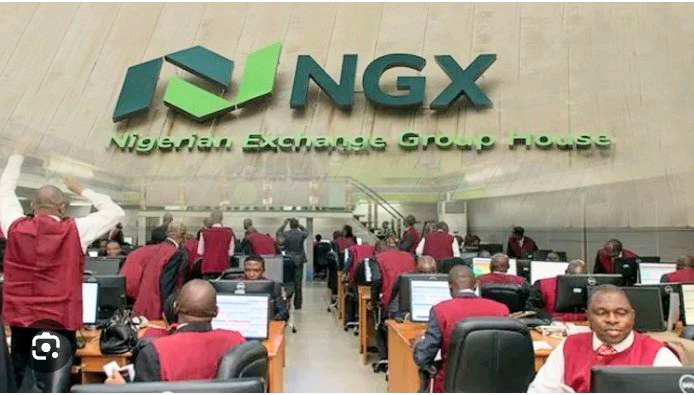
NGX’s ASI climbs by 0.27%, as PMI rises to 54.1% in May

Nigerian Exchange (NGX) All-Share index edged up 0.27 per cent amid decreasing liquidity, just as the Purchasing Managers’ Index (PMI) jumped to 54.1 all in May 2026, according to the Exchange and StanbicIBTC reports.
According to the NGX report covering up to May 29, this year, the All-Share Index (ASI) appreciated by 0.27 per cent to close at 250,385.47, with market capitalisation rising to N160.509 trillion.
This gain reversed the marginal 0.25 per cent decline recorded the preceding week, leaving the market unchanged over the two weeks.
Sectoral performance remained mixed, as the NGX Oil & Gas index led the performance with a +2.53 per cent increase, marking a year-to-date rise of 123.94 per cent.
However, the NGX Banking Index fell by -2.43 per cent, erasing its prior week gain of +1.11 per cent. Additionally, the NGX Consumer Goods and Growth indices also closed lower at -1.52 per cent and -1.04 per cent, respectively, with the market showing that more stocks fell than rose (51 down versus 34 up).
The report indicates that the Nigerian stock market is proceeding cautiously, maintaining strong gains made earlier in the year, although trading is slowing.
Investors are also reallocating their funds towards energy and commodity stocks, while banking stocks are experiencing selling and growing caution.
Meanwhile, data obtained from the Stanbic IBTC’s June 2026 Purchasing Managers’ Index (PMI) report indicate that Nigeria’s private sector recorded a notable improvement in May 2026, with the headline index rising to 54.1 from 52.4 in April 2026.
This represents the strongest monthly expansion since August 2025 and marks the fourth consecutive month in which private-sector activity has remained above the 50-point threshold, signalling sustained growth.
The improvement was driven primarily by stronger demand and an increase in new orders, with the relevant index rising to 57.0 points from 54.6 points in the previous month.
Firms attributed the increase in demand to the introduction of new products and responded by expanding inventories at a robust pace.
On the price front, higher fuel costs, partly associated with the outbreak of conflict in the Middle East, continued to exert upward pressure on input costs and output prices.
Nevertheless, inflationary pressures eased for the second consecutive month, with input-cost inflation falling to a three-month low and output-price inflation moderating to its weakest level since February.
The sustained expansion in the PMI points to strengthening private-sector momentum and resilient demand as the economy enters the second half of the year.
However, persistent cost pressures arising from fuel prices, coupled with subdued job creation due to power shortages and inadequate infrastructure, highlight structural constraints that could hinder economic recovery and long-term growth.
Credit: CSEA