Skip to content

DAPPMAN accuses Dangote Refinery of plotting private monopoly in fuel market

Responding to the recent lawsuit filed against the Federal Government by the Dangote Refinery over the former’s decision, last week, to license six companies to import petrol, the Depot and Petroleum Products Marketers Association of Nigeria (DAPPMAN) has accused the Dangote Refinery of seeking to establish a monopoly in Nigeria.
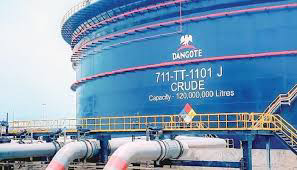
DAPPMAN further insisted that the country’s downstream petrol marketing remains competitive for all operators in the industry, just as the association described the Dangote lawsuit as one that is ‘against the Nigerian consumers,’ as the legal action instituted by the refinery only ‘seeks to reduce that field of players’ in the industry.

It would be recalled that barely days after the Nigerian Midstream and Downstream Petroleum Regulatory Authority (NMDPRA) had resumed the issuance of petrol import licences to petroleum marketers, the Dangote Refinery dragged the federal government to court over what it termed ‘policy inconsistency.’
Earlier, last week, NMDPRA in what was described as a notable shift in the country’s downstream petroleum policy, granted six major marketers permits to import a combined total of 720,000 metric tonnes of Premium Motor Spirit (petrol) into Nigeria.
The beneficiaries include; NIPCO, AA Rano, Matrix, Shafa, Pinnacle, and Bono.
According to allocation details, NIPCO is expected to import 120,000 metric tonnes; AA Rano, 150,000 metric tonnes; Matrix, 150,000 metric tonnes; Shafa, 120,000 metric tonnes; Pinnacle, 120,000 metric tonnes; and Bono, 60,000 metric tonnes.
NMDPRA did not give reasons for the reintroduction of petrol importation licenses policy, amid concerns over the capability of the Dangote Refinery and other local refineries to meet demand, as well as guarantee petrol supply security.
The recently-appointed NMDPRA boss Rabiu Umar had told the senate committee penultimate week, during his screening, that one of his aims is if confirmed for the job is to work towards ensuring petrol supply security in the downstream sector.
Industry data previously released by the regulator indicated that the Dangote Refinery accounted for a significant share of domestic petrol supply.
Meanwhile, last Friday, the Dangote Refinery had approached the Federal High Court in Lagos seeking to nullify the import permits issued or renewed by the NMDPRA, while further accusing the federal government of policy inconsistency despite earlier projections promoting a Nigeria-first policy aimed at encouraging local production and refining.
Dangote Refinery is also seeking the cancellation of import permits granted to the NNPCL and several petrol marketers.
According to the court filing, the refinery argued that the licences issued in May undermine its business operations and violate existing laws, which permit fuel importation only when local supply is insufficient.
While Dangote Refinery claims it currently possesses the capacity to meet a large portion of Nigeria’s local fuel demand, data released by NMDPRA showed that the refinery supplied about 79 percent of the country’s petrol consumption in April 2026.
It is against this backdrop that the NMDPRA proceeded with the issuance of additional import licences,the regulatory agency explained.
Meanwhile, reacting to the lawsuit filed by the Dangote Refinery, weekend, in a statement posted on its X handle, DAPPMAN explained that the import licences at the centre of the lawsuit are not administrative courtesies, but legal instruments through which Nigeria’s fuel supply chain functions.
DAPPMAN further explained that the licences were issued under a regulatory framework established by the Petroleum Industry Act, by an authority empowered to make exactly this kind of determination.
It noted that the NMDPRA has consistently maintained, correctly, that these licences exist to protect supply security, not to disadvantage any single producer, however large.
The association said its member companies have invested billions of naira in depot infrastructure, logistics networks, and compliance systems on the basis that their operating licences are valid, lawful, and durable.
It further added that a legal action designed to retroactively void those licences does not just affect individual businesses but introduces uncertainty into the entire downstream supply chain at a moment when Nigeria can least afford it.
It said while it respects the Dangote Petroleum Refinery’s right to pursue legal remedies, what it does not accept is the premise that a private refinery’s commercial interests should override a regulatory authority’s mandate to ensure adequate supply to Nigerian consumers.
DAPPMAN said the PIA was clear that import licences may be issued where the regulator determines it necessary. Adding that that determination has been made, and has been defended in court before, and would be defended again. Consequently, it said it would be engaging legal counsel, coordinating with affected member companies, and making formal representations to the relevant authorities on the matter.
“Our members did not build this industry to watch it be argued out of existence in a courtroom. They built it to serve Nigeria. That is what they will continue to do, and DAPPMAN will stand behind every one of them through this process.
“The downstream sector works because multiple players operate within it. A lawsuit that seeks to reduce that field of players is ultimately a lawsuit against Nigerian consumers,” the association noted.