Skip to content

Global market has lost 880mb of oil ‘forever,’ says Saudi Aramco

Saudi Aramco has issued one of the starkest warnings yet about the state of the global energy market, declaring that nearly 880 million barrels of liquid hydrocarbons have effectively vanished from global supply chains as the Strait of Hormuz crisis pushes the world toward what the company described as an unprecedented energy shock.
In a presentation published Monday alongside the company’s first-quarter earnings results, Saudi Aramco CEO Amin Nasser said the continuing disruption in the Persian Gulf had already removed roughly 1.442 billion barrels of oil and refined products from the market since the escalation of hostilities in the Middle East earlier this year. Despite emergency rerouting efforts and the release of strategic reserves, hundreds of millions of barrels remain unrecoverable, according to a Reuters report.

“The energy supply shock that began in the first quarter is the largest energy supply shock ever,” Nasser told investors, warning that even if the Strait of Hormuz reopened immediately, the market would still require months to stabilize.
The comments come as the global energy crisis intensifies following months of disruption in one of the world’s most strategically vital maritime corridors. The narrow waterway between Iran and Oman normally carries around 20% of global seaborne oil trade and a major share of liquefied natural gas exports destined for Asia and Europe.
Saudi Aramco said it activated its East-West crude pipeline system at near-maximum capacity, redirecting up to 7 million barrels per day away from the Gulf toward Red Sea export terminals. Governments also tapped strategic petroleum reserves while traders rerouted shipments wherever possible. Yet according to Nasser, those mitigation measures failed to replace approximately 880 million barrels already lost from the system.
The company warned that continued Strait of Hormuz disruption could delay oil market recovery into 2027.
Oil markets have reacted violently to the continuing instability. Brent crude surged above $100 per barrel during the crisis and briefly touched $126, reinforcing fears that the oil prices above $100 era could become the new normal for global consumers and industries.
The closure and militarization of the Strait of Hormuz began after the outbreak of the Iran war and subsequent military confrontation involving Iran, Israel, and the US. Shipping traffic through the strait collapsed by more than 90% at certain stages of the conflict, while insurance costs for tankers soared to record levels.
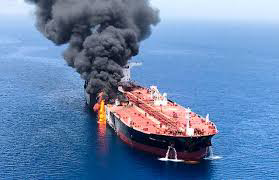
Several commercial vessels were struck or seized during the crisis, further intensifying fears across energy markets. The situation worsened after US strikes Iranian oil tankers escalated tensions across the Gulf.
Although some tankers have managed to bypass the blockade using alternative coastal routes, global export capacity remains severely constrained. Saudi Arabia’s East-West pipeline, often promoted as a strategic bypass to Hormuz, has proven insufficient to compensate for the magnitude of lost Gulf exports.
Aramco executives also noted that high oil prices have failed to trigger a significant increase in production outside the Persian Gulf. That development has alarmed analysts because it suggests the current shortage is structural rather than temporary. Unlike previous crises where higher prices quickly stimulated alternative output, producers elsewhere appear unable or unwilling to ramp up supply fast enough to stabilize markets.
Analysts say the ongoing oil supply shock is now exposing vulnerabilities across global refining and shippinginfrastructure.
The disruption has already begun reshaping global trade flows. Asian economies including China, India, Japan, and South Korea remain particularly vulnerable because of their heavy dependence on Gulf energy exports routed through Hormuz. European states are also facing renewed concerns over energy security as liquefied natural gas shipments from Qatar encounter severe delays and rerouting challenges.
Financial institutions have warned that prolonged supply disruptions could reignite inflationary pressures globally, raising transportation and industrial costs while undermining economic growth. Analysts at several investment banks have described the situation as the most serious threat to energy security in decades.
Meanwhile, OPEC oil output hits new low as Gulf export routes remain heavily constrained by the crisis.
Saudi Arabia itself has become increasingly central to the geopolitical confrontation. Earlier reports involving Saudi Aramco highlighted growing regional fears that attacks on energy infrastructure could trigger even wider instability across the Middle East.
Despite the turmoil, Aramco has benefited financially from soaring crude prices. A recent report noted that Saudi Aramco profits jump despite conflict in Middle East, driven largely by elevated oil prices and emergency export rerouting.
Nasser nevertheless stressed that rising revenues do not offset the broader risks facing the global economy if the crisis continues. According to Aramco estimates, the world is currently losing nearly 100 million barrels every week the Strait of Hormuz remains effectively closed.
The longer the disruption lasts, the more difficult and expensive recovery becomes. Tankers remain stranded, refining networks are operating below capacity, and strategic reserves are being depleted at a pace many governments consider unsustainable. Analysts have also warned that global fuel stocks heading for critically low levels could create fresh panic across commodity markets later this year.
The economic fallout is already spreading beyond the energy sector. From airlines to manufacturing industries and stock exchanges, the growing oil shock is beginning to reshape global financial markets.
At the same time, aviation companies are struggling to cope with rising operational expenses as the Middle East conflict fuels a broader fuel shock across international transport sectors.
The political dimensions of the crisis have also widened. Washington’s shifting strategy toward Gulf security emerged after reports that Saudi Hormuz crisis tensions forced the White House to reconsider regional military and economic priorities.
For global markets already weakened by geopolitical instability, inflation, and slowing industrial growth, the Hormuz crisis is rapidly evolving into a defining economic confrontation with worldwide consequences