Skip to content

Botswana, Tanzania, Nigeria initiate retaliatory action against South Africa over worsening xenophobic attacks

Amid ongoing anti-immigration protests and violent xenophobic attacks against African migrants residing in South Africa, the governments of Tanzania, Botswana and Nigeria have initiated process of retaliatory action on South Africa and its businesses located in their countries.
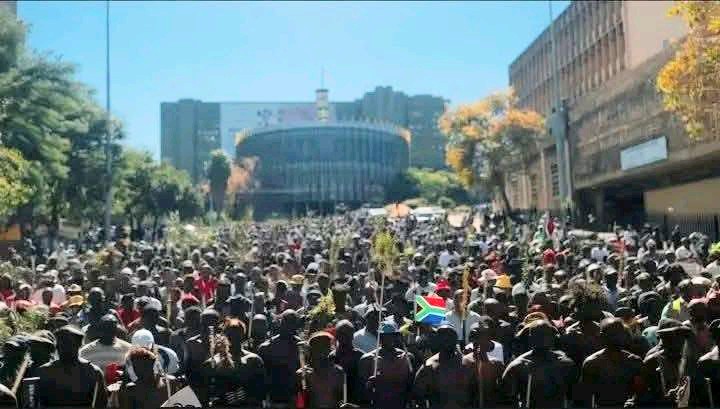
It would be recalled that thousands of angry South Africans took to the streets across the country, last Sunday, against immigration, even as the protests had before then turned violent with killing of suspected African migrants, including Nigerians, in what is seen as renewed concerns over xenophobic violence.


The protesters who gathered in Durban, Pretoria and Johannesburg voiced their frustration over what they described as the growing strain on public resources, rising unemployment, and others which they blamed on African migrants living in South Africa.
However, reacting to the violent attacks on his country’s citizens,
Botswana President, Duma Boko has declared a state of emergency and announced drastic measures against South Africa.
Botswana shares border with South Africa on the north west region close to Pretoria.
Among the most striking decisions is the cutoff of electricity to several South African provinces, an unprecedented move that risks worsening the already severe energy crisis in the neighboring country.
In addition, the Botswana government has ordered the immediate closure of its borders and demanded the return of all its citizens currently in South Africa.
In a firm speech, Duma Boko strongly criticized the treatment of Botswana nationals, recalling his country’s historical support during the struggle against apartheid.
“We helped you fight oppression, and today our children are being humiliated,” the angry president stated.
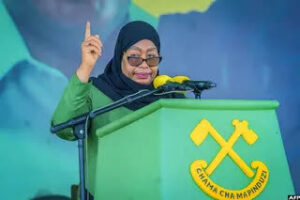
Similarly, while reacting to the worsening attacks, President of Tanzania, Samia Suluhu Hassan, last Tuesday, issued a 48-hour ultimatum to all South Africans in the country to leave.
President Hassan’s order is seen as in a move signalling the escalation of diplomatic tensions between the East African nation and South Africa.
Furthermore, the Tanzanian government has also ordered the immediate closure of borders between both countries and suspended the export of Tanzanian goods to South Africa.
In a strongly worded statement, President Hassan condemned the alleged violence, accusing South Africa of failing to uphold the spirit of African unity.
She stressed that such actions contradict the historical solidarity shown by African nations during South Africa’s struggle against the Apartheid.
The Tanzanian leader further noted that countries like Tanzania played key roles in supporting liberation movements and hosting exiles during the apartheid era, adding that the recent developments represent a departure from those shared values.
The measures, if fully implemented, could have far-reaching implications for trade, regional cooperation, and diplomatic relations across the continent.
The Nigerian senate during its Tuesday plenary had also issued a stern warning to the South African government over the worsening xenophobic attacks on Nigerians, in particular, as it warned of retaliatory action if the attacks continue.
Deliberating on the matter during plenary, the Senator representing Bauchi Central, Abdul Ahmed Ningi, said Nigerians can take the fight to South African territory, even as he condemned the poor manner in which the issue is being handled by the South African government.
“If these things continue, we have alternatives, we have options, and therefore, these words should be sent across South Africa.
“We know where South Africans are, not only in Nigeria but all over Africa, and we can take this fight to their territory,” Senator Ningi said.
Similarly, Senator Adams Oshiomhole (Edo North) urged the Federal Government to take action over attacks on Nigerians in South Africa, and further retaliate against South African businesses operating in Nigeria.
“I am not going to shed tears. If you hit me, I hit you. I think it is appropriate in diplomacy. It is an economic struggle,” Senator Oshiomhole said.
According to Oshiomhole, while some South Africans accuse Nigerians of taking their jobs, Nigerians should return home and take over employment opportunities created by major South African companies operating in the country, including MTN and DSTV.
“When we hit back, the President of South Africa will not only talk but will also go on his knees to recognise that Nigeria cannot be intimidated.
“We will not condone any life being lost. If a crime has been committed under South African law, they have the right to bring any such person to justice, but to kill our people as if we are helpless, we will not allow that,” Oshiomhole added.
However, reacting to the widespread condemnation by countries over the situation in South Africa, the country’s president, Mr Cyril Ramaphosa has denied allegations of xenophobia against his country.
President Ramaphosa, barely hours after the Nigerian senate called for stringent action, including the boycott of South African businesses stated that South Africans are not xenophobic.
Responding to the situation, Ramaphosa emphasized unity across the continent, dismissing claims of widespread hostility toward foreign nationals.
“South Africans are not against people from other nations. We are one people. We’re not xenophobic,” he said.
Meanwhile, in what appears to be a twist to the diplomatic engagement by the Nigerian government, the
Minister of Foreign Affairs, Bianca Odumegwu-Ojukwu, last Thursday, disclosed that the South African government is deliberately blocking attempts to evacuate Nigerians from the troubled country.
According to the Minister, over 130 Nigerians had reportedly requested repatriation under a government-assisted return arrangement, but the South African government objected to Nigeria’s planned evacuation of citizens willing to return home following renewed xenophobic attacks in the country.
The Minister said South Africa raised concerns over the evacuation move during discussions between officials of both countries.
According to her, South Africa’s Minister of International Relations and Cooperation, Ronald Lamola, expressed reservations about the decision after Nigeria announced plans to evacuate citizens seeking to leave the country.
The Nigerian government, however, insisted it could not remain silent amid reports of harassment, intimidation and attacks targeting Nigerians and other foreign nationals in parts of South Africa.
Odumegwu-Ojukwu said Nigeria’s priority remains the safety and protection of its citizens, especially those who now fear for their lives following the latest wave of anti-foreigner protests.
The minister, however, warned that continued attacks against Nigerians could eventually affect South African businesses operating in Nigeria if tensions continue escalating.
She also expressed concern over reports that Nigerian children living in South Africa, including children from mixed Nigerian-South African families, are facing bullying and discrimination in schools.