Skip to content

China’s solar power export to Africa hit 19GW in 2025, toppling Nigeria’s total generating capacity
 Sopuruchi Onwuka Posted on
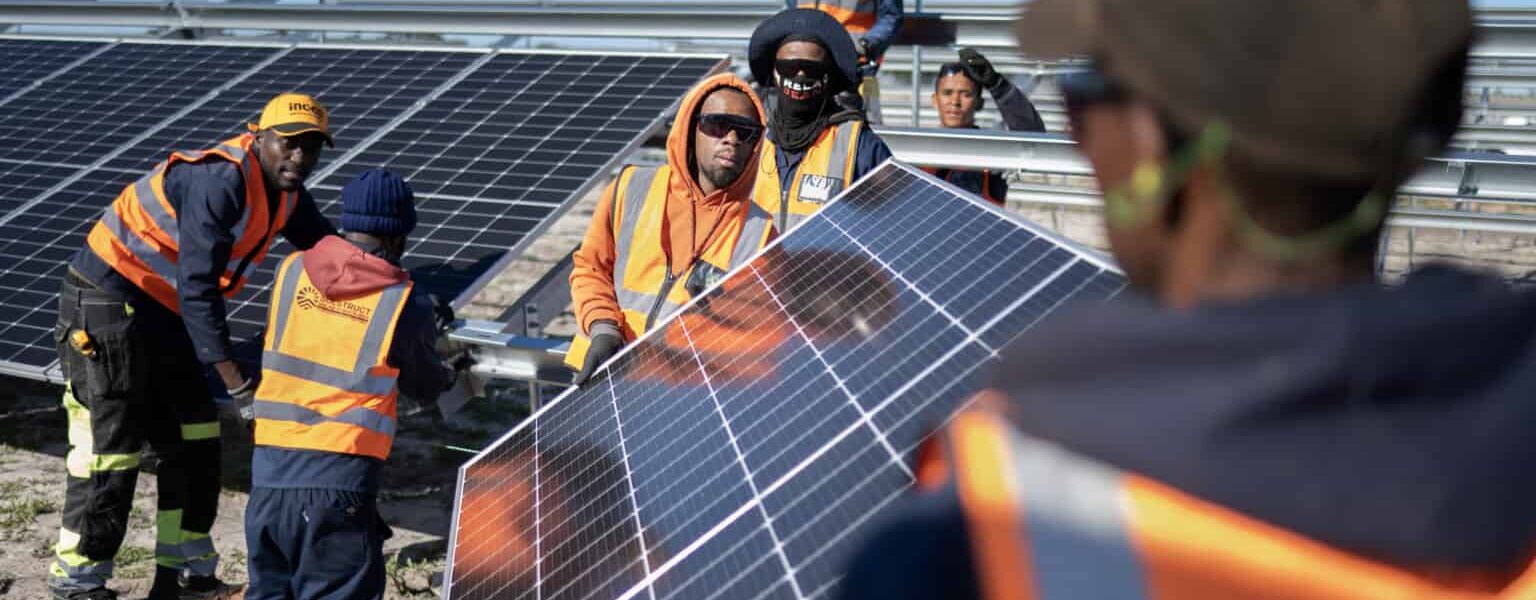
 Chinese firms shipped a significant 19,000 megawatts of solar generating capacity to Africa in 2025, marking a 48% increase on 2024. The scale is striking when set against countries like Nigeria, where total available grid power has at times hovered around just 5,000 megawatts. In effect, a single year of solar imports into Africa now far exceeds the installed capacity of one of the continent’s largest economies.
That jump is not just about volume. It points to a deeper shift in global solar trade. On the supply side, Chinese manufacturers continue to dominate production, backed by massive industrial capacity and aggressive pricing that has driven down the cost of solar modules. But that scale has also created surplus, especially as Western markets tighten trade barriers on Chinese clean energy products.
Africa, by contrast, offers a different kind of opportunity. Demand is rising quickly as governments and businesses look for faster ways to close persistent electricity gaps. Solar fits that need. It is relatively cheap, quick to deploy, and does not depend on the long timelines associated with large, centralized power projects.
The nature of deployment is also changing. Much of the imported capacity is not feeding into national grids. Instead, it is going into distributed systems such as mini-grids, commercial installations, and rooftop setups. This is gradually reshaping how electricity is delivered, especially in areas where grid expansion has lagged.
At the same time, shifting global trade dynamics are reinforcing the trend. With the United States and Europe placing tighter restrictions on Chinese solar imports, Africa is becoming a key destination for excess manufacturing capacity. Fewer entry barriers, combined with large unmet energy demand, make the continent an increasingly important outlet.
The benefits are immediate. Greater access to solar technology is helping expand electricity access and reduce reliance on diesel generation. For many businesses, it is becoming a more reliable and cost-effective option.
But the longer-term picture is more complex. The surge in imports highlights a structural imbalance, where Africa is emerging as a major consumer of renewable energy technology without building equivalent domestic manufacturing capacity. That raises questions about how much value the continent captures from its own energy transition.
For now, the trajectory is clear. China’s solar exports are rising fast, and Africa’s demand is keeping pace. The result is a growing link between Chinese industrial output and Africa’s energy future, one that is likely to deepen as both sides respond to shifting global market pressures.