Skip to content

Strait of Hormuz opens as US, Iran reach ceasefire

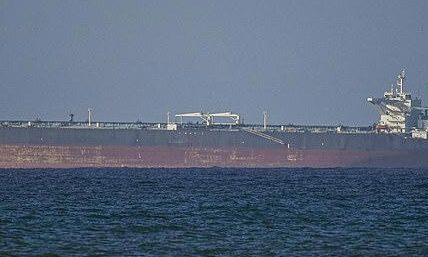
The United States and Iran have agreed to a conditional two-week ceasefire, allowing the resumption of shipping through the strategically vital Strait of Hormuz, in a fragile pause to weeks of escalating conflict.
The agreement comes more than a month after coordinated military strikes by the US and Israel on Iranian targets, and just hours after US President Donald Trump issued a stark ultimatum warning that “a whole civilisation will die tonight” if Tehran failed to reopen the critical oil transit corridor.

Pakistan’s Prime Minister, Shehbaz Sharif, who has been mediating the negotiations, announced early Wednesday that the ceasefire had taken immediate effect. He also confirmed that further talks are expected to take place in Islamabad on Friday to work toward a more comprehensive agreement.
Under the terms outlined by Washington, Trump said the US would “suspend the bombing and attack of Iran for a period of two weeks” on the condition that Iran guarantees safe passage through the Strait. In a post on Truth Social, he said the decision followed the achievement of key military objectives.
“We have already met and exceeded all military objectives,” Trump said, while also indicating that discussions on tariffs and sanctions relief with Iran would follow.
Iran confirmed it would allow vessels to pass through the Strait for the duration of the ceasefire, with movements coordinated by its armed forces. However, Tehran also released a sweeping 10-point proposal that includes demands for a broader cessation of hostilities across Iraq, Lebanon and Yemen, the lifting of sanctions, the release of frozen Iranian assets, and compensation for war-related damages.
The plan further states that Iran is fully committed to not pursuing nuclear weapons, though US officials have maintained that the handover of enriched uranium remains a non-negotiable condition.
Despite the announcement, confusion persists over the scope of the ceasefire. While Israel has backed the agreement in principle, Prime Minister Benjamin Netanyahu clarified that operations in Lebanon—where Israeli forces are engaged against the Iranian-backed group Hezbollah—are not covered by the deal.
“Israel supports President Trump’s decision… subject to Iran immediately opening the straits and stopping all attacks,” Netanyahu said, adding that military operations in Lebanon would continue.
Hostilities also appeared to continue in parts of the region. Kuwait reported a wave of Iranian drone attacks targeting key infrastructure, including power and oil facilities, even after the ceasefire was declared. Air defence systems reportedly intercepted multiple drones.
In Israel, sirens sounded shortly after the announcement, with the military confirming it was intercepting missiles launched from Iran. Explosions were also heard in Jerusalem late Tuesday.
US Defence Secretary Pete Hegseth said the Strait of Hormuz had been reopened and that global shipping would resume, urging international partners to help ensure its continued security.
“It’s time for the rest of the world to step up and ensure that it stays open,” he said.
Meanwhile, Chairman of the Joint Chiefs of Staff, Dan Caine, stated that the US had achieved all three primary military objectives set at the outset of the campaign, including degrading Iran’s missile and naval capabilities.
European and allied leaders, including those from France, Germany, United Kingdom and the European Union, welcomed the ceasefire and called for a “swift and lasting end” to the conflict, urging all sides to fully implement the agreement.
However, analysts warn that the truce remains fragile, with both Washington and Tehran offering differing interpretations of its terms. Previous rounds of negotiations between the two countries have also been punctuated by renewed military escalation.
As diplomatic efforts resume, the coming days are expected to test whether the ceasefire can hold long enough to evolve into a broader and more durable peace agreement.