Skip to content

Iran chases back Qatar’s LNG vessels from Strait of Hormuz

Ziggy Ojiegbe
Tensions in the Persian Gulf are beginning to disrupt global energy flows, as Iran tightens its grip on key shipping routes.

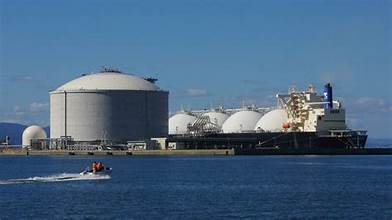
Two liquefied natural gas carriers — the Al Daayen and Rasheeda — have turned back toward Qatar after aborting an attempt to exit via the Strait of Hormuz, one of the world’s most critical maritime chokepoints.
Ship-tracking data shows both vessels reversing course mid-journey. The Al Daayen, which had initially signaled China as its destination, is now heading back toward Ras Laffan, Qatar’s main LNG export hub. The Rasheeda is also sailing westward, awaiting further instructions after briefly indicating Pakistan as its destination.
The sudden turnaround comes as Iran tightens control over Hormuz following escalating conflict involving the United States and Israel, whose strikes on Iranian targets began in late February. Since then, no loaded LNG cargo has successfully passed through the narrow waterway.
Before the conflict, roughly a fifth of the world’s LNG supply flowed through Hormuz, most of it from Qatar, with smaller volumes from the United Arab Emirates. Now, that vital artery is effectively choked, with Tehran allowing passage selectively, mainly for vessels it approves.
For Qatar, the disruption is a major setback. Its Ras Laffan export facility has already been offline for more than a month following Iranian attacks, leaving shipments stranded in the Gulf. Safe passage through Hormuz would have allowed those cargoes to reach global markets or at least ease storage pressure.
Instead, uncertainty is growing. Traders are closely watching vessel movements, though tracking in the region has become increasingly unreliable due to signal interference and deliberate transponder shutdowns in high-risk waters.
Ownership of the vessels underscores the global stakes. The Al Daayen is managed by Seapeak, while the Rasheeda is owned by Nakilat, one of the world’s largest LNG shipping firms.
So far, Iran appears to be enforcing a selective blockade — restricting Qatar-linked shipments while permitting some vessels tied to countries seen as less hostile. With no clear timeline for reopening the route, the Strait of Hormuz is fast becoming a critical energy chokepoint with global consequences.