Skip to content

Goldman Sachs lifts oil outlook as Hormuz disruption reshapes global markets

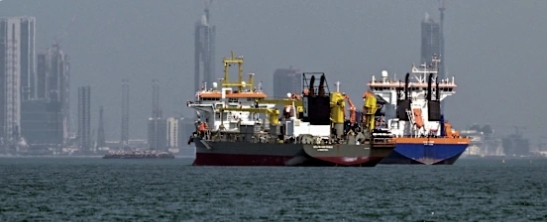
Goldman Sachs has sharply raised its oil price outlook for 2026, pointing to the prolonged disruption in the Strait of Hormuz as a defining shock to global energy markets. The bank now expects Brent crude to average $85 per barrel next year, up from an earlier forecast of $77, while West Texas Intermediate is projected at $79, compared with $72 previously. The revision reflects what Goldman describes as the most significant supply disruption in the history of the oil market, driven by the ongoing conflict involving Iran, the United States and Israel.
At the core of Goldman’s outlook is a scenario in which flows through the Strait of Hormuz, a critical artery for global energy trade, fall to just 5 percent of normal levels for six weeks before gradually recovering. Under that assumption, cumulative supply losses would exceed 800 million barrels. Current production disruptions in the Middle East are already estimated at 11 million barrels per day and could rise to as much as 17 million barrels per day at peak, underscoring the scale of the shock in a region that accounts for roughly a fifth of global oil and liquefied natural gas flows.

The bank expects prices to remain elevated in the near term, with Brent averaging around $110 per barrel through March and April, broadly in line with recent futures trading. Even as supply conditions improve later in the year, Goldman does not anticipate a rapid return to pre-war pricing. Instead, it argues that markets are undergoing a structural repricing of geopolitical risk, with a sustained premium now embedded in longer-dated oil contracts.
By the fourth quarter of 2026, Brent is forecast to ease to $71 per barrel and WTI to $67, both still higher than previous estimates. However, the risks around that baseline remain significant. A longer disruption to Hormuz could push fourth-quarter Brent prices toward $93, while more extreme scenarios could see prices exceed the highs reached during the 2008 commodity boom. Goldman’s 2027 base case for Brent stands at $80, reinforcing the view that the current shock will have lasting effects rather than being a short-lived spike.
Beyond supply disruptions, the bank highlights several factors that will shape the trajectory of oil prices. Spare production capacity within OPEC+, particularly from Saudi Arabia and its allies, could provide some relief, but there are concerns about how long that buffer can be sustained given fiscal pressures. U.S. shale producers are expected to respond, though not immediately, with Goldman estimating a near-term supply increase of about 1.5 million barrels per day. At the same time, efforts by governments to rebuild strategic petroleum reserves after the crisis are likely to add a layer of long-term demand, effectively placing a floor under prices even after supply normalizes.
The implications extend well beyond energy markets. Goldman has revised its U.S. monetary policy expectations in response to the oil shock, pushing back its forecast for the first Federal Reserve rate cut from June to September, with a second cut now expected in December. The shift reflects the difficult trade-off facing policymakers, as higher oil prices simultaneously drive inflation upward and weigh on economic growth. Jerome Powell has acknowledged this tension, noting that premature rate cuts could entrench inflation, while maintaining tight policy risks slowing the economy further.
Goldman now estimates that a sustained 10 percent increase in oil prices would raise headline PCE inflation by about 0.2 percentage points while reducing GDP growth by 0.1 percentage points. With prices already well above pre-war levels, the impact on household purchasing power and business costs is becoming more pronounced. The bank expects U.S. inflation to end 2026 at around 2.9 percent, still significantly above the Federal Reserve’s 2 percent target, complicating the path for policy easing.
Reflecting these pressures, Goldman has raised its probability of a U.S. recession over the next 12 months to 30 percent, up from 20 percent previously. While its base case remains one of continued, albeit slower, growth, the margin for error has narrowed considerably as energy costs ripple through the global economy.
For markets, the key question is no longer whether the disruption will have an impact, but how persistent it will be. Each additional week of constrained flows through Hormuz increases pressure on near-term prices and delays the normalization embedded in Goldman’s forecasts. The upcoming earnings season is expected to provide an early indication of how businesses are absorbing higher energy costs and whether the bank’s baseline scenario holds.
In a separate, less severe scenario that assumes no major supply disruption and a gradual easing of geopolitical tensions, Goldman maintains that oil markets could still move into surplus in 2026. Under that view, Brent would average closer to the mid-$60s for the year, with prices softening as OECD inventories build and OPEC+ begins to unwind production cuts. However, even in this case, the bank acknowledges downside and upside risks tied to potential sanctions relief for countries such as Iran or Russia, as well as uncertainties around global demand, particularly in Asia.
Taken together, Goldman’s latest outlook underscores a fundamental shift in how energy markets are being priced. What began as a geopolitical shock is increasingly shaping expectations for inflation, growth and monetary policy, placing oil at the center of the global economic outlook.