 Skip to content

Iran opens talks with countries willing to negotiate sail cargoes across Hormuz

* Blames US-Israel attacks for closure
The government of Iran has said countries seeking to move cargo through the Strait of Hormuz should negotiate directly with Tehran for safe passage, as tensions escalate following military actions by the United States and Israel.

The development comes after Donald Trump, President of the United States, called on allied nations to deploy naval forces to help reopen and secure the strategic waterway amid growing concerns about disruptions to global oil supply.
Iran has blamed the current instability on attacks by the United States and Israel, while accusing Washington of escalating tensions in the region.
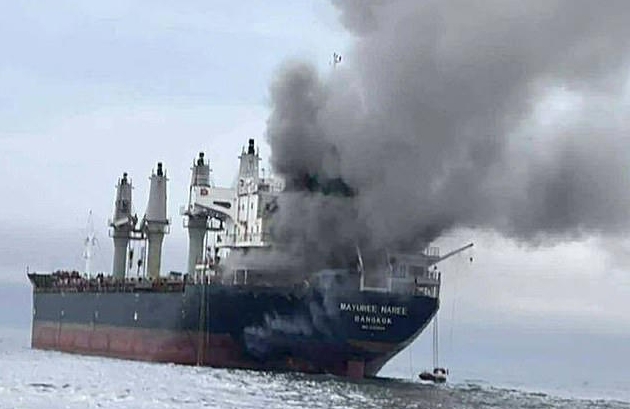
According to Iranian officials, Tehran has laid seabed mines and taken other defensive measures in the strait, while also targeting some oil tankers and halting oil production in certain parts of the Middle East. These actions have contributed to a tightening of global crude supply, pushing fuel prices higher and raising concerns about the short-term outlook for the global economy.
However, Abbas Araghchi, Iran’s foreign minister, said the country has not formally closed the strait and remains open to discussions with countries seeking safe transit.
In an interview with CBS News on June 15, Araghchi said, “We welcome any country that wishes to engage in dialogue for the safe passage of vessels in the Strait of Hormuz at any time.”
He added that the strait remains technically open, though the security situation has reduced vessel traffic.
“We guarantee the passage of vessels because we have not closed the strait,” Araghchi said, arguing that the decline in shipping activity is the result of the “unstable situation caused by the U.S.’ aggressive stance.”
Iran also maintains that the mines deployed in the waterway are fixed to the seabed and designed to target specific vessels rather than drifting mines that could indiscriminately attack ships.
Some countries have reportedly responded to Iran’s offer of negotiation. Subrahmanyam Jaishankar, foreign minister of India, told the Financial Times that New Delhi has been in dialogue with Tehran regarding maritime passage.
According to reports, India recently secured safe transit for two gas carriers moving through the Strait of Hormuz despite the regional conflict.
Other nations, including Turkey, France, and Italy, are also said to be in discussions with Iran over vessel passage.
Meanwhile, shipments heading to China, one of Iran’s largest crude oil buyers, have continued with little disruption.
Reports indicate that Iran’s oil exports have averaged more than 1.5 million barrels per day this month, a level that remains close to pre-conflict figures. By contrast, global crude oil supply has reportedly dropped sharply from around 14.7 million barrels per day to about 8 million barrels per day during the same period.
The Strait of Hormuz, located between Iran and Oman, is one of the world’s most critical energy chokepoints, with roughly a fifth of global oil shipments typically passing through the narrow waterway.


