Skip to content

Airlines resume cautious flights amidst Middle East airspace risks

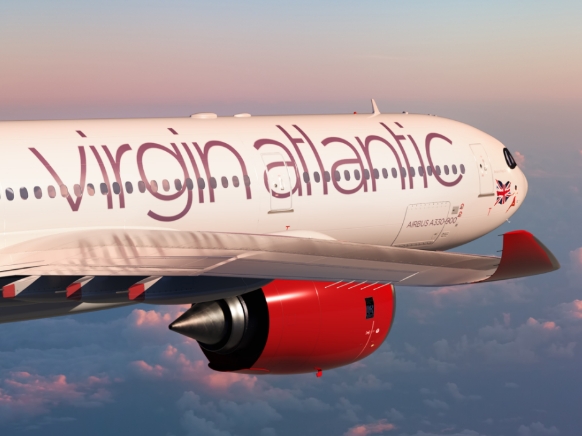
Virgin Atlantic has become the latest airline to resume operations from the United Arab Emirates, operating its first flight to London Heathrow since regional airspace closures began following the escalation of the US-Israel conflict with Iran.
The British carrier’s scheduled 11:20 a.m. flight departed Dubai International Airport at 11:50 a.m. local time on Wednesday. Virgin Atlantic also resumed services from Riyadh, with its first departure from King Khalid International Airport leaving at 4:22 a.m. local time.

However, many airlines across the region remain suspended.
Emirates said its scheduled flights will stay suspended until 11:59 p.m. local time on 7 March, while Etihad Airways has extended its suspension until 6 a.m. on 6 March. Both carriers are operating a limited number of repatriation flights for stranded passengers and will contact eligible travelers directly. Passengers who have not been contacted have been advised not to travel to the airport.
Budget airline flydubai has also restarted a limited number of flights.
The UAE’s General Civil Aviation Authority said Tuesday evening that 60 flights carrying 17,498 passengers have departed the country so far. Authorities aim to increase operations to around 80 flights per day, with capacity for approximately 27,000 passengers.
British Airways has arranged a special flight from Muscat to London scheduled to depart at 2:30 a.m. local time on 5 March. Seats are available on a first-come, first-served basis for passengers originally booked on flights from Dubai, Doha, Abu Dhabi, Bahrain, Amman, and Tel Aviv.
Despite these efforts, the majority of flights across the region remain cancelled.
Flight-tracking service Flightradar24 reported that more than 12,300 flights were cancelled between 28 February and 3 March across seven major Middle Eastern airports. These include Dubai International Airport, Hamad International Airport in Doha, Zayed International Airport in Abu Dhabi, Sharjah International Airport, Kuwait International Airport, Bahrain International Airport, and Dubai World Central – Al Maktoum International Airport.
In the UAE alone, around 20,200 passengers have been affected by cancellations or rescheduled flights. An additional 8,000 transit passengers remain stranded in Doha.
The conflict, which began on Saturday, has stranded hundreds of thousands of travelers across several countries. Tourists, business travelers, and religious pilgrims have found themselves stuck in airports, hotels, and even cruise ships.
Major aviation hubs such as Dubai International Airport, Abu Dhabi’s Zayed International Airport, and Hamad International Airport in Doha serve as key connections between Europe, Asia, and Africa. Over the weekend, Iranian strikes directly affected airports in both Dubai and Abu Dhabi.
Hamad International Airport remains closed as Qatari airspace is temporarily shut. Qatar Airways said it will resume operations once the country’s Civil Aviation Authority declares the airspace safe, with an update expected on Friday morning.
Airspace closures also remain in effect in Iran, Iraq, Bahrain, Kuwait, Syria, and Israel.
Several regional airlines have extended suspensions. Air Arabia has halted UAE flights until 3 p.m. local time on 4 March, while services to Lebanon, Jordan, Syria, and Iraq remain suspended until 5 March. Oman Air has cancelled flights to multiple destinations, including Amman, Dubai, Bahrain, Doha, Kuwait, and Baghdad, until 6 March.
Gulf Air flights are suspended while Bahrain’s airspace remains closed. Saudia has cancelled services to several regional cities, including Dubai, Abu Dhabi, Doha, Bahrain, and Kuwait, until late on 4 March.
Some Indian carriers have begun limited operations to help retrieve stranded passengers. IndiGo plans to operate four return flights to Jeddah, while Air India and Air India Express have resumed select services to Dubai and Muscat.
Meanwhile, several international airlines continue to cancel or suspend flights across the region.
Wizz Air has halted flights to Israel, Dubai, Abu Dhabi, Amman, and Saudi Arabia until at least 7 March. Turkish Airlines has cancelled services to numerous Middle Eastern destinations, including Iran, Iraq, Lebanon, and the UAE.
Air France has suspended flights to Tel Aviv, Beirut, Dubai, and Riyadh until 5 March. KLM has also stopped flying through airspace over Iran, Iraq, and Israel and has suspended flights to Dubai, Dammam, and Riyadh.
British Airways has cancelled several Middle East flights and is offering free changes for passengers scheduled to travel between London Heathrow and destinations including Abu Dhabi, Doha, and Dubai until 15 March.
Lufthansa Group airlines — including SWISS, Austrian Airlines, Brussels Airlines, ITA Airways, and Eurowings — have suspended flights to several regional destinations until early March.
Other carriers have taken similar precautions. Norwegian has suspended Dubai flights until 10 March, while Finnair has paused flights to Dubai and Doha until 28 March.
“We do not compromise on flight safety,” said Finnair Chief Operating Officer Jaakko Schildt. “Some flights to Dubai were turned away yesterday due to missile attacks.”
Delta Air Lines has cancelled New York–Tel Aviv flights until 8 March, and American Airlines has temporarily suspended its Doha–Philadelphia route.
Air Canada has also halted flights to Dubai and Tel Aviv, with services expected to restart on 23 March. Indonesia’s Garuda Indonesia has suspended flights to and from Doha until further notice.
Airlines say the situation remains fluid and that passenger safety continues to be the top priority.