Ziggy Ojiegbe
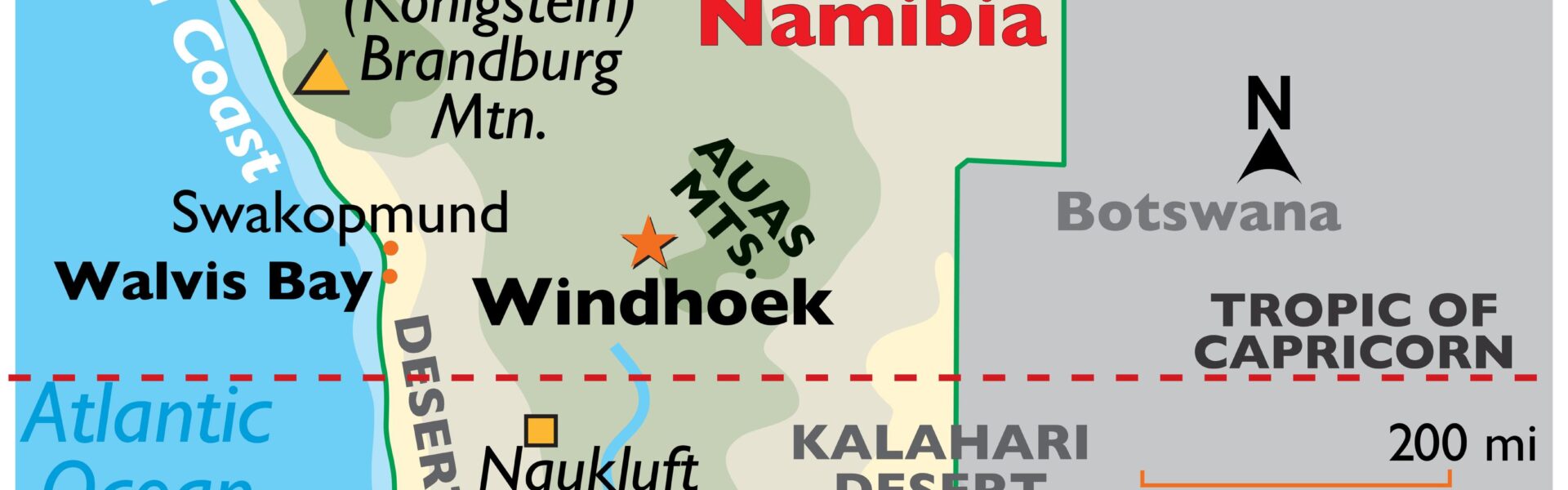
The government of Namibia has said it will not recognize recent stake purchases in the PEL 104 offshore exploration license by TotalEnergies and Petrobras, arguing that the companies failed to follow proper approval procedures.
Ad >>>

In a report reviewed by Oracle Intelligence, Namibia’s Ministry of Industries, Mines and Energy said the two majors did not formally notify the government of their intention to acquire 42.5 percent each in PEL 104. As a result, the ministry said, they did not obtain the required prior approval for the transfer of participating interests.
Under Namibian law, any assignment or acquisition of stakes in petroleum licenses must receive ministerial consent before it can be recognized. The government made clear that without this approval, the transaction cannot proceed.
TotalEnergies had announced it signed agreements to acquire a 42.5 percent operated interest in PEL 104 from Eight Offshore Investments Holdings and Maravilla Oil & Gas. If approved, the French major would become operator of the block, which lies north of PEL 83, home to the significant Mopane discovery. The planned ownership structure would see TotalEnergies and Petrobras each holding 42.5 percent, alongside Namcor with 10 percent and Eight with 5 percent.
The dispute adds a layer of uncertainty to what has been one of the most closely watched exploration frontiers globally. TotalEnergies recently completed a separate stake swap with Portugal’s Galp, securing a 40 percent operating interest in the block containing the Mopane discovery. In exchange, Galp received a 10 percent stake in the Venus block and 9.39 percent in PEL 91.
Namibia is widely seen as a potential new deepwater growth story, often compared to Guyana’s rapid rise as an oil producer. However, the country lacks the infrastructure needed to quickly develop offshore finds, making projects more capital-intensive and complex. Even so, international oil companies appear willing to commit significant investment to secure new production that can offset declines in mature basins.
For now, the future of the PEL 104 transaction hinges on regulatory approval. The government’s stance sends a clear signal that, despite strong industry interest, procedural compliance remains non-negotiable.


 Skip to content