Skip to content

Tinubu Authorises CVFF disbursement, targets 30,000 maritime jobs

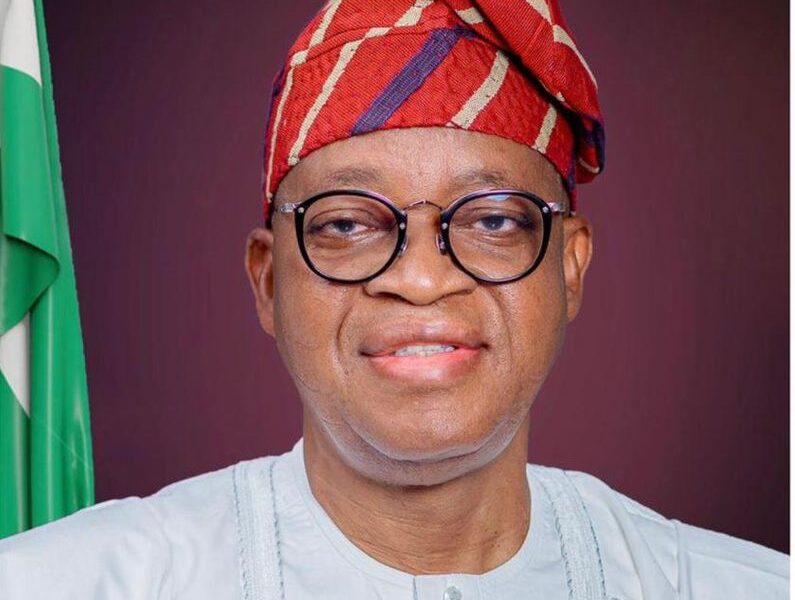
President Bola Tinubu has authorised the disbursement of the long-awaited Cabotage Vessel Financing Fund (CVFF), with the Minister of Marine and Blue Economy, Dr Adegboyega Oyetola, directing the Nigeria Maritime Administration and Safety Agency (NIMASA) and 12 Primary Lending Institutions (PLIs) to accelerate the process.
Oyetola said the presidential authorisation marked a decisive step towards ending more than 20 years of delays in accessing the fund and unlocking fresh investment, industrial growth and employment opportunities across Nigeria’s maritime sector.

The minister disclosed this in a statement issued on Sunday by his Special Adviser, Dr Bolaji Akinola.
According to him, NIMASA had so far received 92 applications for CVFF financing, of which 20 had been forwarded to the PLIs, while one application had completed review and been sent for final approval.
Oyetola described the move to operationalise the fund as a major milestone in the Federal Government’s drive to strengthen indigenous participation in Nigeria’s coastal and offshore shipping industry.
He recalled that in April 2025, he directed NIMASA to commence the disbursement process, breaking with years of administrative stagnation and setting the stage for the revival of indigenous shipping capacity.
The process gathered further momentum with the launch of the CVFF Application Portal in Lagos on January 22, designed to provide eligible Nigerian shipowners with a more transparent and structured mechanism for accessing the financing facility.
To widen access and reduce delays in loan processing, the number of PLIs was subsequently increased from five to 12, according to the minister.
The CVFF, which has accumulated for more than two decades, was established to provide low-interest, long-term financing for vessel acquisition, enabling Nigerian operators to build or acquire vessels and compete more effectively for opportunities in the domestic maritime market.
Oyetola said access to the fund would strengthen the capacity of Nigerian shipowners to compete for coastal shipping contracts, reduce the country’s dependence on foreign vessels and ensure that a greater proportion of maritime revenues remains within the Nigerian economy.
The initiative could also have significant employment implications, with the minister projecting the creation of more than 30,000 direct and indirect jobs across shipyards, marine engineering companies and maritime logistics firms.
He said the disbursement was being driven by President Tinubu’s determination to resolve the financing constraints that have historically limited indigenous participation in the maritime industry and unlock the wider economic potential of Nigeria’s blue economy.
Beyond vessel financing, Oyetola said the Federal Government was simultaneously strengthening the human-capital base required to support an expanding maritime industry through NIMASA’s seafarer development initiatives.
He disclosed that 222 Nigerian seafarers had received free basic and advanced training, while 333 cadets had completed academic training and obtained degrees.
“Under the Nigerian Seafarers Development Programme, 135 cadets successfully completed the programme and obtained Certificates of Competency,” he said.
The minister further disclosed that 7,059 Nigerian seafarers had been placed onboard vessels to acquire the mandatory sea-time experience required for professional advancement.
The combination of vessel financing and manpower development, Oyetola said, was intended to address two of the most fundamental constraints to Nigeria’s maritime competitiveness—limited indigenous shipping capacity and inadequate access to opportunities for developing a skilled maritime workforce.
The CVFF intervention therefore represents more than the release of a dormant financing pool. By directing long-delayed funds towards vessel acquisition while simultaneously expanding the country’s pool of certified seafarers, the government is seeking to create the financial and human-capital foundation for a stronger Nigerian-owned shipping industry.
Oyetola said the interventions reflected the administration’s commitment to ensuring that Nigerians become direct beneficiaries of the investment, employment and commercial opportunities expected to emerge from the country’s blue economy.