Skip to content

UN dismayed as Iran admits killing 3,000 protester

Frank Okon
The United Nations has expressed alarm after an Iranian official acknowledged that around 3,000 people have been killed amid the ongoing crackdown on nationwide protests.

An Iranian official told The New York Times on Tuesday that the death toll had reached about 3,000. A separate source speaking to Reuters attributed the deaths of civilians and security personnel to what it described as “terrorists.”
UN High Commissioner for Human Rights Volker Türk said he was “horrified” by what he described as escalating violence by Iranian security forces against largely peaceful demonstrators.
“This cycle of horrific violence cannot continue. The Iranian people and their demands for fairness, equality and justice must be heard,” Türk said in a statement read by UN Human Rights Office spokesperson Jeremy Laurence.
When asked about the scale of the killings, Laurence said the UN’s own sources in Iran point to “hundreds” of deaths, underscoring the uncertainty surrounding the true toll.
Security lockdown in western Iran
Meanwhile, sources told The Jerusalem Post that Iran’s Islamic Revolutionary Guard Corps (IRGC) has imposed sweeping security measures across several western provinces, including West Azerbaijan, Kurdistan, Kermanshah and Ilam.
According to the sources, entrances to many cities have been blocked and numerous checkpoints established. IRGC forces are reportedly stopping vehicles, searching them and, in some cases, forcing citizens to unlock their mobile phones.
In border areas such as Sardasht in West Azerbaijan, as well as Baneh and Marivan in Kurdistan, heavy military equipment and IRGC special forces have been deployed. The measures have severely disrupted daily life in border communities, with widespread restrictions on movement and local activities.
Iran has also imposed a near-total shutdown of internet and telephone services. As a result, many residents are relying on satellite television for news, though broadcasts are heavily jammed in most cities. There have also been reports of house-to-house searches in cities including Tehran and the confiscation of satellite dishes.
Conflicting death toll estimates
Independent estimates of the death toll vary widely and remain difficult to verify due to the communications blackout.
The US-based human rights organisation HRANA said that as of Sunday it had confirmed 646 deaths linked to the protests. Of those, 505 were protesters, including nine children. HRANA also reported the deaths of 133 members of the military and law enforcement, one prosecutor and seven civilians not participating in protests. An additional 579 reported deaths remain under review.
Other outlets have reported far higher figures. Iran International estimated that more than 12,000 people may have been killed, largely over the course of two nights, describing the events as “the largest killing in Iran’s contemporary history.” The claim has not been independently verified.
HRANA also said at least 10,721 people have been detained since the protests began, and that 97 cases of forced confessions have been broadcast by state or state-affiliated media.
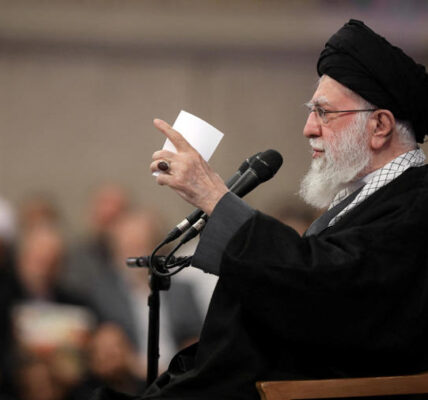
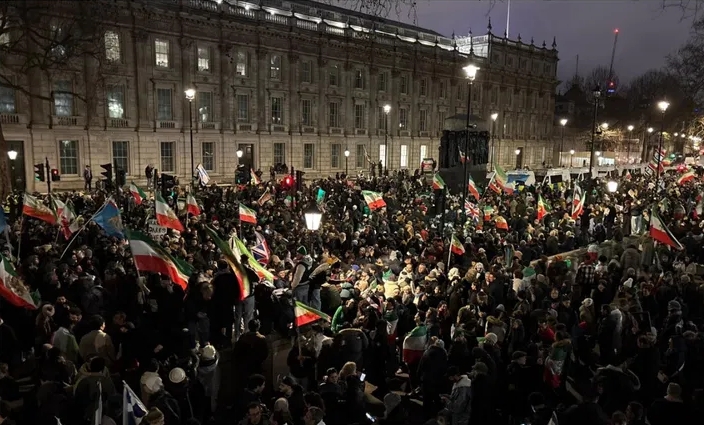
On Monday, protesters gathered at Tehran’s largest cemetery, Behesht-e Zahra, chanting slogans including, “This year is the year of bloodshed; Seyyed Ali will be overthrown,” according to videos posted online. The phrase refers to Supreme Leader Ayatollah Ali Khamenei.
Videos released by HRANA also appear to show security forces firing at protesters. One clip shows an armed officer shooting from the back of a moving motorcycle, later joined by others. The exact date and location of the footage could not be independently verified.
HRANA said the communications blackout has severely limited documentation and that all figures represent minimum verified estimates.
The protests, which began on December 28, have continued despite the sweeping security measures and rising casualties.