Skip to content

New collaboration with Elon Musk aims to make Israel global AI leader

Global technology entrepreneur Elon Musk is working toward a collaboration agreement with the State of Israel to advance artificial intelligence (AI) and autonomous vehicle technology, a move expected to strengthen Israel’s position as a global leader in the sector.
According to a report by the Jerusalem Post reviewed by Oracle Intelligence, Israeli Prime Minister Benjamin Netanyahu and Musk have already begun discussions on cooperation in AI development and autonomous transportation.
The report said Netanyahu, Transportation Minister Miri Regev, and the head of Israel’s National AI Directorate, Erez Eskel, held a conference call with Musk on Sunday, a development confirmed by the Prime Minister’s Office on Monday.
Netanyahu and Musk spoke at length about advancing artificial intelligence in Israel, with the Prime Minister stating that he intends to “catapult Israel forward and turn it into a global leader in the field.”
He added that such progress would build on Israel’s past achievements in cyber security and other advanced technologies.
The call also covered ongoing cooperation between Israel and Tesla, including efforts to advance legislation that would support the deployment of autonomous vehicles.
During the discussion, Musk accepted an invitation from Netanyahu and Regev to participate in Israel’s Smart Transportation Conference scheduled for March 2026.
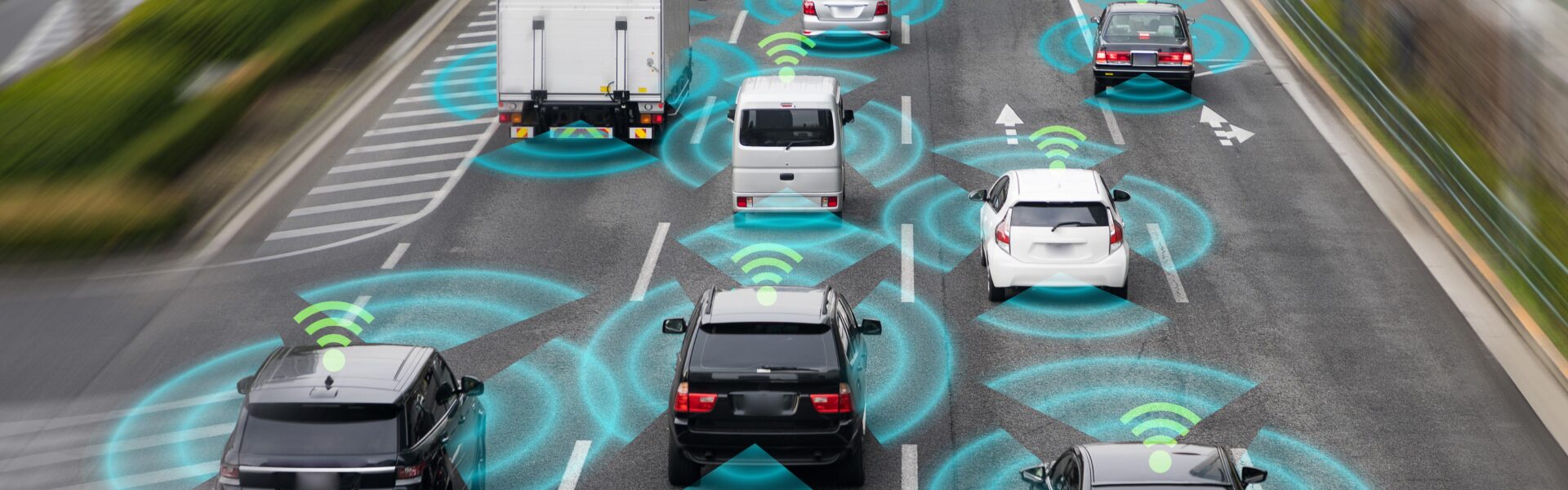
Oracle Intelligence reports that autonomous vehicles rely on a combination of remote-sensing technologies, including radar, GPS, cameras, and lidar, to monitor their surroundings and generate a three-dimensional map of the environment. This typically includes road infrastructure, other vehicles, pedestrians, traffic lights, and road signs.
Advanced computer systems process the collected data and make real-time decisions on vehicle operation, continually adjusting steering, speed, acceleration, and braking as sensors relay constant updates about the surroundings.
Machine learning and artificial intelligence are core components of automated vehicle systems. Through machine learning, vehicles are trained to interpret complex data, refine operating algorithms, and improve their ability to navigate different driving conditions. Artificial intelligence enables these systems to make decisions without requiring specific instructions for every possible scenario encountered on the road.
Connected vehicle technology further enhances autonomy by allowing vehicles to communicate with one another and with surrounding infrastructure through radio signals. This shared information creates a more complete picture of the driving environment, including elements that may not be within direct visual range, contributing to improved safety for drivers, pedestrians, and cyclists.
While vehicles with partially automated features such as lane-keeping assist, adaptive cruise control, and traffic jam assist are already available on the market, fully autonomous vehicles are not yet commercially available for public use. Predictions on full deployment vary, with Stage 4 automation expected to become available to consumers between 2030 and 2035.