Skip to content

PETAN demands role in regulating project economics

- Insists Nigeria’s petroleum industry services are cheapest in Africa
Sopuruchi Onwuka
The President of the Petroleum Technology Association of Nigeria, Engr. Wole Ogunsanya, says service costs in Nigeria’s oil and gas industry remain the lowest in Africa. But he stressed that the industry cannot manage costs effectively unless PETAN is formally allowed to help regulate and benchmark project economics.

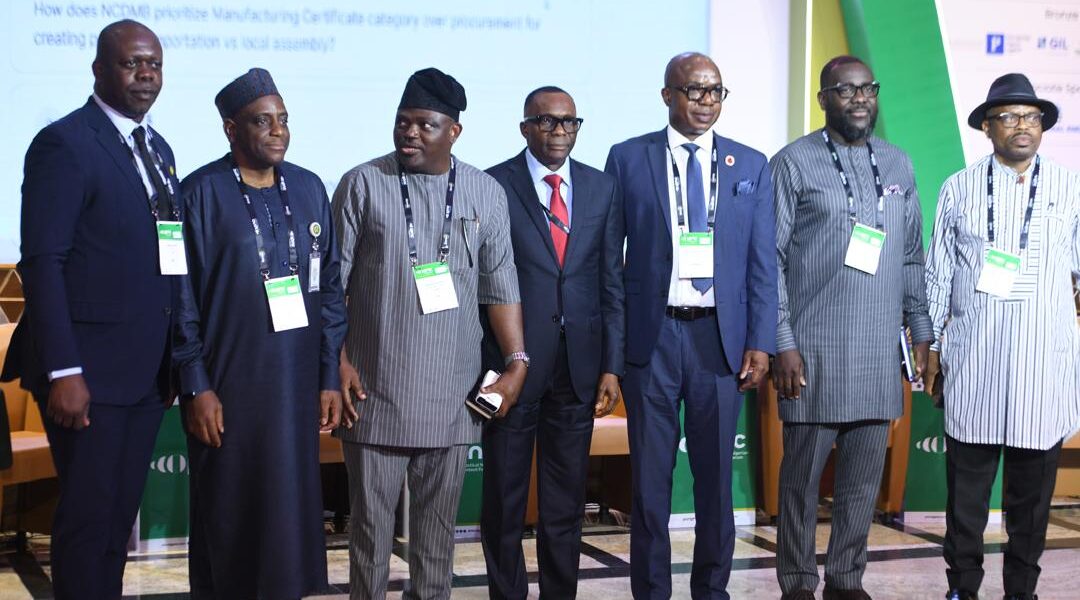
Speaking at a town hall session during the 14th Practical Nigerian Content Conference in Yenagoa, Ogunsanya said many cost-related claims in the sector ignore the difference between capital expenditure and operating expenditure.
He noted that Nigeria’s CAPEX rates are already among the cheapest on the continent, and what often pushes OPEX upward are evacuation challenges, security costs and the influence of portfolio companies that inflate prices without adding real capacity.
He said PETAN has spent years analyzing project costs across several countries and breaking down Nigeria’s cost elements at every stage of production. Drawing from that research, he argued that PETAN should be directly involved in helping the Government, NNPCL and regulators verify and compare project cost proposals.
Ogunsanya urged authorities to support PETAN in establishing clear benchmarks for project economics across global markets.
“So, when an IOC or even an indigenous company says a project will cost US$5 billion to produce 100,000 barrels, we have a solid basis for comparison,” he said.
He also called on the NCDMB to rely on PETAN specialists when defining equipment and capacity requirements for operations and warned that portfolio companies continue to distort Nigeria’s cost structure despite lacking the assets to perform the work.
The March 2024 Presidential Directive on Local Content Compliance, he noted, was designed to eliminate such firms from the contracting space.
Other issues discussed at the session included requirements for the Nigerian Content Equipment Certificate and funding options through the NCDMB. Officials clarified that R&D-focused firms cannot access the US$400 million Nigerian Content Intervention Fund but can use the Board’s US$50 million R&D Fund and its innovation programs.
The conference ended with a site visit to an oil and gas facility specializing in electrical services.