 Skip to content


Seplat Energy canvasses affordability as key factor for energy security

Leading independent energy company, Seplat Energy Plc, has said Nigeria must urgently enhance its energy supply to drive revenue growth, stimulate economic stability, and build a more prosperous nation.
Seplat which is listed on both the Nigerian Exchange and the London Stock Exchange, made it clear that economic resilience id directly connected to energy security.

Chief Operating Officer, Samson Ezugworie, who deliverd a keynote address at the opening ceremony of the 43rd Annual International Conference and Exhibition of the Nigerian Association of Petroleum Explorationists (NAPE) in Lagos said energy must be made affordable for it to be accessible.
Speaking on the conference theme, “Revitalizing the Nigerian Petroleum Exploration and Production: Strategies for Energy Security and Sustainable Development,” Ezugworie said reliable, affordable, and accessible energy remains central to Nigeria’s economic future.
“The imperative before us is clear. We must build a prosperous Nigeria, and we can only do that with affordable and reliable energy that is accessible to all,” he said, according to a statement by Stanley Opara, Manager, Corporate Communications, Seplat Energy.
He warned that with over 70 million Nigerians lacking electricity and more than 170 million depending on biomass for cooking, the country’s current energy gap poses serious risks to its economic stability and growth potential. With Nigeria’s population projected to reach 237 million by 2025 and 400 million by 2050, he said urgent action is needed to expand energy infrastructure and access.
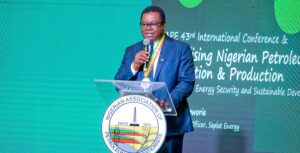
Ezugworie stressed that Nigeria must increase oil and gas production — not just to boost government revenue and reduce budget deficits, but also to power industries, create jobs, and strengthen its position as Africa’s economic powerhouse.
“We must harness our vast gas reserves to expand domestic energy access, replace polluting generators, provide clean cooking solutions, and drive industrial growth,” he said.
The Seplat COO noted that the ongoing shift from international oil companies to local operators presents both challenges and opportunities for Nigeria’s energy future.
“This transition allows us to harness local expertise, build resilient partnerships, and grow an energy industry owned and managed by Nigerians, for Nigerians,” he said.
Highlighting Seplat Energy’s progress, Ezugworie said the company’s Leadership, Partnership, and Stewardship model continues to deliver results. Seplat has rehabilitated 33 wells, with 26 now producing about 33,000 barrels per day, contributing to national output and revenue.
He also disclosed that Seplat is nearing first gas production from the ANOH Gas Processing Plant, has delivered its first LPG cargoes from the upgraded Sapele Gas Plant, and is on track to end routine flaring in its onshore operations.
“Our progress on gas initiatives like ANOH, Sapele, and LPG shipments demonstrates our commitment to Nigeria’s prosperity. These projects are not just about energy — they are about transforming lives and powering national development,” Ezugworie said.


