Skip to content

Divestments: Can independents secure Nigeria’s energy future with brown asset?

- NAPE calls for seismic data update on Niger Delta
Sopuruchi Onwuka
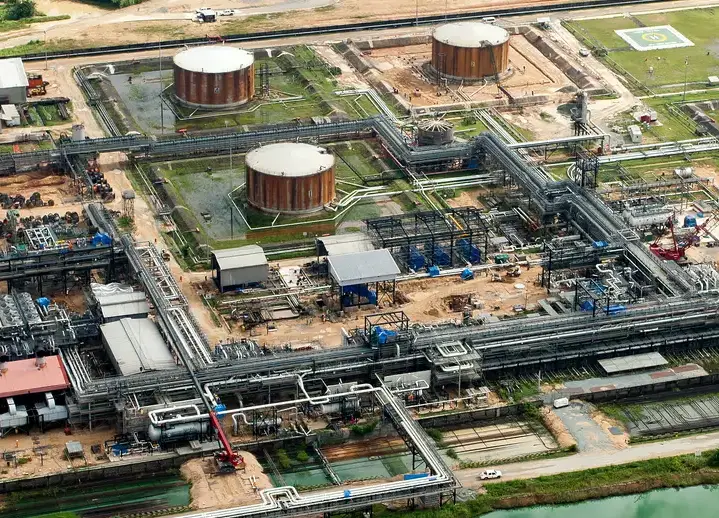
Transfer of most onshore petroleum industry operations from the international oil companies to mainly indigenous independent companies puts the fate of the country’s economy in the efficient hands of local experts, but the sustainability challenge requires adoption of new sets of data, enhance recovery technology and intense search for bypassed exploration opportunities.
Notable industry captains who shared expert views on sustainability of operations in the mature Niger Delta basin in Nigeria stated that the country’s conventional petroleum play still runs on blurred data generated by early explorers that used outdated tools.
Chairman of Oida Energy Group, Engr Emeka Ene; Chairman of AA Holdings Limited, Mr Austin Avuru; and the Chairman of Nigerian Association of Petroleum Explorationists (NAPE), Mr Johnbosco Uche; all agreed that whereas Niger Delta producing oilfields are mature, there exists immense organic reserves growth potentials.
The Oida Energy Group provides integrated oilfield services that help operating companies maximize output and capture full commodity value from lean assets by deploying latest enhanced oil and gas recovery technology suitable for mature assets and marginal fields.
These technologies, according to Engr Ene, could help extend field life, provide clues for exploration opportunities and also help operators capture resources that extend beyond crude oil production to include gas gathering, processing and marketing.
 Chairman of Oida Energy Group, Engr Emeka Ene
By integrating full resource valorisation into the field development plan, he said, mature field operators could achieve sustainable operations despite the configuration of reserves in the operated assets.
“Some fields are mainly gas fields with little oil. Other could be more and little gas. And some could be condensate fields with natural gas and no oil;” according to Dr Emmanual Okoroafor, the Executive Director of Hobark International Limited.
According to Mr Johnbosco Uche, sustainability of operations in the Niger Delta is guaranteed by the strong potential for successful exploration; including seismic data acquisition as well as appraisal and deeper exploration drilling campaigns.
New exploration efforts, he said, are bound to pay off with new discovery of bypassed opportunities.
Mr Uche who provided technical insight into the sustainability of operations on assets located in the country’s mature basins stated that whereas most of the oilfields located onshore Niger Delta may have seen their prime days, the prospects of long term value derivation from the assets remain high.
Oracle Intelligence reports that the traditional international players in the Nigerian upstream petroleum industry including Shell, ExxonMobil, ConocoPhillips and Eni have given up all their stakes in the oil and gas exploration and production joint ventures with the Nigerian National Petroleum Company (NNPC) Limited to a community of indigenous independent companies like Seplat, Oando, Renaissance Africa, First E&P and many others.
Other international companies like TotalEnergies and Chevron has also limited their portfolios in some assets located in onshore, swamp and shallow water terrains. Whereas TotalEnergies sold its stakes in the divestments transacted by Shell between 2008 and 2024, Chevron sold its stakes in assets remote from existing operating infrastructure.
Then divestments and acquisitions, Oracle Intelligence reports, entail total exist of Shell, ExxonMobil and Eni from Nigeria’s conventional plays; making them strictly deepwater giants in the country. The development followed declining output from onshore and conventional offshore locations.
Over $15 billion left the Nigerian economy through debt supported acquisition deals as the international oil companies cashed out from conventional terrains to focus on the deepwater.
Despite the divestments and acquisitions; indigenous companies exclusively dominate the country’s marginal field operations, a scheme that allows farm-out of mainly stranded lean assets from the portfolios of big companies to enable small companies gain entry.
The divestments and new license awards by the Nigerian Upstream Petroleum Regulatory Commission (NUPRC), have thus placed greater proportion of upstream petroleum industry production performance in the hands of indigenous companies; putting the future of the industry and the economy in the hands of indigenous companies for the first time.
While the indigenous players, pressed by urgent debt service burden, have continued to choke out incremental output from the brownfield and lean petroleum assets, concerns about the sustainability of operations remain high under depleting reserves.
Many indigenous pundits, experts and professional leaders including veterans that worked with the international oil companies insist that the country’s conventional terrains still hold great potentials for organic growth. They point at oil oilfields in Nigeria which have continued to produce for over 40 years without significant decline.
Oracle Intelligence reports that the Obagi oilfield operated by TotalEnergies onshore Rivers State has been in operation for nearly 60 years after it was commissioned in 1966.
Mr Johnbosco Uche stated at the 2025 NAEC Energy Conference that the Nigerian sedimentary basins have exhibited very resilient production profiles that alter earlier geological conclusions about the reservoir structures. He explained that most of the assets onshore Niger Delta have doubled their projected field life while some have not indicated any sign of running out of reserves.
 Chairman of Nigerian Association of Petroleum Explorationists (NAPE), Mr Johnbosco Uche
The indications, according to him, suggest that the original geological tools used in generating the reserves estimates have proved obsolete and less than precise. He stated the urgent need for the industry to revisit the Niger Delta with modern data generating tools that provide clearer picture of what is underground.
According to him, the original 2D seismic data used in exploration leads and modelling in the country in the 1950s ND 1960s are limited in technology required to provide clear understanding of the full petroleum system that underpin the spread of shallow discoveries in the Niger Delta.
With modern exploration technology, he said, there is immense potential to still grow operated reserves organically through deliberate exploration work programmes that probe deeper structures for large volume reserves.
To make such ventures easier, cost effective and less risky, the explorers leader noted that new drilling technology are available and affordable for handling the high temperature and high pressure complexities that associate with deep exploration.
In calling for pan-industry collaboration led by the government, Mr Uche proposed a renewed seismic data acquisition that provides clear sight for the current crew of indigenous players seeking organic reserves growth.
Chairman of AA Holding, Mr Austin Avuru, had also told Oracle Intelligence that deeper drilling and deliberate search for bypassed opportunities remain the brightest paths for organic reserves growth for managers of lean assets.

Chairman of AA Holding, Mr Austin Avuru
He described the crew change in the onshore locations in the Niger Delta as logical pattern in the global petroleum exploration and production business, adding that independents normally step in to mop up leftovers after IOCs have creamed off assets. He pointed at the North Sea as clear example of such changes where independents effectively succeeded exiting multinational giants.
The good thing, according to him, is that managing mature assets tasks the creativity of the independents in squeezing out the last barrels and also looking back for bypassed exploration opportunities.
Mr Avuru, a former Chairman of NAPE, who has functioned in the industry as Founding Managing Director of Platform Petroleum and Seplat Energy Plc respectively, stated that operating mature or depleted assets requires application of new technologies for enhanced oil recovery, gas valorisation and integrated field development strategies.
He stated that capturing full commercial opportunities from gas, natural gas liquids and crude oil delivers greater economic value for the player, company shareholders, resource stakeholders and the domestic economy.