 Skip to content



- As debts drown investments
Sopuruchi Onwuka
The numerous government initiatives on gas valorization are yet to resonate with commercial players that continue to point at differing and conflicting policies, programmes and regulations that render investments unviable in over-controlled market.

Players in both the electricity supply industry and upstream petroleum sector weekend jointly called for total redesign of the commercial arrangement that subsidizes gas for the power sector and electricity for the consumers.
Chairman of Geometric Power Limited, Prof Barth Nnaji, and the Acting Managing Director of Neconde Energy, Engr Chichi Emenike, roundly criticized the current commercial arrangements in the domestic gas market as defective, inefficient and incapable of delivering the objective of bridging supply gaps in both gas and electricity markets.
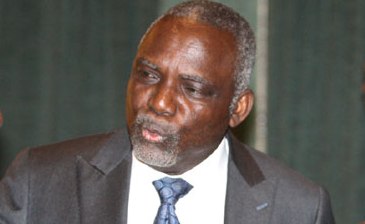
The industry captains spoke at a conference hosted by Oriental News magazine in Lagos to examine the lingering issues stalling capacity optimization in the power sector.
The Oracle reports that the government’s gas-to-power programme was designed to primarily score two major objectives of deepening the domestic gas market for robust commercial investments and also spurring enhanced power production and industrial activity with cheaper, cleaner and sustainable energy supply.
Secondary policy and programme initiatives have also been evolved to further deepen the domestic gas market, propel industrialization, diversify fuel options for transportation and displace dirty cooking fuels from Nigerian homes. The overall economic aspiration for government has been to generate greater economic value from the nation’s abundant gas reserves, cut flares at production sites and align with the prevailing global climate action by switching to cleaner fuels.
However, most of the programmes designed to realize the policy goals have been mired in disputed market regimes that players in the upstream electric power industry and gas suppliers have continued to criticize as inefficient and technically unviable.
At the event in Lagos, Professor Nnaji who, as former Minister of Power, played a major role in delivering a reforms process that privatized and liberalized the electric power sector in the country, pointed at the conflict between regulated prices in the market and the effective prices required for power production uptime.
He stressed the urgent need for the market regulators including the Nigerian Electricity Regulatory Commission (NERC) and the Nigerian Midstream and Downstream Petroleum Regulatory Authority (NMDPRA) to reconcile the gap between the regulated $2.42 per MMBTU domestic gas price for power generation and the prevailing market rate ranging from $2.70 to $9 per MMBTU.
He noted that while the official domestic gas price for power generation was formerly pegged at $2.42 per MMBtu, the NMDPRA revised this down to $2.13/MMBtu effective April 1, 2025. He noted that, in reality, Gencos often source gas from the open market where prices range from $2.70 to as high as $9/MMBtu, depending on supply constraints and contract terms.
“Because most electricity is generated using gas, and GenCos depend heavily on sourcing this gas from the open market, the disparity between the regulated and actual prices continues to strain the sector,” Nnaji said.
He warned that the pricing gap is worsening liquidity challenges in the power sector, contributing significantly to the ₦1.1 trillion electricity subsidy recorded in the first half of 2025 and the growing trillion-Naira debt owed to Gencos by the federal government.
According to him, “The gas-to-power benchmark being below market realities places an unsustainable burden on power producers.”
He also emphasized the need for more cost-reflective electricity tariffs, explaining that the current pricing structure fails to cover the operational and maintenance costs of Gencos, particularly as many critical inputs are imported.
“The energy charge component of the power tariff must be able to cover the cost of maintaining the assets. If operators can’t recover expenses for operations and maintenance, which are often dollar-denominated, there will be recurring system failures,” Nnaji said.
“The regulator must continue to adjust the tariff in line with actual industry costs to ensure sustainability.”
But dismantling government’s control on domestic gas price for the power sector, The Oracle reports, is dreaded to exacerbate the already piling debts in the gas-to-power value chain which has failed to be commercially viable since the power sector privatization in 2005.
The electricity distribution companies (Discos) have been unable to defray invoices for volumes of electricity delivered from generating companies (Gencos) through the tariff sustained transmission company (Transysco) and market auditor, the Nigerian Bulk Electricity Trading Company (NBET).
To ensure full cost recovery from the market which is operated by debt-ridden electricity distribution companies (Discos), Prof Nnaji called for a more realistic tariff framework that aligns with actual gas procurement costs for electricity generation companies (GenCos).
He questioned assumptions behind the current tariff framework, where Discos are expected to supply power to consumers at N45 per kilowatt hour (N45/KWh), based on a presumed federal subsidy through NBET to Gencos.
“There’s a belief that the federal government subsidizes power purchases, but in reality, that subsidy isn’t always there. This has contributed to the over ₦5.2 trillion debt owed to Gencos,” he said, pointing at high level of cost recovery inefficiency by the Discos leading to poor market returns.
Prof Nnaji pointed out the contentious application of Aggregate Technical, Commercial, and Collection losses (ATC&C) losses which influence cost-reflective tariffs and remittance obligations.
“Some DisCos remit as little as 30 percent of the power they receive, while others remit up to 60 percent. These discrepancies affect liquidity across the market,” he noted.
He stressed the need for enforceable Power Purchase Agreements (PPAs) and the resolution of issues like vandalism and operational disruptions that hinder gas supply and power offtake.
“Without a consistent gas supply and proper market design, we can’t expect PPAs to deliver,” he said.
In taking up the gas end of the discussion, Engr. Chichi Emenike, warned that unpaid gas bills, currency mismatch between the gas and electricity markets, and policy inconsistencies are discouraging investment in the sector.

He pointed out that Gencos have been unable to defray her company’s gas bills in the past two years, describing the satiation as a serious conundrum in the gas-to-power programme. She added that the currency mismatch between dollar denominated gas market and Naira denominated local electricity market makes supplies difficult to sustain without a commercially viable framework.
Speakers at the event called for a complete redesign of the nation’s gas-to-power programme to make supply contracts effective and enforceable.



