Skip to content

PIC-FUEL: Nigeria’s decarbonization quest ignores homemade solutions

Sopuruchi Onwuka
Nigeria’s search for solutions in sharpening a national climate agendum that targets decarbonization appears focused on blaming developed nations for failing to evolve ways of cleaning up petroleum energy for continued usage. And the country’s insistence that the West must take full responsibility for environmental liability of the petroleum industry has since morphed into continental demand.

At several conferences on the continent in the past few years, Nigeria has led the argument that African must be allowed to drive growth with available energy while building capacity for sustainable energy options.
Minister of State for Petroleum Resources (Oil), Senator Heineken Lokpobiri, has remained vehement that instead to driving aggressive energy transition that puts the economies of developing nations at risk, the developed nations of America and Europe should channel resources towards decarbonization of hydrocarbon fuels.
Erstwhile Secretary General of African Petroleum Producers Organization (APPO), Dr Omar Farouk Ibrahim, had also argued that western nations are deliberate in their reluctance to pursue decarbonization of hydrocarbon energy despite huge financial inducement volunteered by Arab oil producers to the International Energy Agency (IEA) for the purpose.
After several years of driving hard arguments about just energy transition and climate justice, Affrica’s climate plan is now gravitating towards accepting the need to make hydrocarbon resource cleaner and more acceptable as central source of global energy.
While the ministers, diplomats and national energy companies are vehement on continuing to use hydrocarbon energy to drive social development and economic prosperity of their countries, they are also coming to terms with the truth that irreversible trends have been set for global energy transition. Thus, eventual migration of demand from petroleum resources as primary source of energy has become glaringly inevitable.
Before now, governments of Nigeria and most oil producing African countries had adopted a common position to explore collaboration in driving projects and aligning policies that guarantee energy access to over 600 million citizens.
While these arguments resonate with large sections of conference delegates and political audiences, there is silent but universal consensus is that hydrocarbon resource, when used to produce energy, contributes significantly to global warming and accelerates climate change. And discerning industry experts work quietly to explore various ways to capture, sequestrate, recycle and safely stash away the harmful compounds before emission into the atmosphere.
Some of the innovative endeavors that have recorded successes have been invented and made available for deployment in Nigeria and Africa, but the policy drivers and regulators in the industry appear to seek solution elsewhere.
The “Process Intensification Technology for Greenhouse Emission Control in Power Generation and Industry for Sustainable Fuel Production (PIC-FUEL),” was developed by a team of scientists in the annual Nigeria Prize for Science sponsored by the Nigeria Liquefied Natural Gas (NLNG) Limited.
The introduction of the PIC-FUEL technology for Nigeria’s industries brings game changing potentials that, when adopted through efficient regulations, would advance greenhouse gas emission standards in the entire fuel production and consumption chains; improving the health of workers, protecting the environment and helping diversify clean fuel options available for versatile application in homes and businesses.
The new technology introduced by the Nigerian Liquefied Natural gas (NLNG) Limited in its ongoing repositioning campaign for the future also lays regulatory agenda for new emission control standards for industrial and manufacturing operations across sectors in the country and the continent.
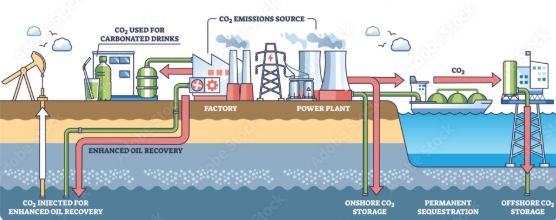
The scientific process is conceived to assist players in the industrial sector capture fumes from industrial exhaust systems, recover useful components of the combustion byproduct for production of synthetic fuels, and then sequester harmful remnants for injection into the ground to keep them from escaping into the atmosphere.
Thus, the technique directly resonates with the prevailing scramble across the globe to accelerate climate action and cut the volume of greenhouse gas emission that puffs into the earth’s atmosphere. The process, according to scientists, aims to minimize emissions across various industries by capturing carbon dioxide emissions, sequestrating and re-injecting the non-reusable components into the ground while using valuable components for production of cleaner secondary fuels.
General Secretary of Gas Exporting Countries Forum (GECF), Dr Phillip Mshelbila, who acknowledges the importance of PIC-FUEL technology noted that whereas the future would definitely come, those who desire better future must take actions that replace fears with hope.
Mr Mshelbila is former Managing Director of NLNG Limited.
He noted that the problem of emission reduction at oilfields in Nigeria led to business propositions for establishment of the NLNG, stressing that today’s actions would define the future we desire amidst fears of climate change, catastrophic impacts of extreme weather and socio-economic and security crises that come with them.
He hinted that the operations of the company have not only drastically reduced gas flares and associated greenhouse gas emissions at flare sites in the Nigerian petroleum industry, it has also arrested massive resource waste and created economic benefits for all stakeholders.
“Natural gas, being the cleanest fossil fuel will remain vital in the global energy mix during the transition to sustainable alternatives. Between 1999 and 2023, NLNG converted over 80 trillion cubic feet of gas that would have been flared, transforming it into value for Nigeria and our stakeholders,” he declared at an industry event.
While the petroleum industry continues to sanitize and decarbonize the footprints of its operations, scientists believe that greater volumes of greenhouse gas emission continue to puff from industrial, manufacturing and power plants across the globe. This has posed challenges in capturing and stashing away carbon dioxide from industrial plants.
Worldwide, there is growing agreement that eliminating human-caused greenhouse gas emissions is vital to securing a livable climate for humanity. And global industry, which is responsible for roughly one-third of human-caused greenhouse gas emissions, is at the heart of the transition to safer operating standards.
According to Yale Climate Connections, industry is a major emitter and also at the core of developing low-carbon solutions. For instance, manufacturers produce technologies such as solar panels, wind turbines, clean vehicles, and energy-efficient buildings.
“Therefore, industry must transition to zero-carbon processes while continuing to supply transformational technologies and infrastructure,” according to a book published by Senior Director of Energy Innovation, Jeffrey Rissman.
He declared in the book that eliminating greenhouse gases from global industry is very achievable with well-designed investments in existing and new technologies. And this daunting task of investing in innovative technologies is led in Nigeria and Africa by the Nigerian LNG Limited through its annual Nigerian Prize for Science.
Whereas Carbon Capture and Storage (CCS) is a tested technology that captures carbon emissions from industrial sources and stores them underground in effort at achieving carbon neutrality; PIC-FUEL technology mirrors the NLNG model of converting waste to wealth. It comes with the premium of achieving similar goals while generating a new kind of clean fuel from exhaust fumes.
The PIC-FUEL technology also plugs directly into the prevailing fuel diversification programs in Nigeria as the government battles high cost of traditional fuels with introduction greener alternatives through gas processing.
The advisory board recruited by the NLNG to regulate quality and integrity of the annual $100,000 Nigerian Prize for Science determined that the PIC-FUEL invention highlighted the importance of the mandate handed by the company “Innovations and Technologies for Reducing the Effect of Climate Change.”
Oracle Intelligence reports that the PIC-FUEL technology has not only helped amplify the growing list of forward-looking innovations championed by the Nigerian LNG Limited in harnessing global expertise in solving Nigeria’s local problems; it also comes with the potential to help the country in its prevailing fuel diversification programs in a manner that simultaneously advances the country’s global sustainability goals in full adherence to the United Nations Framework Convention on Climate Change (UNFCCC).
The Advisory Committee of the Nigerian Prize for Science noted that whereas the focus of the PIC-FUEL technology centers on capturing industrial fumes from mainly manufacturing and power generation industries, its application can also be useful in recycling fumes from oilfield operations gas flares.
Former Minister of Science and Technology and Chairman of the committee, Prof Barth Nnaji, stated that the PIC-FUEL technology is now one of the promising solutions for industries and power production plants across the country to cut their adverse impact on the environment.
Explaining the significance of the groundbreaking work by the scientists, Prof. Nnaji stated that the PIC-FUEL technology works by capturing carbon dioxide emissions directly from industrial sources such as power plants, cement factories, and refineries. He explained that the emissions are passed through the Rotating Packed Bed (RPB) unit, where carbon dioxide is absorbed using a solvent before being converted into methanol through a reaction with hydrogen in an electrolyser machine.
The methanol can then be directly blended with diesel or sold as a product, he noted.
“Imagine if every time a factory or power plant released carbon dioxide, instead of harmful gases escaping into the atmosphere, those gases were captured, transformed, and repurposed into cleaner, more sustainable fuels. That is exactly what PIC-FUEL does.
“This revolutionary approach could cut emissions by 40%, significantly reducing Nigeria’s carbon footprint and helping the country achieve its 2060 net-zero goals without expensive government subsidies. PIC-FUEL implementation will fully decarbonize the power and industrial sectors and deliver up to 20% decarbonization of diesel-fueled transportation and electricity generators for household and small businesses through the supply of cleaner diesel.
“The technology doesn’t just ensure cleaner air; it also offers significant economic benefits. It could reduce the cost of cutting down emissions by 30-40%, translating to considerable reductions in the national budgetary requirement for implementing the Nigerian Energy Transition Plan, equivalent to $120-140 billion, and achieving the 2060 net zero targets.
“Additionally, by producing cleaner diesel locally, the country could save up to $500 million annually in foreign exchange, strengthening the local economy and stabilizing the Naira,” Professor Nnaji pointed out, adding that the proof of concept of the winning work has been established in the U.K. and Norway.
With all the advantages that come with the PIC-FUEL technology, it a wonder that government’s policy formulators at the ministries, industry and environmental regulators, and other stakeholders in the petroleum and industrial sectors still mount global podiums to require distant governments and agencies to assist evolve solutions that are already available in-country.