Skip to content

Informal economy reflects governance failure — Brookings

As governments across sub-Saharan Africa intensify efforts to broaden their tax bases by targeting micro, small and medium-sized enterprises (MSMEs) that account for nearly 90 per cent of jobs in the region, a new report by the Brookings Institution argues that the growth of the informal economy is fundamentally a reflection of governance failures rather than widespread tax evasion.
According to the report, informal economic activity frequently emerges and expands to fill gaps created by weak institutions, poor public service delivery and inadequate economic opportunities. Where governments fail to provide sufficient jobs, infrastructure, social protection and access to finance, citizens often develop alternative economic arrangements to sustain livelihoods and meet basic needs.

The Brookings paper challenges a long-held policy assumption that informality is primarily a compliance problem that can be resolved through registration, digitisation and stricter enforcement. Instead, it argues that many policymakers continue to misdiagnose the nature of informality in developing economies.
Rather than representing deliberate resistance to regulation, the report says, the informal economy often reflects the efforts of individuals and businesses to navigate economic systems that fail to provide adequate opportunities and support. In many African countries, informal enterprises serve as critical sources of employment, income and economic resilience, particularly for populations excluded from formal labour and financial markets.
The report comes at a time when African governments are under growing pressure to mobilise domestic revenues. With tax-to-GDP ratios averaging about half the level of countries in the Organisation for Economic Co-operation and Development (OECD), many governments face mounting fiscal constraints amid rising debt burdens and tightening global financing conditions.
As a result, countries including Nigeria, Kenya and Senegal have increasingly focused on expanding tax collection from the informal sector, often through digital platforms and enhanced monitoring systems.
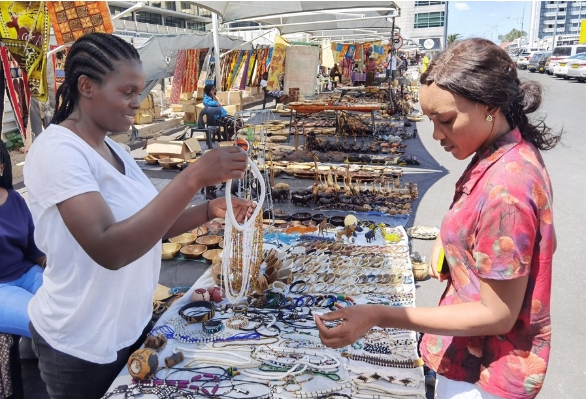
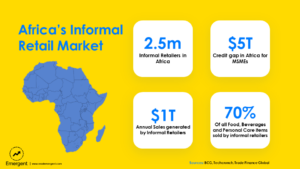
Brookings notes that the informal economy is not a marginal feature of Africa’s economic landscape. In much of sub-Saharan Africa, it is the dominant source of employment, accounting for nearly nine out of every 10 jobs. The sector encompasses a wide range of activities, from market trading and transportation services to small-scale manufacturing and household enterprises.
The report warns that governments risk undermining economic participation if tax enforcement measures are pursued without corresponding improvements in public services and business support systems. It cites concerns over proposals in Kenya to increase taxes linked to digital payments and mobile money platforms such as M-Pesa, with critics warning that excessive taxation could discourage digital adoption and drive transactions back into cash-based channels.
Brookings further observes that the rapid expansion of digital identification systems, electronic payments and mobile money services is providing governments with unprecedented visibility into economic transactions that previously existed outside formal oversight. However, that visibility is also generating concerns among businesses and citizens who fear increased taxation without commensurate improvements in infrastructure, public services and administrative efficiency.
“The demands for compliance are made long before any value is delivered,” the report quotes Brookings scholar Pierre Nguimkeu as saying.
The institution concludes that sustainable formalisation cannot be achieved through enforcement alone. Instead, governments must address the underlying conditions that drive informality by improving governance, strengthening public institutions, expanding economic opportunities and creating an environment in which businesses and workers voluntarily choose to participate in the formal economy.
Ultimately, the report argues, many African governments are attempting to tax their way toward stronger states, even though the persistence of informality is itself evidence of historical state weakness. Until governance systems deliver greater value, trust and opportunity to citizens, the informal economy will likely remain a rational and necessary response to institutional shortcomings.