Skip to content


Cameroon’s Kribi oil refinery to begin early operations in 2026

Nigeria’s fuel exports to Cameroon are expected to decline as Cameroon’s Kribi oil refinery prepares to begin partial operations in the second half of 2026, almost two years ahead of its original schedule.
The refinery project, backed by Cstar Petroleum, Cameroon’s National Hydrocarbons Corporation (SNH), Tradex SA and Ariana Energy, is designed to cut fuel imports, ease pressure on foreign exchange reserves and improve domestic fuel supply.

Cameroon has relied heavily on imported refined petroleum products since the shutdown of its only other refinery, Sonara in Limbe, following a fire in 2019. The country currently sources diesel and gasoline mainly from Nigeria, Equatorial Guinea, Gabon and France, with occasional supplies from the Middle East and Asia.
By refining more crude oil locally, the Kribi refinery is expected to reduce Cameroon’s exposure to global fuel price volatility and lower the risk of supply disruptions.
According to the Energy Council, the refinery’s first phase will process about 10,000 barrels per day, covering roughly 22 percent of national fuel demand. This represents one-third of its planned full capacity of 30,000 barrels per day.
Preparatory construction activities are already underway, including the development of a base camp, while full construction is scheduled to begin in January 2026. Once completed, the refinery will require an estimated total investment of $622 million.
The project is being developed by SNH as part of its broader energy strategy and is located about five kilometres from the Kribi deep-water port on a 250-hectare site. Reports indicate that front-end engineering design studies are about 80 percent complete, signalling steady progress toward the main construction phase.
Execution of the project is being handled by Dubai-based special purpose vehicle CSTAR Refinery Project Management LLC-FZ. The refinery is designed to produce about 30,000 barrels per day, equivalent to roughly 1.5 million tonnes annually.
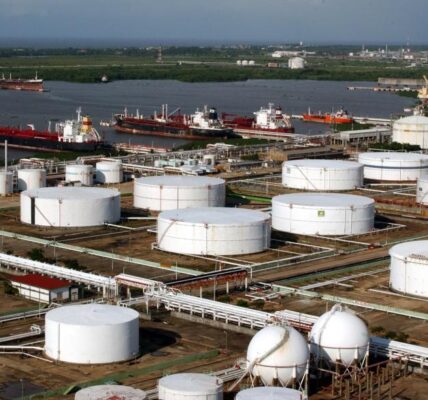
According to Energy Capital Power, the project will also include a fuel storage terminal with a capacity of between 250,000 and 300,000 cubic metres. The terminal will store diesel, gasoline, Jet A1, kerosene and heavy fuel oil.
Construction oversight is being provided by a consortium comprising RCG Turnkey Solutions, Global Process Systems and China’s Norinco International, while BGFI Cameroon is responsible for raising approximately $215 million in financing.
Once operational, the refinery is projected to generate about $250 million annually from marine and petrochemical exports, save Cameroon an estimated $680 million each year in fuel import costs, create more than 7,000 jobs and support skills development for local workers.