Skip to content


- Displaces Chappal Energies, beats SAPETRO
Sopuruchi Onwuka
French multinational oil major with significant commercial interest in Nigeria, TotalEnergies, has reached a deal to sell its 10 percent non-operating stake in the Renaissance operated Joint Venture with the Nigerian National Petroleum Company (NNPC) Limited to indigenous Vaaris consortium for a consideration of princely $800 million.

The deal which was announced on Wednesday displaces earlier $860 million deal with Chappal Energy which could not close even after securing crucial ministerial approval brokered by the Nigerian Upstream Petroleum Regulatory Commission (NUPRC).
TotalEnergies Exploration and Production Nigeria Limited signed the sales and purchase agreement with Varis and now waits for regulatory approvals and “customary closing conditions,” the company announced.
The NNPC Limited holds overriding 55 percent stake in the JV, Renaissance Africa Energy Company (RAEC) Limited holds 30 percent operating interest, TotalEnergies EP Nigeria has 10 percent, and Agip Energy and Natural Resources Nigeria holds the remaining 5 percent.
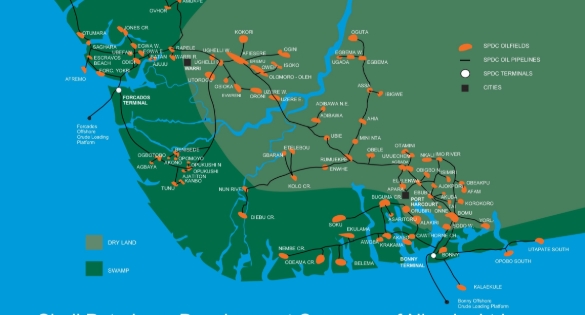
The JV holds 18 licenses in the Niger Delta region.
Under the agreement, TotalEnergies will transfer its 10 percent interest in 15 oil-producing licenses and three gas-producing licenses to Vaaris. TotalEnergies will however retain full economic interest in the gas licenses, ensuring continued support for Nigeria LNG Limited, which currently sources 50 percent of its feedgas supply from the assets.
TotalEnergies stated that it continues its portfolio reshuffling in Nigeria after key milestones achieved in 2025 focusing on operated assets.
The company launched offshore exploration in Petroleum Prospecting License (PPL2000/2001) in August 2025, increased its stakes in OPL257 and sold its non-operated interest in OML118 in November 2025.
The French multinational energy firm restated it commitment to support Nigeria’s strategy to grow production onshore along the gas value chain “as demonstrated by the FID of Ubeta gas project in 2024 on OML58 and offshore oil and gas.”
When the new divestment deal with Vaaris scales mandatory ministerial approval, it would thin down the stakes and presence of multinational oil majors in the Renaissance JV, transforming a once all foreign partnership to mainly indigenous business alliance.
Vaaris Resources Joint Venture Company Limited hosts a consortium of existing indigenous oil companies that currently operate small assets in the industry and offer oilfield services.
Chairman of Vaaris, Tein George, signed the acquisition deal with divesting TotalEnergies, possibly ending years of lingering but failed efforts by portfolio company, Chappal Energies, to close a hyped $860 million acquisition attempt even after TotalEnergies had cleared all regulatory hurdles to the transaction.
With Chappal Energies visibly failing to close the acquisition, Theophilus Danjuma’s South Atlantic Petroleum (SAPETRO) also launched a failed attempt to secure the position in the Renaissance JV in an attempt perceived as novel for the indigenous company which has held strong interest in deepwater operations of TotalEnergies.
The Renaissance farm in would have been the significant foot of SAPETRO in onshore terrains of the petroleum industry.
Whereas Chappal Energies appears to have gone quiet after failing to close the acquisition deal, and SPAETRO has always operated discretely, it is not very clear if a backstage contest has shifted for the acquisition of the Eni’s 5 percent interest in the Renaissance JV.
It is most unlikely that the Italian company would retain the minority interest in the JV after it sold bigger assets to indigenous Oando Plc in a major step-away from onshore operations.
Oracle Intelligence reports that all the former partners in the defunct SPDC JV jointly hold proportionate stakes in the highly profitable Nigerian LNG Limited which was established by the multinational partners as key entity for valorization of produced gas the JV assets.
Even under the prevailing basket divestment by the partners, each of them has inserted clauses that entitle them access to gas output from the Renaissance operated assets.