Skip to content

AGM: WIEN demands resource governance model for solid minerals, agriculture

Sopuruchi Onwuka
Leading female professional and business group in the energy sector, the Women in Energy Network (WIEN), has called on the government to urgently evolve a structured governance system for agriculture and solid mineral sectors.
President of WIEN, Mrs Eyono Fatai-Williams, who addressed journalists during the group’s annual general meeting yesterday in Lagos, declared that time has come for government to evolve a structured approach to harnessing and optimizing the value of the solid mineral industry as part of the aspiration to deepen, diversify and spur rapid economic growth.
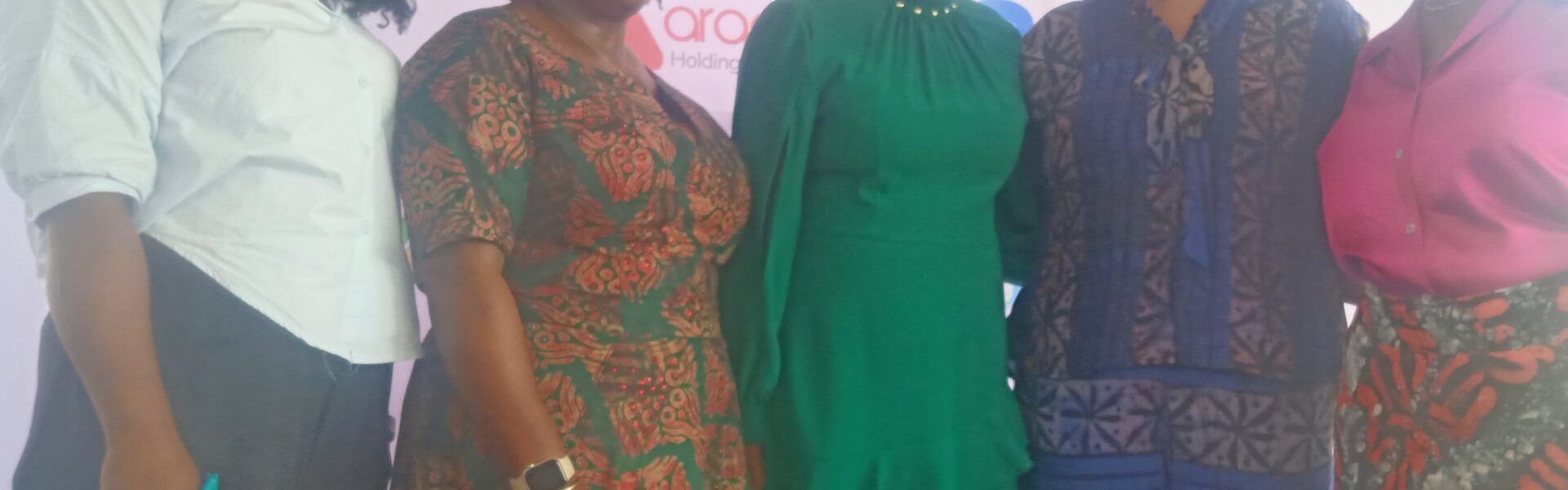
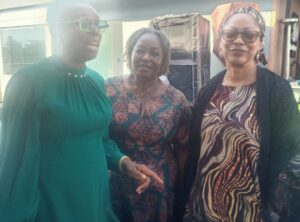 From left: President of WIEN, Mrs Eyono Fatai-Williams; Executive Secretary, Engr Asanimo Omezi; and Founding President of WIEN, Mrs Funmi Ogbue shared pleasantries during the group’s AGM in Lagos.
Mrs. Fatai-Williams made it clear that the country might not hit its clean energy goals without fixing the two critical sectors that sit outside Nigeria’s traditional energy industry.
In pointing at the rising value and criticality of rare earth minerals in the evolving green energy industry, Mrs Fatai-Williams stated that government must quickly position the solid mineral sector to lead the country in the global race for low carbon energy, climate responsibility and energy security.
She called for a structured governance model for solid minerals that mirrors the petroleum industry’s regulatory framework, arguing that Nigeria cannot lead in the global race for low carbon energy while allowing valuable minerals to be mined with little oversight, poor transparency and almost no contribution to national development.
Oracle Intelligence reports that rare earth minerals are central to the fast-growing green energy industry. They power everything from electric vehicles to wind turbines. And whereas most African countries base their economies on solid minerals exploration and exploitation, rare earth mining in Nigeria is poorly administered and largely in the hands of unregulated syndicates whose activities are not transparent and whose economic contributions are not palpable.
Whereas government agencies downgrade solid mineral mining in the country as artisanal, site activities have been observed to be industrial scale while outputs take invisible export routes. The result remains that Nigeria’s rare earth mining is still handled by unregistered syndicates that operate far from public scrutiny. And communities report displacement, unsafe working conditions and land grabs that provide no compensation.
Mrs Fatai-Williams did not allude to community controversies and political issues that shroud the solid mineral industry in Nigeria, but she hammered on the need to urgently bring the sector under regulation and transparent governance model to allow credible investors explore commercial opportunities that would spur growth in the economy.
She stated that WIEN would, as part of its immediate program agenda, intensify its campaign for cleaner domestic energy by creating mass awareness and preparing its members to explore commercial opportunities in the renewable industry. She added that policy changes have become urgent for government to make entry opportunities and investments smoother, less disruptive and more structured by replicating the governance model that rules petroleum industry operations in the solid mineral industry.
Besides the upstream section of renewable energy, she said WIEN continues to participate in the National Working Group on liquefied petroleum gas which is mostly used as clean cooking fuel in Nigeria. She added that WIEN would continue pushing for LPG penetration with intention to cause mass displacement of dirty fuels that harm women and girls in rural kitchens.
WIEN, according to her, is in currently in partnership with the Nigerian LPG Association (NLPGA), Urban Kitchen, Smart Energies, Women on Grid Hub and other likeminded groups to accelerate penetration of clean energy for homes and businesses in the country.
She also called for greater regulatory attention to the agricultural industry, noting that farming which currently makes the highest contribution to national gross domestic product (GPD) still holds immense but untapped potential to spur massive transformation of the economy, contribute to green energy evolution and cut reliance on fossil fuels.
At the concluded 30th Conference of Parties (COP) of the United Nations Framework Convention on Climate Change (UNFCCC), delegates pointed out that it will be impossible to meet the goals of the 2015 Paris agreement without radical changes to the way we produce and consume food.
WIEN President made it clear that government’s clean energy, climate action and energy transition programs mut incorporate policies and regulations that apply greater structures in the governance of agriculture and solid mineral industries.
She stated that WIEN would be relentless to churning out policy propositions that would contribute to pan-industry pool of ideas in evolving sustainability across the energy landscape. She added that WIEN would also continue to drive inclusion and spur innovation through its robust learning programs, partnerships on innovation, student STEM education sponsorships, and coaching and mentorship programs that feed the pipeline of skills.
For women led businesses in the group, Mrs Fatai-Williams pledged that the group would continue to drive hard on programs like the planned business incubation hub, partnership with the academia, and funding partnerships that provide low-cost funding for women in energy business.
Through its learning programs, Mrs Fatai-Williams pledged, WIEN would continue to create awareness for its members on changes in the policies and programs that impact the fate of professionals and the fortunes of women-led businesses in the energy industry.