Skip to content

UK, Nigeria deepen trade ties, launch Economic Diversification Dialogue

The United Kingdom and Nigeria have launched the UK–Nigeria Economic Diversification Dialogue, a strategic platform under the Enhanced Trade and Investment Partnership (ETIP) aimed at expanding bilateral trade and unlocking growth in Nigeria’s non-oil sectors.
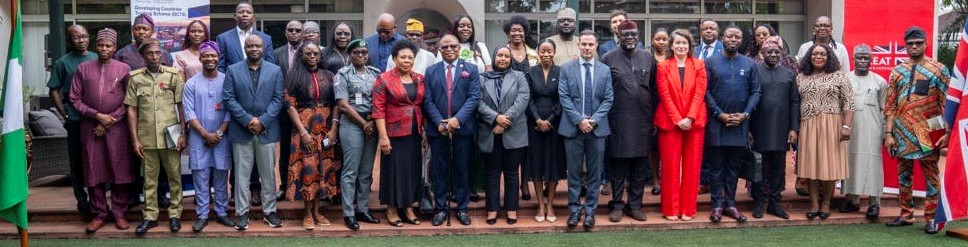
The dialogue, held as a follow-up to the Developing Countries Trading Scheme (DCTS) Roadshow in Lagos and Kano, brought together senior government officials, trade experts, and private sector leaders from both nations.
Discussions focused on investment opportunities in agriculture, manufacturing, and digital services, with the UK pledging continued support through trade facilitation, investment promotion, and capacity-building initiatives.
Opening the event, British Deputy High Commissioner Jonny Baxter reaffirmed the UK’s commitment to strengthening bilateral economic cooperation, noting that trade between both countries stood at £7.9 billion in the twelve months ending March 2025.
Baxter said the UK remains committed to helping Nigerian exporters leverage the DCTS, which offers generous tariff reductions and simplified trade rules for over 3,000 Nigerian products — including ginger, cocoa, sesame seeds, cashew nuts, soya beans, and textiles.
“Today’s dialogue marks a significant milestone in the UK–Nigeria partnership,” Baxter said. “By working together — government to government and with the private sector through our market development programmes like Propcom+ — we are unlocking new opportunities for trade, investment, and innovation across key sectors.”
Representing the Federal Ministry of Industry, Trade and Investment, Mrs. Orji Gertrude, Director of Trade and Investment, who stood in for Permanent Secretary Ambassador Abba Nura Rimi, commended the initiative as timely, given Nigeria’s drive to diversify its export base and strengthen its participation in global value chains.
“To fully harness the benefits of the DCTS, stakeholders must understand the rules of origin, documentation requirements, product standards, and trade facilitation measures,” she said. “Through partnerships like this with the UK’s Department for Business and Trade, we aim to reduce barriers, improve competitiveness, and ensure Nigerian products meet international standards.”
Both governments reaffirmed their commitment to building resilient, diversified economies, concluding the session with a joint call for sustained collaboration, knowledge exchange, and policy innovation to deepen trade and investment between the two nations.